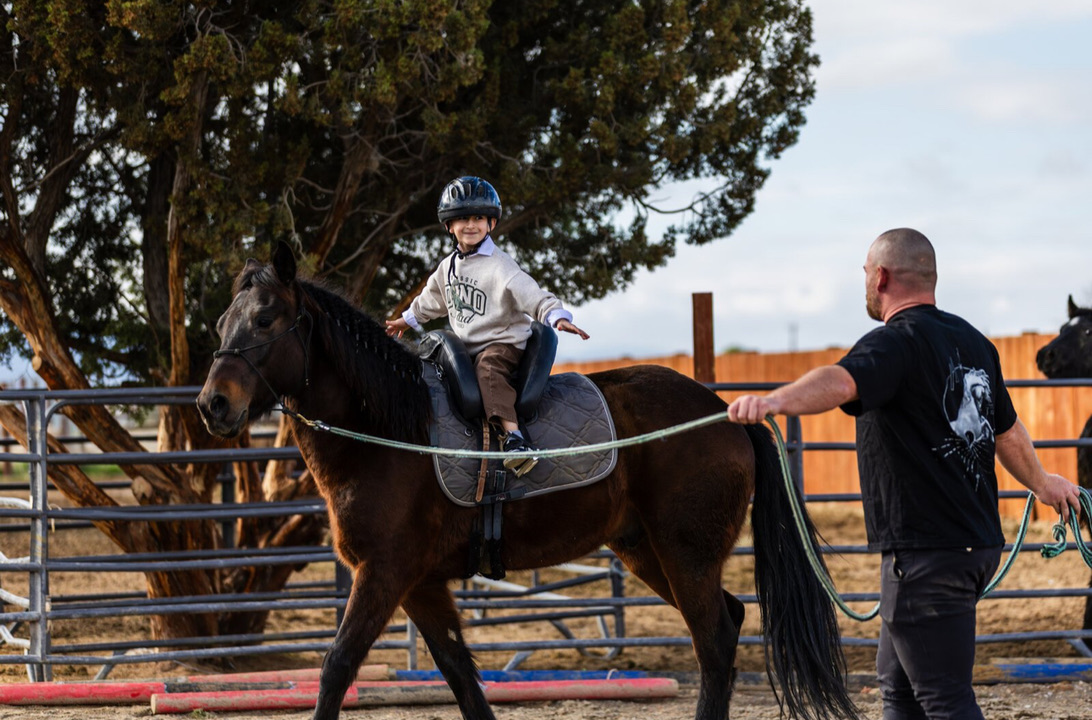
Everything a complete beginner needs to know before their first ride: what to expect, how to prepare, what to wear, and how to find the right instructor.
Horseback riding for beginners starts with finding a structured lesson program, wearing proper safety gear (ASTM-certified helmet, boots with a heel), and committing to weekly lessons. Most beginners can walk, trot, and steer independently within 4-8 weeks of consistent weekly lessons.
Horseback riding is one of the most rewarding skills a person can learn. But for most beginners, the first question is the same: where do I even start?
This guide answers every question a new rider has before their first lesson. We cover what to expect, how to prepare, what to wear, how long it takes to learn, and what separates a good riding school from a bad one.
What to Expect on Your First Ride
Your first lesson will not look like a movie. You will not be galloping across open fields. And that is a good thing.
A well-run first lesson begins on the ground. You will meet the horse, learn how to approach it safely, and understand basic body language. Then you will be helped into the saddle and guided through the walk. A good instructor will spend most of this lesson teaching you how to sit correctly, not how to steer.
The most important thing you will learn in your first lesson is balance, not control. Before you can direct a horse, you need to be able to sit without gripping the reins for support. This is the foundation everything else is built on.
At Hussar Stables, every new rider begins with a private Intro Lesson. We introduce you to our calm, experienced lesson horses, teach you basic safety on the ground, and get you in the saddle for a gentle guided ride. There is no pressure, no rushing, and no chaos.
What to Wear
Clothing matters more in riding than most beginners expect.
Helmet. An ASTM/SEI-certified equestrian helmet is required. Many schools provide them for beginners. A bicycle helmet is not acceptable — it is not designed to protect against the specific impact angles of a fall from a horse.
Boots. You need a boot with a smooth sole and a heel of at least one inch. The heel prevents your foot from sliding through the stirrup. Cowboy boots, paddock boots, and tall riding boots all work. Sneakers and sandals do not.
Pants. Wear long pants with a smooth inner seam. Jeans work for a first lesson. Dedicated riding tights or breeches are more comfortable once you commit to regular riding.
How Long Does It Take to Learn to Ride?
With weekly lessons, most beginners reach these milestones:
Weeks 1-4: Comfortable at the walk. Learning to post the trot. Beginning to understand how to use legs and seat as aids.
Weeks 5-12: Confident at the trot. Beginning the canter. Understanding basic steering and transitions.
Months 3-6: Cantering independently. Beginning lateral work. Starting to feel the difference between a balanced and an unbalanced position.
Year 1+: Developing an independent seat. Beginning to work on collection, impulsion, and more advanced movements.
The riders who progress fastest are not the most naturally athletic. They are the ones who ride consistently, pay attention to their instructor, and practice the fundamentals without skipping ahead.
The 7 Most Common Beginner Mistakes
1. Gripping with the knees. The instinct when nervous is to grip tightly. This actually makes you less secure. A correct position requires a long, relaxed leg.
2. Looking down. Your horse goes where you look. Looking down causes you to tip forward and lose your balance. Look up, between the horse's ears.
3. Pulling back on the reins for balance. The reins are a communication tool, not a handle. Your balance must come from your seat, not your hands.
4. Holding your breath. Tension travels directly from your body into the horse. Breathe consciously, especially when you feel nervous.
5. Rushing the process. The riders who try to skip the walk and trot to get to the canter faster almost always have to go back and fix foundational problems later.
6. Ignoring ground work. What you do on the ground with a horse matters as much as what you do in the saddle.
7. Inconsistent scheduling. Riding once a month is not learning to ride. Your body needs consistent repetition to build muscle memory.
How to Choose the Right Riding School
Lesson horses. The quality of the lesson horse is the most important factor. Horses should be calm, experienced, and well-cared-for.
Structured curriculum. A good school has a defined progression. You should know what skills you are working on and what you need to master to advance to the next level.
Small class sizes. Beginners need individual attention. Look for private or semi-private lessons, especially in the beginning.
Unmounted horsemanship. The best programs teach you about the horse, not just how to sit on one.
Frequently Asked Questions
Do I need any experience to start? No. Every rider starts from zero. A good instructor will meet you exactly where you are.
What is the right age to start riding? Children as young as 5-6 can begin with lead-line instruction. Adults can start at any age.
Is horseback riding dangerous? Like any sport, riding carries risk. The risk is significantly reduced by wearing proper safety equipment, riding well-trained lesson horses, and learning in a structured environment.
How often should I ride? Once a week is the minimum for real progress. Twice a week accelerates development significantly.
Your Next Step
Most riders start exactly like this: a single intro lesson, a calm horse, a patient instructor, and a question they have been putting off for years.
At Hussar Stables in Palmdale, CA, we have built our entire program around giving beginners the best possible start. Our Intro Lesson is a private, one-on-one session designed to answer your questions, introduce you to our horses, and show you what structured riding education looks like.
Book your Intro Lesson at Hussar Stables and take the first step.
- Wear an ASTM-certified helmet and boots with a 1-inch heel on your first lesson
- Weekly lessons produce far better results than occasional drop-in rides
- Balance comes before reins — your seat and position are learned first
- Expect 4-8 weeks to feel comfortable at a walk and trot
- A structured curriculum with clear levels is the fastest path to real progress
- Ground work and horse care are as important as riding itself
Have a question?
Text us — we reply fast.
(661) 227-3214 · Hussar Stables, Palmdale CA
Ready to Experience This in Person?
Book a private Intro Lesson at Hussar Stables and discover why families from Palmdale, Lancaster, and Santa Clarita choose our members-only riding club.
Book Intro Lesson