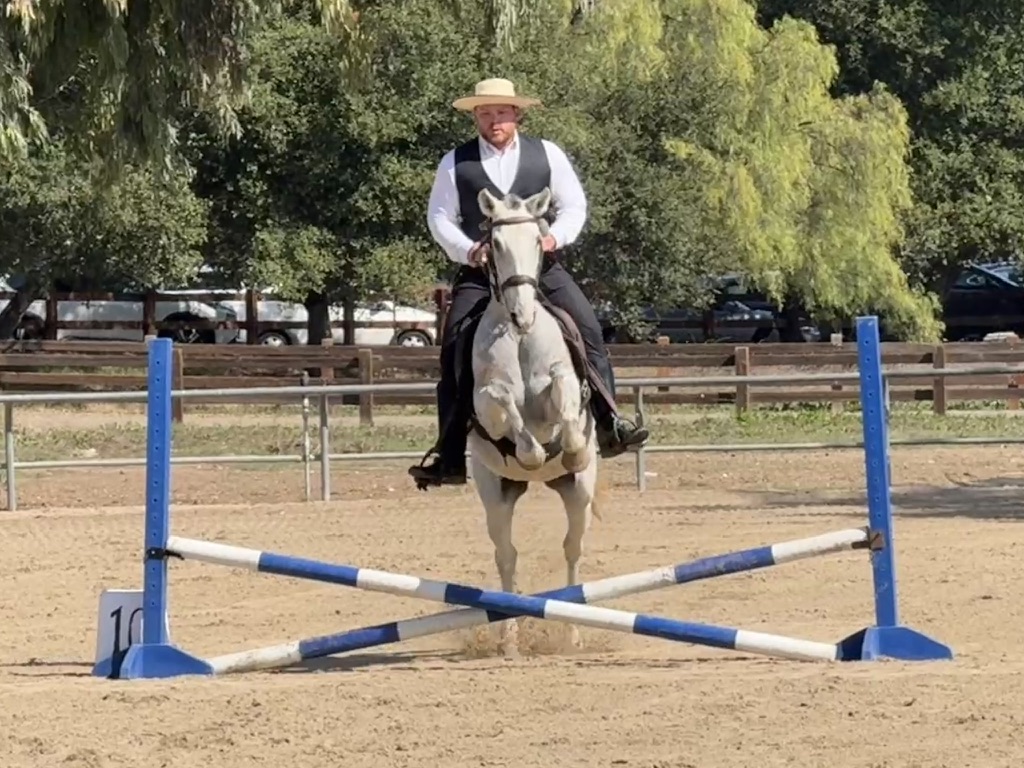
Explore the captivating history of Working Equitation, from its Iberian roots in cattle ranches to its global recognition as a sophisticated equestrian sport. Discover its evolution, the founding of WAWE, and its growth in the USA.
Working Equitation is approached through the classical principles of harmony, precision, and partnership between horse and rider. At Hussar Stables, we integrate WE principles from the very first lesson, so riders develop both the technical skill and the feel that the sport demands.
Working Equitation, a discipline that beautifully marries the artistry of classical horsemanship with the practical skills of ranch work, has captivated equestrians worldwide. Its rich history, rooted in the ancient traditions of the Iberian Peninsula, tells a tale of necessity evolving into a sophisticated sport. For members of Hussar Stables in Palmdale, CA, who appreciate the depth and dedication required for true horsemanship, understanding these origins enriches every ride.
The Iberian Roots: Where Tradition Met Necessity
The story of Working Equitation begins centuries ago in the sun-drenched landscapes of Portugal and Spain. Here, skilled horsemen, known as vaqueros in Spain and campinos in Portugal, developed an unparalleled partnership with their horses. Their daily lives revolved around managing vast herds of cattle across challenging terrains. This demanding work required horses that were not only agile and responsive but also calm, courageous, and capable of performing intricate maneuvers with precision.
These early horsemen, often mounted on agile Iberian breeds like the Lusitano and Andalusian, honed their riding techniques to navigate dense brush, separate specific animals from the herd, and control livestock with subtle cues. The development of their riding style was purely functional, yet it laid the groundwork for what would become a highly refined form of classical dressage. The deep connection between horse and rider, the emphasis on collection, balance, and obedience, all stemmed from the practical demands of the ranch.
The Birth of a Sport: From Field to Arena
While the traditions of working with cattle on horseback are ancient, the formalization of Working Equitation as a competitive sport is relatively recent. The late 20th century saw a growing appreciation for these traditional riding styles, and a desire to preserve and promote them led to the creation of organized competitions. The first official Working Equitation competition took place in 1996 near Lisbon, Portugal.
This pivotal event marked the transition of practical ranch skills into a structured equestrian discipline. The founding nations — Portugal, Spain, France, and Italy — recognized the unique blend of athleticism, precision, and historical significance that Working Equitation offered. They sought to create a sport that would test the horse and rider\'s ability to perform tasks reminiscent of field work, while also showcasing the elegance and harmony of classical dressage.
The World Association for Working Equitation (WAWE)
The rapid growth and international interest in Working Equitation necessitated a governing body to standardize rules, promote the sport, and organize world championships. In 2004, the World Association for Working Equitation (WAWE) was established. WAWE\'s mission was to unite the various national organizations, ensure fair competition, and safeguard the integrity and traditions of the sport globally.
WAWE\'s formation was a crucial step in elevating Working Equitation to a recognized international discipline. It provided a platform for countries to collaborate, share knowledge, and develop the sport consistently. Today, WAWE oversees competitions and promotes the discipline across numerous affiliated nations, fostering a vibrant global community of Working Equitation enthusiasts.
Growth in the USA: A New Frontier for an Old Tradition
The allure of Working Equitation soon crossed the Atlantic, finding fertile ground in the United States. American equestrians, drawn to its unique blend of classical training and practical application, embraced the sport with enthusiasm. The growth in the USA has been remarkable, with numerous organizations forming to promote and govern the discipline at a national level. Initially, organizations like WE United and the Confederation for Working Equitation played significant roles in establishing the sport.
Today, USA Working Equitation (USAWE) stands as the recognized governing body for the sport in the United States, affiliated with WAWE. USAWE has been instrumental in developing a robust competition circuit, offering clinics, and educating riders about the nuances of Working Equitation. From California to Florida, riders are discovering the profound benefits of this discipline, which enhances communication, balance, and partnership between horse and rider.
For riders in Palmdale, CA, and the surrounding areas like Lancaster, Santa Clarita, and the wider Antelope Valley, the growth of Working Equitation means more opportunities to engage with this captivating sport. Hussar Stables is proud to be a part of this movement, offering specialized training in Working Equitation and classical horsemanship, allowing local equestrians to delve into these rich traditions.
Notable Champions and the Sport Today
Working Equitation has produced many exceptional horse and rider pairs who exemplify the discipline\'s ideals. While it\'s challenging to name every champion, riders like Pedro Torres of Portugal are often cited for their mastery and influence. Torres, a multiple World Champion, is renowned for his exquisite horsemanship and his ability to showcase the Lusitano\'s agility and responsiveness in the arena. His performances inspire countless riders and demonstrate the pinnacle of Working Equitation.
Today, Working Equitation competitions typically consist of four phases: Dressage, Ease of Handling, Speed, and Cow Work (though Cow Work is often optional or replaced by a simulated obstacle course in many regions). Each phase tests different aspects of the horse and rider\'s training and partnership:
Dressage:* This phase assesses the horse\'s obedience, suppleness, and willingness to perform classical dressage movements.
Ease of Handling:* Here, horse and rider navigate a course of obstacles designed to simulate challenges encountered during ranch work, such as opening gates, crossing bridges, and maneuvering around barrels.
Speed:* This exciting phase tests the pair\'s agility and quickness as they navigate a similar obstacle course at speed.
Cow Work:* The ultimate test of practical skill, where horse and rider work together to separate a specific cow from a herd.
The sport continues to evolve, attracting riders from diverse equestrian backgrounds. Its emphasis on a harmonious partnership, combined with the thrill of navigating challenging obstacles, makes it a truly engaging and rewarding discipline. Hussar Stables, nestled in the heart of Palmdale, CA, is dedicated to fostering this partnership, offering a premium environment for riders to explore the depths of Working Equitation and classical horsemanship.
Experience the Legacy at Hussar Stables
Working Equitation is more than just a sport; it\'s a journey into the heart of equestrian tradition, demanding skill, patience, and an unbreakable bond between horse and rider. If you\'re inspired by the rich history and dynamic challenges of Working Equitation, we invite you to experience it firsthand. Discover the premium, members-only environment at Hussar Stables in Palmdale, CA, where classical horsemanship thrives. Take the first step towards mastering this elegant discipline. Book an Intro Lesson today at hussarstables.com and begin your own equestrian legacy.
- Working Equitation has four phases: Dressage, Ease of Handling, Speed, and Cattle Handling
- It is open to all breeds and riding styles — English, Western, or Iberian tack
- The obstacle course tests practical horsemanship: gates, bridges, slaloms, and more
- WE gives classical dressage a tangible purpose — movements are used to navigate real obstacles
- The WE community is known for being welcoming, supportive, and focused on horsemanship
Have a question?
Text us — we reply fast.
(661) 227-3214 · Hussar Stables, Palmdale CA
Ready to Experience This in Person?
Book a private Intro Lesson at Hussar Stables and discover why families from Palmdale, Lancaster, and Santa Clarita choose our members-only riding club.
Book Intro Lesson