The drum requires the horse to stand quietly while the rider reaches down to move or strike an object — a test of obedience, balance, and the rider's independent seat. Here is how to train it correctly.
# The Working Equitation Drum Obstacle: Technique, Timing, and Common Mistakes
Among the obstacles in the Working Equitation ease-of-handling course, the drum is one of the most revealing. It looks simple — approach a drum, perform a task, move on — but it exposes weaknesses in the horse's obedience, the rider's independent seat, and the partnership between them that more visually dramatic obstacles can obscure.
The drum obstacle tests something fundamental: can the horse stand quietly while the rider's attention and body shift away from riding? Can the rider reach, lean, or strike an object without disturbing the horse's balance or their own? In the working tradition from which this discipline descends, a horse that could not stand still while its rider attended to a task was a liability. The drum is a direct test of that quality.
What the Drum Obstacle Involves
In competition, the drum obstacle typically requires the rider to approach a barrel or drum, reach down to strike it with a stick or move an object placed on or near it, and then continue on course. The specific task varies by competition level and course design — at lower levels it may simply require touching the drum; at higher levels it may involve picking up an object, placing it on the drum, or striking it in a specific sequence.
Continue Reading · Working Equitation
Complete Guide to Working Equitation: Everything You Need to Know
18 min read
The USAWE and WWEA rulebooks specify that the horse must halt or come to a near-halt at the obstacle, the rider must complete the designated task without dismounting, and the horse must remain obedient throughout. Penalties are assessed for knocking the drum over, missing the task, or requiring excessive circling to set up the approach.
The Three Elements of a Good Drum Performance
1. The Approach
The approach to the drum sets up everything that follows. You want to arrive at the drum in a balanced, forward trot (or walk, at lower levels) on a straight line, with the drum positioned at approximately your stirrup level on your dominant side. Arriving at an angle, or arriving with a horse that is rushing or drifting, makes the task exponentially harder.
Plan your approach from at least 10 meters out. Identify the exact spot where you want to halt or slow, and ride to that spot deliberately. A horse that arrives at the drum with energy and straightness will stand more quietly than one that drifts in and stops because it ran out of momentum.
2. The Halt and Task
Ask for the halt (or near-halt) two to three horse lengths from the drum, then walk forward to position yourself alongside it. The horse should stand square and still while you complete the task.
Continue Reading · Working Equitation
What is Working Equitation? A Beginner's Guide to the USA's Fastest-Growing Equestrian Sport
9 min read
The rider's position during the task is critical. The temptation is to collapse the inside hip and lean dramatically toward the drum, which shifts your weight off-center and signals the horse to move. Instead, think of reaching from the shoulder while keeping your seat bones equally weighted in the saddle. Your outside leg should remain quietly at the girth, not gripping, but present — a soft boundary that tells the horse the door to moving forward is not open yet.
If the task requires striking the drum, use a controlled, deliberate motion rather than a sharp or sudden one. Horses that have not been desensitized to sudden movements near their head or barrel will startle at an unexpected strike. Train this at home by introducing the drum gradually — first standing near it, then touching it quietly, then striking it with increasing energy as the horse demonstrates confidence.
3. The Departure
The departure from the drum is where many riders lose points they earned on the approach. After completing the task, riders often rush the departure — releasing the horse before they have reorganized their position, or allowing the horse to anticipate and leave before being asked.
Take a breath after completing the task. Reestablish your position — weight even, both legs at the girth, soft contact. Then ask for the departure with a clear, deliberate aid. A horse that departs calmly and in balance from the drum will carry that quality into the next obstacle.
Continue Reading · Working Equitation
Working Equitation vs. Dressage: Understanding the Key Differences
8 min read
Training the Drum at Home
The drum is one of the easiest obstacles to train at home because it requires minimal equipment. A plastic barrel, a 5-gallon bucket, or even a traffic cone can serve as a training drum.
Phase 1: Desensitization. Introduce the drum at halt. Walk your horse up to it and let them investigate. Touch it yourself, move it slightly, tap it with your hand. Reward calm behavior. Do not proceed to the next phase until the horse is completely indifferent to the drum's presence and movement.
Phase 2: Positioning at walk. Practice walking up to the drum and halting with it at your stirrup. Do not attempt the task yet — just practice arriving in the correct position and standing quietly. Reward generously for a square, still halt.
Phase 3: Task at halt. From a halt, reach down and touch or tap the drum. Keep your seat balanced. If the horse moves, quietly reposition and try again. Do not punish movement — simply reestablish the halt and repeat.
Continue Reading · Working Equitation
The Essential Gear Guide for Working Equitation Beginners
7 min read
Phase 4: Approach at trot. Once the horse is reliable at walk, introduce the trot approach. Trot a straight line to the drum, transition to walk two or three strides out, halt, complete the task, and depart. This is the sequence you will ride in competition.
Phase 5: Speed and precision. In the speed phase of competition, you will need to execute the drum at a working canter, halting sharply and departing immediately. This requires a horse that is confirmed in the task and a rider with an independent seat. Do not rush to this phase — the quality of the halt and task matters more than the speed of the approach.
Common Mistakes and How to Fix Them
| Mistake | Cause | Fix |
|---|---|---|
Continue Reading · Working Equitation
How to Choose the Right Horse Breed for Working Equitation
7 min read
| Horse moves during the task | Rider shifts weight; horse anticipates departure | Keep seat balanced; use outside leg as quiet boundary |
| Approaching at wrong angle | Poor planning from previous obstacle | Identify drum position early; plan approach line from 15+ meters |
| Knocking the drum over | Striking too hard or from wrong position | Practice task at halt; control the motion |
| Horse rushes departure | Rider releases aids before reorganizing | Pause after task; reestablish position before asking to move |
| Rider leans excessively | Trying to reach too far | Adjust approach so drum is closer; reach from shoulder, not waist |
| Horse spooks at drum sound | Insufficient desensitization | Return to Phase 1; introduce sound gradually at home |
How the Drum Is Judged
In the ease-of-handling phase, judges evaluate the drum on the same criteria as all obstacles: the horse's obedience and calmness, the quality of the gaits approaching and departing, the rider's position and effectiveness of aids, and the accurate completion of the task.
A horse that halts squarely, stands quietly, and departs calmly will score well even if the approach was not perfectly straight. A horse that completes the task but moves throughout, or that requires multiple attempts, will score significantly lower. The judges are looking for the quality of the partnership — the sense that the horse trusts the rider and the rider is in control without force.
---
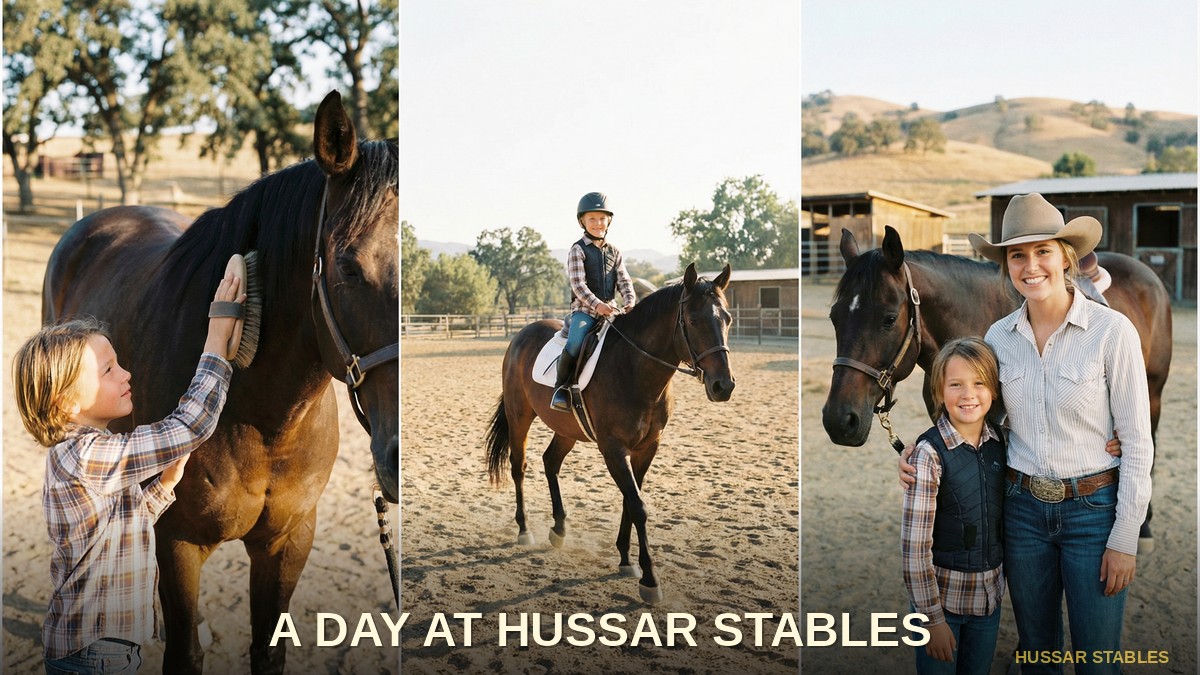
At Hussar Stables in Palmdale, CA, we train all Working Equitation obstacles as part of our structured curriculum. The drum is introduced at Level 5, after the horse and rider have established the obedience and independent seat that the obstacle requires. If you are working toward your first WE competition, our instructors can help you develop the skills to ride every obstacle with confidence.
[Book an Intro Lesson](/book) at Hussar Stables and begin your Working Equitation journey.
More in Working Equitation
Complete Guide to Working Equitation: Everything You Need to Know
18 min read
What is Working Equitation? A Beginner's Guide to the USA's Fastest-Growing Equestrian Sport
9 min read
Working Equitation vs. Dressage: Understanding the Key Differences
8 min read
The Essential Gear Guide for Working Equitation Beginners
7 min read
How to Choose the Right Horse Breed for Working Equitation
7 min read
Working Equitation Scoring Explained: How Judges Evaluate Your Ride
8 min read
Have a question?
Text us — we reply fast.
(661) 227-3214 · Hussar Stables, Palmdale CA
Ready to Experience This in Person?
Book a private Intro Lesson at Hussar Stables and discover why families from Palmdale, Lancaster, and Santa Clarita choose our members-only riding club.
Book Intro Lesson