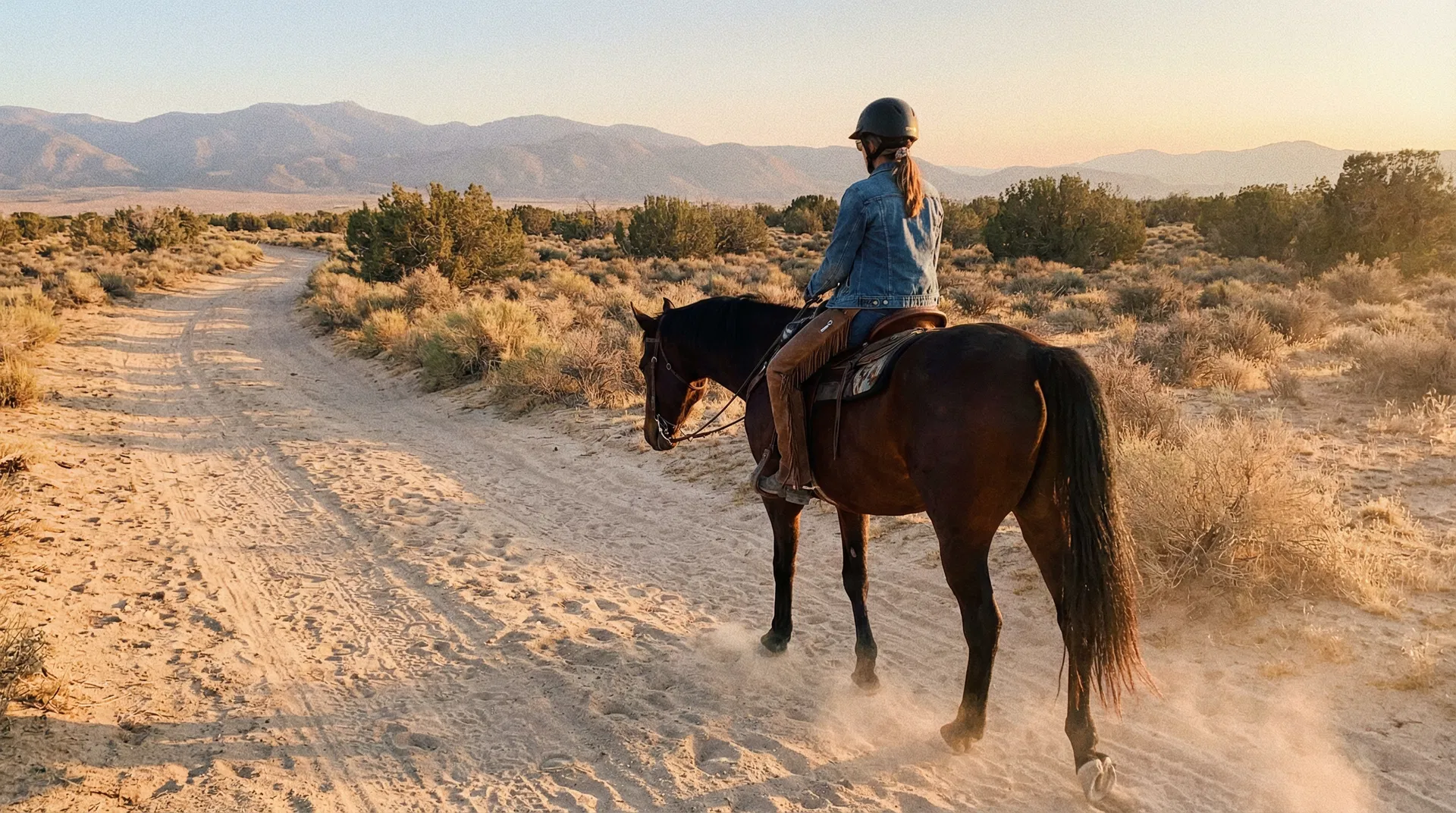
The short answer is yes — adults can absolutely learn to ride and compete, even starting from scratch. The longer answer involves understanding what the timeline looks like and which disciplines suit adult learners best.
# Can Adults Learn to Ride Horses Competitively? What You Need to Know
The question arrives in our inbox regularly, usually from someone in their 30s, 40s, or 50s who has always wanted to ride and is finally in a position to try. The question is always some version of the same thing: Is it too late? Can I actually get good enough to compete?
The short answer is yes. Adults can learn to ride horses, progress through a structured curriculum, and compete at a meaningful level — even starting from zero. The longer answer involves understanding what the realistic timeline looks like, which disciplines suit adult learners best, and what the competitive landscape actually looks like for adult amateurs.
Why Adults Learn Differently (Not Worse)
Adult learners bring genuine advantages to the arena. They have longer attention spans than children, better ability to process verbal instruction, stronger motivation (they are choosing to be there, not being dropped off by a parent), and a more developed capacity for self-reflection. When an instructor explains why a movement works — the biomechanics of the half-halt, the geometry of a correct circle — an adult can integrate that information in a way a seven-year-old cannot.
Continue Reading · Cost & Expectations
How Much Does Horseback Riding Cost? A Complete Guide to Pricing and Expectations
12 min read
The challenges are real but manageable. Adults tend to carry more tension in their bodies than children, particularly in the hips and lower back. Years of desk work, driving, and sedentary habits create postural patterns that conflict with the relaxed, following seat that riding requires. Adults are also more aware of risk, which can manifest as physical tension that the horse immediately feels and responds to.
Neither of these challenges is insurmountable. They are simply things to work on — and working on them, through riding, tends to improve them significantly.
The Realistic Timeline to Competition
The timeline from first lesson to first competition varies considerably based on how often you ride, the quality of your instruction, and which discipline you pursue. As a general framework:
| Milestone | Typical Timeline (2x/week lessons) |
Continue Reading · Cost & Expectations
What is a Half-Lease? A Parent's Guide to Horse Leasing in the Antelope Valley
7 min read
|---|---|
| Confident walk, trot, and canter | 3–6 months |
| Independent balance without holding saddle | 4–8 months |
| Basic lateral work (leg yield, turn on haunches) | 8–14 months |
Continue Reading · Cost & Expectations
The Difference Between English and Western Riding: Which is Right for Your Child?
7 min read
| First schooling show or club competition | 12–18 months |
| Consistent competition at entry level | 18–30 months |
| Intermediate competition | 3–5 years |
These timelines assume consistent lessons with a qualified instructor on appropriate horses. Riders who take lessons once a week will progress more slowly; riders who also lease or own a horse and ride between lessons will progress faster.
Continue Reading · Cost & Expectations
How Much Do Horseback Riding Lessons Cost in California? (2025 Breakdown)
6 min read
The key insight is that competition does not require perfection. Schooling shows and club-level competitions exist specifically for riders who are still learning. The purpose is not to win — it is to experience the pressure of performance, get feedback from judges, and measure your progress against an objective standard.
Which Disciplines Suit Adult Beginners?
Not all equestrian disciplines are equally accessible to adult beginners. Some require years of specialized training before competition is realistic; others have entry-level classes specifically designed for newer riders.
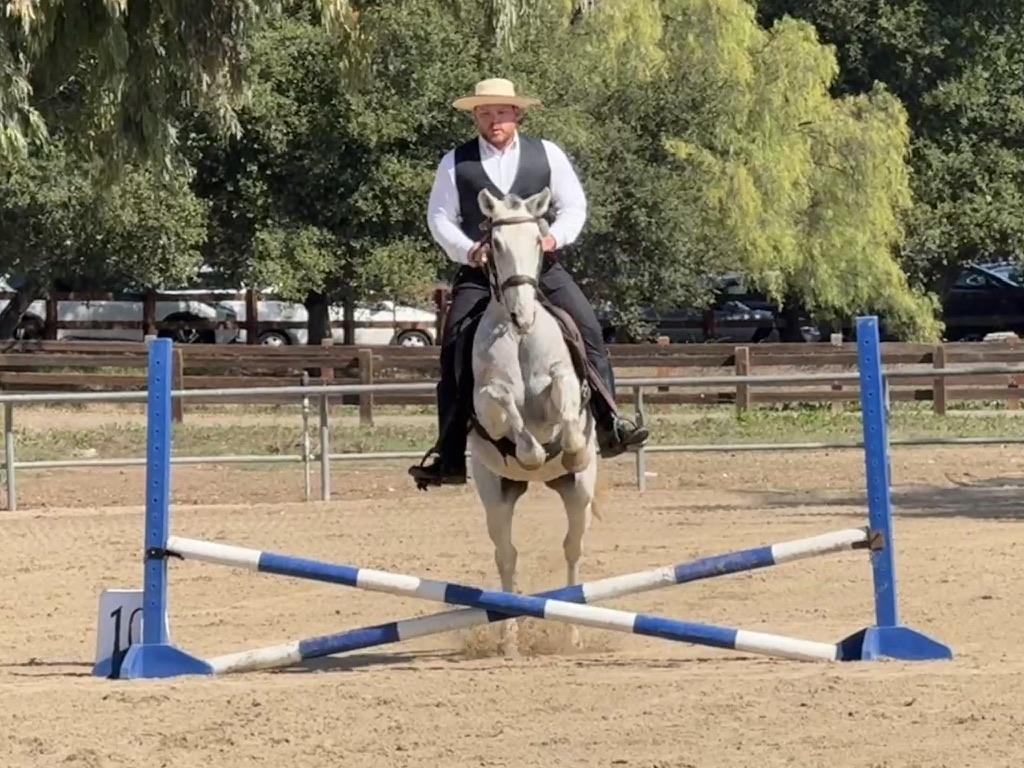
Working Equitation is particularly well-suited to adult beginners. The ease-of-handling phase — in which horse and rider navigate a course of obstacles at walk and trot — can be competed at a basic level within 12 to 18 months of starting lessons. The discipline rewards partnership and communication over athletic perfection, which plays to the adult learner's strengths. The community is welcoming, the judging is constructive, and the obstacles are genuinely fun to train.
Dressage is another excellent choice. The USDF Introductory Level tests are ridden entirely at walk and trot, with no canter required. They test basic rhythm, relaxation, and contact — skills that a dedicated adult beginner can develop within a year. The progression through Training Level, First Level, and beyond provides a clear ladder that many adult riders find deeply satisfying.
Continue Reading · Cost & Expectations
Is Horseback Riding Worth It? An Honest Cost-Benefit Analysis for Parents
7 min read
Trail and ranch riding competitions offer another accessible entry point. Classes are judged on the horse and rider's ability to navigate obstacles that simulate real-world trail conditions — bridges, water crossings, gate openings, backing through poles. The judging criteria are practical and the atmosphere is typically relaxed and encouraging.
Hunter/jumper is accessible at the lower levels but requires a longer runway before competition is realistic, as jumping introduces additional safety considerations and biomechanical demands that take time to develop safely.
The Role of the Right Program
The single most important factor in an adult's competitive development is the quality and structure of their training program. An adult beginner who rides twice a week in a structured curriculum with clear level progressions will outpace a rider who takes random lessons on whatever horse is available.
What to look for in a program for adult competitive development:
A structured curriculum with defined levels and measurable milestones. You should know what skills you are working on and what the criteria are for progressing to the next level. Vague instruction ("just feel it") is not useful for adult learners who benefit from explicit feedback.
Horses appropriate for your level. A horse that is too sensitive or too forward will undermine your confidence and slow your development. A horse that is too dull will not give you the feedback you need to develop feel. The right horse for a developing adult is calm, responsive, and forgiving — but not dead.
Exposure to competition before you feel ready. The first show is always more stressful than subsequent shows. A good program will prepare you for competition through mock tests, schooling shows, and in-lesson simulation so that the actual show feels familiar rather than foreign.
An instructor who competes or has competed. Theoretical knowledge of competition is not the same as experiential knowledge. An instructor who has stood in the warm-up ring, managed a nervous horse, and ridden a test under pressure can prepare you for those experiences in a way that someone who has only watched cannot.
What "Competing" Actually Means
It is worth being clear about what adult amateur competition looks like in practice. The vast majority of adult competitors are not professionals, not Olympians, and not riding horses worth six figures. They are people with jobs and families who ride two or three times a week, train with a local instructor, and compete at schooling shows and regional events for the pleasure of the challenge.
At this level, competition is about personal progress. A score of 62% on a Training Level dressage test is not a failure — it is a data point. The judge's comments tell you exactly what to work on. The next show, you aim for 64%. This is the rhythm of amateur competition, and it is genuinely satisfying in a way that recreational riding alone cannot replicate.
The riders who succeed at this level are not the most talented. They are the most consistent — the ones who show up twice a week, work on the feedback from their last show, and keep their expectations calibrated to their actual stage of development.
---
At Hussar Stables in Palmdale, CA, we have adult members at every stage of the competitive journey — from riders preparing for their first schooling show to members who have competed at regional Working Equitation events. Our curriculum is designed to take adult beginners from their first lesson to their first competition in a structured, supportive environment.
If you are an adult who has always wanted to ride — and maybe compete — the Intro Lesson is the right place to start.
[Book an Intro Lesson](/book) at Hussar Stables and find out where riding can take you.
More in Cost & Expectations
How Much Does Horseback Riding Cost? A Complete Guide to Pricing and Expectations
12 min read
What is a Half-Lease? A Parent's Guide to Horse Leasing in the Antelope Valley
7 min read
The Difference Between English and Western Riding: Which is Right for Your Child?
7 min read
How Much Do Horseback Riding Lessons Cost in California? (2025 Breakdown)
6 min read
Is Horseback Riding Worth It? An Honest Cost-Benefit Analysis for Parents
7 min read
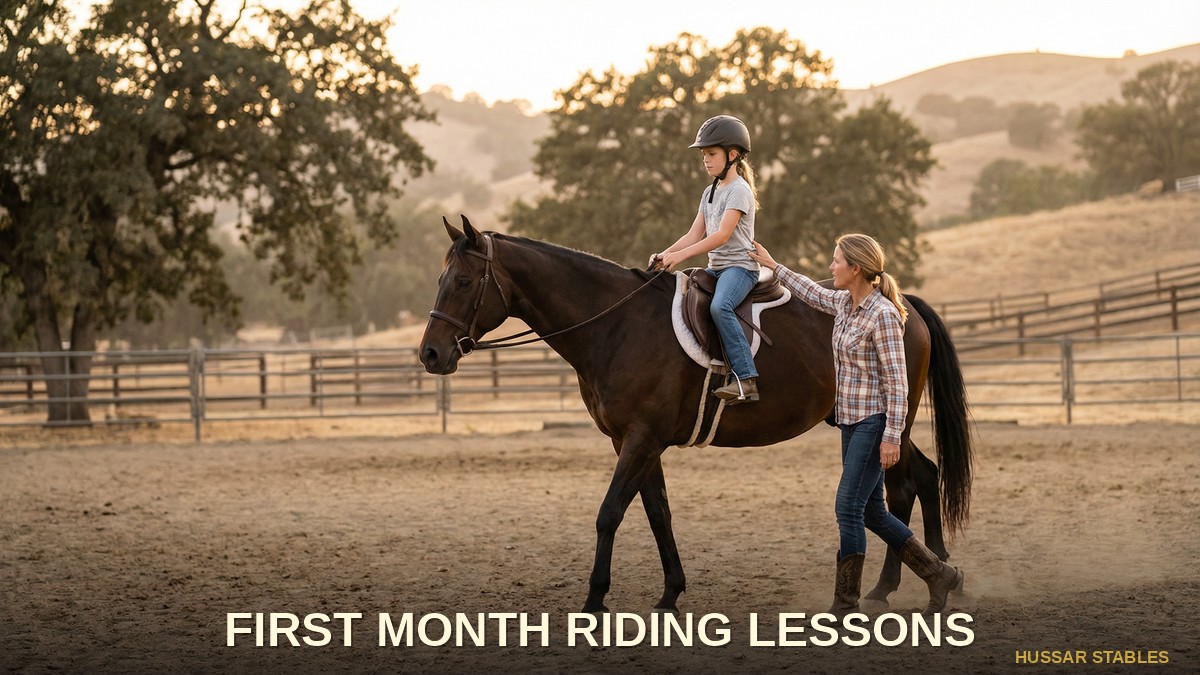
What to Expect in Your First Month of Riding Lessons
5 min read
Have a question?
Text us — we reply fast.
(661) 227-3214 · Hussar Stables, Palmdale CA
Ready to Experience This in Person?
Book a private Intro Lesson at Hussar Stables and discover why families from Palmdale, Lancaster, and Santa Clarita choose our members-only riding club.
Book Intro Lesson