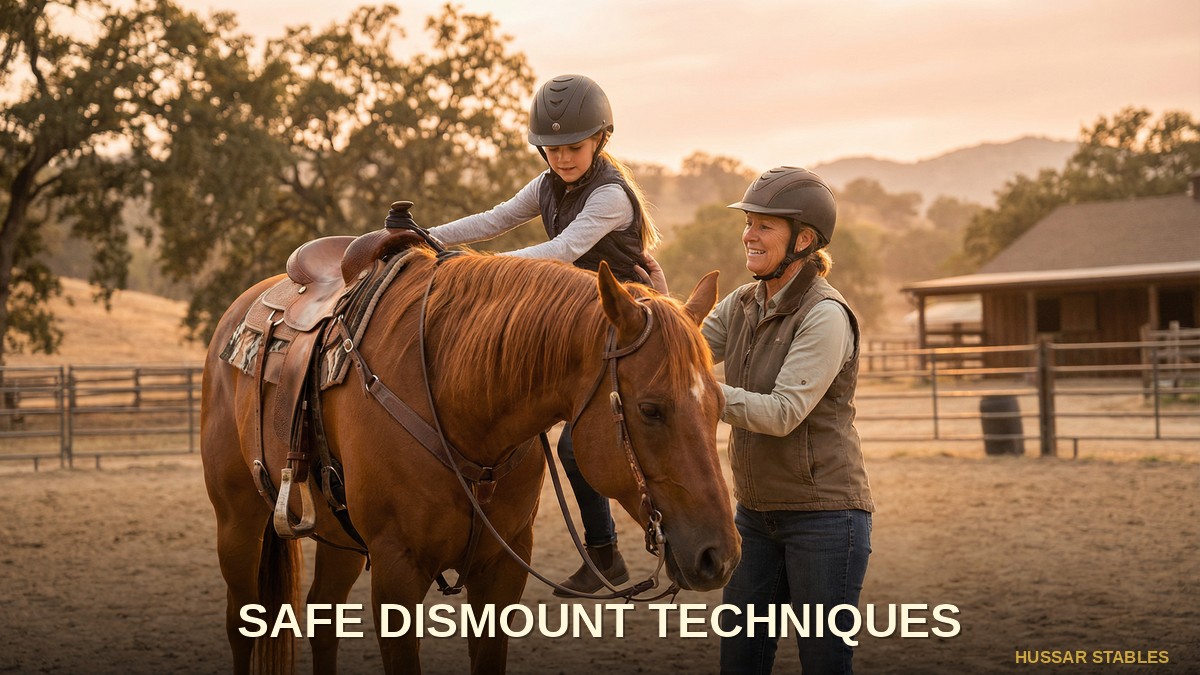
Falls happen in riding. The riders who get hurt are usually the ones who fight the fall. Here is how to fall correctly — and the emergency dismount technique that could save your life.
The safest way to fall off a horse is to tuck and roll — bring your chin to your chest, round your back, and roll away from the horse rather than trying to catch yourself with outstretched hands. The emergency dismount (a controlled bail-out) is a skill every rider should practice before they need it.
Every rider falls eventually. It is not a question of if — it is a question of when, and whether you are prepared.
The good news is that falling correctly is a learnable skill. Riders who know how to fall get hurt far less often than those who do not. And the emergency dismount — a controlled technique for getting off a horse that is about to do something dangerous — is a skill that can prevent falls entirely.
This guide covers both.
Why Most Riding Injuries Happen
The majority of riding injuries are not caused by dramatic falls at speed. They are caused by:
1. Instinctive reactions: When a rider feels themselves falling, the natural instinct is to reach out with their hands to catch themselves. This is how wrists and collarbones get broken.
2. Stiffening up: A tense body absorbs impact poorly. A relaxed body distributes it.
3. Fighting the fall: Trying to stay on a horse that is already falling or bucking often makes the situation worse.
The techniques below address all three of these factors.
How to Fall Correctly
If you feel yourself going off a horse and cannot stop it, do the following:
Step 1: Let go of the reins. This is counterintuitive, but holding on can pull you into the horse or cause you to land in a dangerous position.
Step 2: Tuck your chin to your chest. This protects your head and neck and initiates the rolling motion.
Step 3: Round your back. A rounded back distributes the impact across a larger surface area. A flat back concentrates it.
Step 4: Roll away from the horse. Land on your shoulder and roll, not on your hands or head. Roll away from the horse to avoid being stepped on.
Step 5: Stay still for a moment. After landing, take a breath before getting up. Assess whether anything hurts before putting weight on it.
This technique is taught in every structured riding program and is practiced at Hussar Stables as part of our safety curriculum.
The Emergency Dismount
The emergency dismount is a controlled technique for getting off a horse quickly when something goes wrong — the horse spooks, stumbles, or starts to bolt. It is not a fall; it is a deliberate, practiced movement.
How to perform an emergency dismount:
1. Remove both feet from the stirrups simultaneously
2. Lean forward slightly and place both hands on the horse's neck or mane
3. Swing both legs to one side (usually the left) and push off the saddle
4. Land on both feet, slightly bent knees, facing the direction of travel
5. Release the reins as you land and step away from the horse
This technique should be practiced at the walk until it is automatic. At Hussar Stables, we introduce the emergency dismount in the first few lessons and practice it regularly.
After a Fall: What to Do
If you or your child falls from a horse:
1. Do not get up immediately. Take a moment to assess. If there is any head, neck, or back pain, do not move — call for help.
2. Check the helmet. Any significant impact to a helmet means it should be replaced, even if it looks undamaged. The foam liner compresses on impact and does not recover.
3. Get back on (if appropriate). In most cases, getting back on the horse after a minor fall is the right thing to do — it prevents fear from taking hold. Your instructor will assess the situation and make this call.
The Most Important Safety Equipment
A certified equestrian helmet is your most important piece of safety equipment. It should be:
- ASTM/SEI certified (look for the sticker inside)
- Properly fitted — it should not move when you shake your head
- Replaced after any significant impact, even if it looks undamaged
- Replaced every 5 years regardless of use (the foam degrades over time)
At Hussar Stables, we provide certified helmets for every Intro Lesson. We also offer guidance on purchasing your own helmet as you progress in the program.
Falls are part of riding. But with the right preparation, the right equipment, and the right program, they do not have to be dangerous.
- Never try to catch yourself with outstretched hands — this is the most common cause of wrist and collarbone fractures in falls
- Tuck your chin to your chest and round your back to distribute impact across your back and shoulder
- Roll away from the horse, not toward it
- The emergency dismount is a controlled technique that should be practiced at the walk before it is needed at speed
- A certified helmet is your most important protection — replace it after any significant impact
Have a question?
Text us — we reply fast.
(661) 227-3214 · Hussar Stables, Palmdale CA
Ready to Experience This in Person?
Book a private Intro Lesson at Hussar Stables and discover why families from Palmdale, Lancaster, and Santa Clarita choose our members-only riding club.
Book Intro Lesson