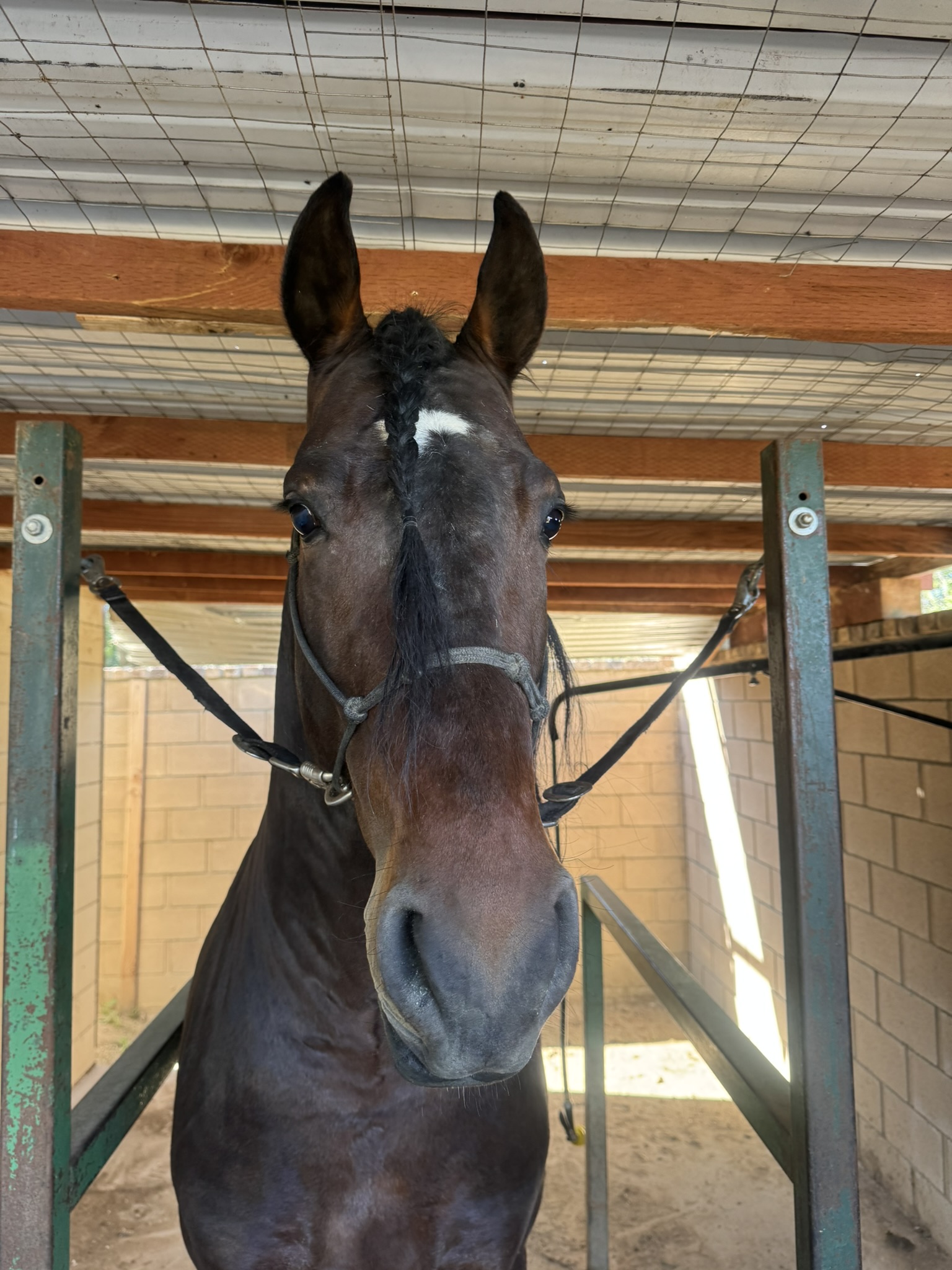
Most discussions of rider posture focus on what it means for the rider. But the horse is carrying the rider — and bad posture has measurable physical consequences for the horse. Here is what the research shows.
# What Happens to a Horse When a Rider Has Bad Posture?
Most discussions of rider posture focus on the rider: how it affects their balance, their aids, their ability to communicate with the horse. These are important considerations. But the horse is the one carrying the rider — and bad posture has real, measurable physical consequences for the animal beneath you.
Understanding what happens to a horse when a rider sits poorly is one of the most compelling arguments for taking position seriously. It reframes posture not as an aesthetic concern or a competitive requirement, but as a matter of basic horsemanship and welfare.
The Horse's Back Is the Foundation
The horse's back is a complex structure of vertebrae, ligaments, muscles, and connective tissue that must simultaneously support the rider's weight and generate the propulsive power of the hindquarters. The longissimus dorsi — the long muscle running along either side of the spine — is the primary load-bearing muscle of the back, and it is also the muscle most directly affected by how the rider sits.
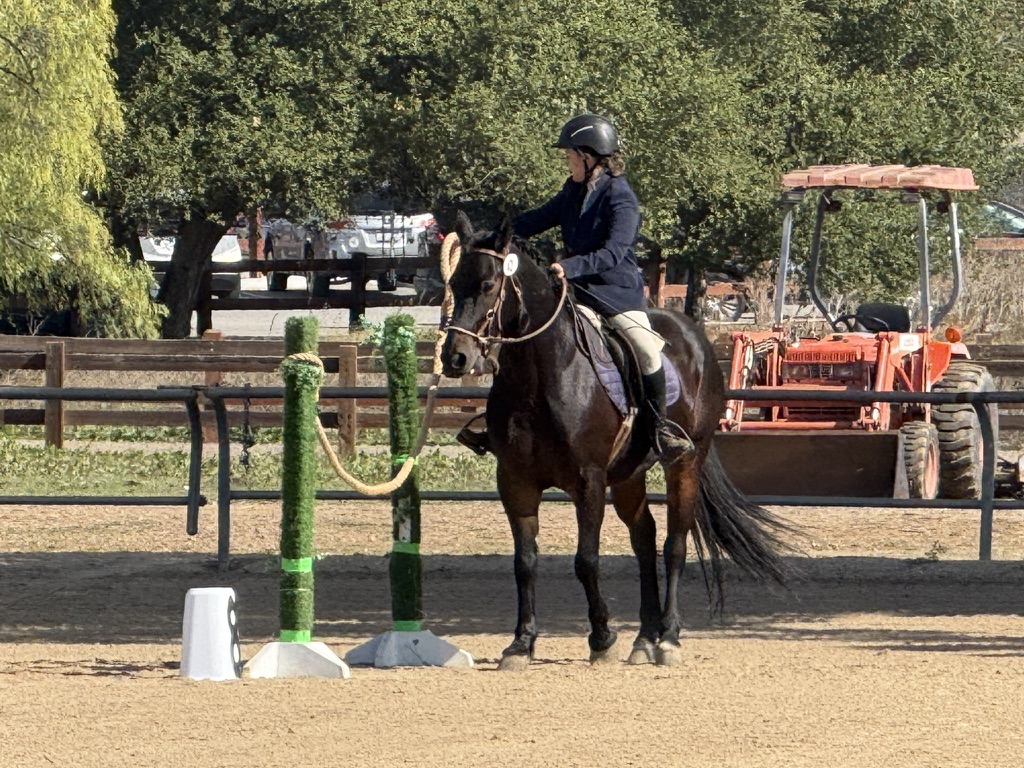
Continue Reading · Riding Technique
Riding Technique: The Complete Guide to Learning and Progressing as an Equestrian
16 min read
When a rider sits in balance, their weight is distributed evenly across the horse's back, their pelvis follows the horse's movement, and the longissimus dorsi can function freely. When a rider sits out of balance — collapsed to one side, tipped forward, braced against the movement, or gripping with the legs — the load on the horse's back becomes uneven and the muscle's ability to function is compromised.
The Consequences of Specific Postural Faults
Collapsing to one side. When a rider habitually collapses through one hip — dropping one shoulder, weighting one seat bone more heavily than the other — the horse compensates by shifting its own balance to accommodate the asymmetry. Over time, this can cause uneven muscular development, stiffness on one rein, and resistance to lateral work on the affected side. Research using pressure-mapping saddle pads has documented significant asymmetries in pressure distribution in riders who appear visually balanced but have subtle weight-bearing differences.
Tipping forward (chair seat or fork seat). A rider who tips forward places excess weight on the horse's forehand — the shoulders and front legs. The horse's natural balance is already slightly forehand-heavy; a rider who adds to this load makes it harder for the horse to engage its hindquarters, collect, or move with impulsion. Horses carrying forward-tipped riders often become heavy in the contact, flat in their movement, and resistant to upward transitions. They are not being difficult — they are responding accurately to the load they are carrying.
Bracing and gripping. A rider who braces against the horse's movement — stiffening the lower back, gripping with the thigh or knee, pushing against the stirrups — transmits that tension directly into the horse's back. The horse's back cannot swing freely if the rider's back is rigid. The result is a shortened, choppy stride, tension through the topline, and a horse that may hollow its back to escape the discomfort. Hollowing — raising the head and neck while dropping the back — is one of the most common signs that a horse is uncomfortable with its rider.
Continue Reading · Riding Technique
Mastering the Bridge: A Step-by-Step Guide to Working Equitation Obstacles
8 min read
Sitting behind the vertical. A rider who sits behind the vertical — leaning back with the lower leg pushed forward — creates a driving seat that pushes the horse forward and down. This can be useful as a deliberate aid, but as a habitual posture it overloads the horse's hindquarters, creates tension in the lumbar region, and makes it difficult for the horse to carry itself in balance.
What the Research Shows
Studies using pressure-mapping technology and surface electromyography (EMG) have documented the relationship between rider posture and horse movement with increasing precision over the past two decades. Key findings include:
A 2013 study published in the Veterinary Journal found that horses ridden by less experienced riders — who tend to have more postural instability — showed significantly higher activation of the longissimus dorsi muscle compared to horses ridden by experienced riders. Higher muscle activation indicates greater effort to stabilize against the rider's movement.
Research from the Swedish University of Agricultural Sciences has documented that asymmetric rider posture produces asymmetric pressure on the horse's back, with the higher-pressure side corresponding to the side toward which the rider collapses. These pressure asymmetries are associated with back pain and behavioral resistance in horses.
Continue Reading · Riding Technique
How Alta Escuela Principles Build Better Riders (Even if You Never Compete)
7 min read
A 2015 study in the Journal of Veterinary Behavior found that horses ridden by riders with poor posture showed more behavioral indicators of discomfort — tail swishing, ear pinning, head tossing — than horses ridden by riders with correct posture, even when the same horses were used across both conditions.
What This Means for Riders
The practical implication is straightforward: improving your posture is not just about riding better. It is about being a better partner to your horse.
This does not mean that every rider must be perfect before they can ride. Horses are remarkably tolerant and adaptable, and a good lesson horse is specifically selected and trained to work with riders at all levels. But it does mean that taking posture seriously — working on core stability, seeking regular instruction, being honest about your asymmetries — is an act of respect for the animal you are riding.
The riders who make the fastest progress are almost always the ones who approach their own position with genuine curiosity rather than defensiveness. They want to know what they are doing to the horse, because they care about the horse.
Continue Reading · Riding Technique
Why Unmounted Horsemanship is Just as Important as Riding
6 min read
Common Signs That a Horse Is Compensating for Rider Posture
| Sign | Possible Postural Cause |
|---|---|
| Stiff on one rein | Rider collapsing to one side |
| Heavy in the contact | Rider tipping forward onto forehand |
Continue Reading · Riding Technique
How to Prepare Your Horse for the Working Equitation Speed Trial
8 min read
| Short, choppy stride | Rider bracing or gripping |
| Hollowing the back | Rider tension transmitted through seat |
| Resistance to collection | Rider sitting behind vertical, driving seat |
| Uneven muscular development | Chronic postural asymmetry |
None of these signs is definitive — there are many possible causes for each. But when a horse shows consistent behavioral or movement patterns, rider posture is always worth examining as a contributing factor.
---
At Hussar Stables in Palmdale, CA, we teach posture as a welfare issue, not just a technique issue. Our instructors are trained to observe both horse and rider and to identify when a rider's position is affecting the horse's comfort and movement.
[Book an Intro Lesson](/book) at Hussar Stables and ride with instructors who care about both sides of the partnership.
More in Riding Technique
Riding Technique: The Complete Guide to Learning and Progressing as an Equestrian
16 min read
Mastering the Bridge: A Step-by-Step Guide to Working Equitation Obstacles
8 min read
How Alta Escuela Principles Build Better Riders (Even if You Never Compete)
7 min read
Why Unmounted Horsemanship is Just as Important as Riding
6 min read
How to Prepare Your Horse for the Working Equitation Speed Trial
8 min read
Classical vs. Modern Dressage: What Every Rider Should Know
5 min read
Have a question?
Text us — we reply fast.
(661) 227-3214 · Hussar Stables, Palmdale CA
Ready to Experience This in Person?
Book a private Intro Lesson at Hussar Stables and discover why families from Palmdale, Lancaster, and Santa Clarita choose our members-only riding club.
Book Intro Lesson