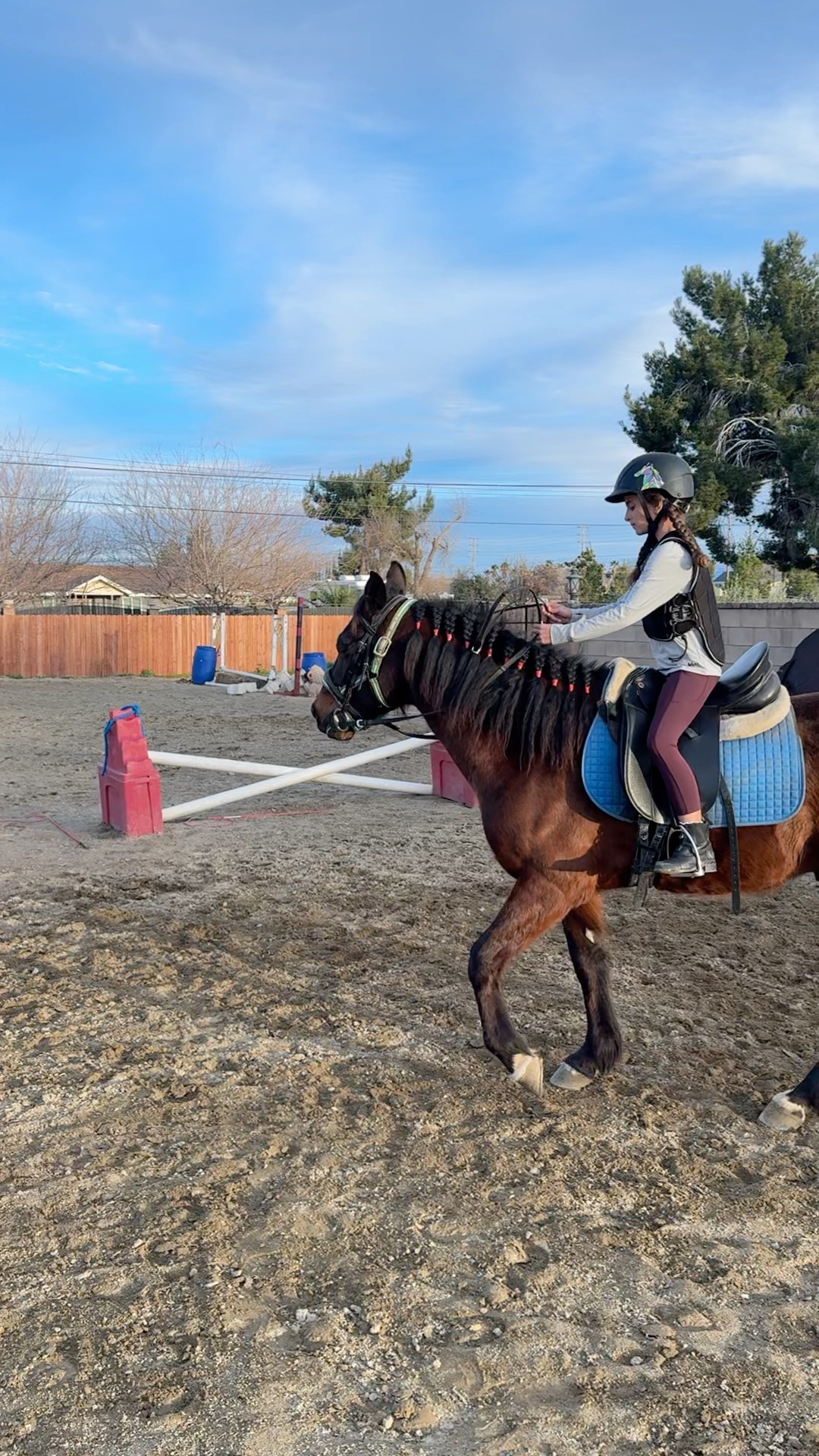
A comprehensive guide to horseback riding safety: the right equipment, how to evaluate a safe riding school, what to expect from a safe lesson horse, and how to minimize risk.
Horseback riding is a safe sport when practiced in a structured environment with proper equipment, qualified instructors, and well-trained lesson horses. The most important safety factors are wearing an ASTM-certified helmet, riding horses appropriate for your skill level, and learning in a program with a defined safety curriculum.
Horseback riding is often perceived as a dangerous sport. Like any activity involving large animals, it carries inherent risk. But the vast majority of riding accidents are preventable — and the factors that prevent them are well understood.
This guide covers everything you need to know to ride safely: the right equipment, how to evaluate a safe riding school, what makes a lesson horse safe, and the habits that separate riders who stay safe from those who get hurt.
The Essential Safety Equipment
The Helmet
An ASTM/SEI-certified equestrian helmet is non-negotiable. Period.
A bicycle helmet is not an acceptable substitute. Equestrian helmets are specifically engineered to protect against the impact angles and forces generated by falls from horses — which are different from the forces generated by bicycle accidents.
When choosing a helmet, look for the ASTM F1163 certification stamp inside. The helmet should fit snugly without being painful, and it should not rock forward or backward when you shake your head. Replace any helmet that has been involved in a fall, even if it looks undamaged.
Boots
You need a boot with a smooth sole and a heel of at least one inch. The heel serves a critical safety function: it prevents your foot from sliding all the way through the stirrup. If your foot slides through and you fall, your foot can become trapped in the stirrup — a situation that can be fatal.
Cowboy boots, paddock boots, and tall riding boots all meet this requirement. Sneakers, sandals, and boots with thick lug soles do not.
Additional Protective Gear
For beginners and children, a safety vest (body protector) adds an additional layer of protection for the torso and spine. While not required for most lesson programs, it is worth considering for riders who are jumping or working with young horses.
What Makes a Lesson Horse Safe?
The lesson horse is the single most important safety factor in a beginner's riding experience. Here is what to look for:
Age and experience. A safe lesson horse is typically 10 years or older, with extensive experience carrying unbalanced, nervous beginners. Young horses — even well-trained ones — are not appropriate for beginners.
Temperament. A safe lesson horse is calm, patient, and forgiving. It should not spook at normal barn sounds, react dramatically to unbalanced riders, or show signs of anxiety or aggression.
Health and soundness. A horse in pain is an unpredictable horse. Lesson horses should be regularly evaluated by a veterinarian and farrier, and should move freely and comfortably.
Training. A safe lesson horse has been trained to respond to clear, consistent aids and to ignore the inconsistent, accidental aids that beginners inevitably give.
At Hussar Stables, our lesson horses are carefully selected and maintained to the highest standards. We do not use horses that are too young, too reactive, or too tired to provide a safe learning environment.
How to Evaluate a Safe Riding School
When you visit a riding school for the first time, here is what to look for:
A calm, organized environment. The barn should be clean and orderly. Horses should look relaxed in their stalls or paddocks. Instructors should be speaking calmly to their students.
Helmets provided or required. Any reputable school will either provide helmets or require that students bring their own certified helmet.
Small class sizes. A beginner in a group of six riders is not getting the safety supervision they need. Look for private or semi-private lessons, especially at the beginning.
Structured curriculum. A school with a defined, progressive curriculum is safer than one that puts beginners on horses and hopes for the best.
Unmounted instruction. Programs that teach students how to handle horses on the ground — grooming, leading, reading body language — produce safer riders.
The Role of Unmounted Horsemanship in Safety
One of the most underappreciated aspects of riding safety is what happens before you get in the saddle.
Understanding how horses think and communicate is the foundation of safe horsemanship. Horses are prey animals. They are wired to flee from perceived threats. A rider who understands this — who knows how to approach a horse calmly, read its ear position and body tension, and respond appropriately — is dramatically safer than one who does not.
At Hussar Stables, every membership tier includes unmounted horsemanship lessons. We believe this is non-negotiable for safety and for developing riders who are truly capable equestrians.
Frequently Asked Questions
Is horseback riding more dangerous than other sports? Studies suggest that horseback riding has a similar injury rate to sports like skiing and cycling. The risk is manageable with proper equipment, instruction, and appropriate horses.
What is the most common cause of riding accidents? Falls are the most common cause of injury. Most falls are caused by rider error (loss of balance), horse behavior (spooking), or equipment failure. All three are significantly reduced by proper training and equipment.
Should my child wear a body protector? For beginners and children, a body protector is a worthwhile addition to the standard helmet and boots. It is particularly recommended for jumping or working with young horses.
Your Next Step
Safety is the foundation of everything we do at Hussar Stables. Our structured curriculum, carefully selected lesson horses, and mandatory unmounted horsemanship program are all designed to minimize risk and maximize confidence.
Experience the difference for yourself. Book a private Intro Lesson at Hussar Stables in Palmdale, CA.
- Always wear an ASTM/SEI-certified equestrian helmet — not a bicycle helmet
- Boots with a 1-inch heel prevent the foot from sliding through the stirrup
- A calm, experienced lesson horse is the single most important safety factor
- Unmounted horsemanship — learning to read horse body language — dramatically reduces risk
- Small class sizes allow instructors to monitor and correct safety issues in real time
- A structured curriculum with progressive skill levels is safer than drop-in lessons
Have a question?
Text us — we reply fast.
(661) 227-3214 · Hussar Stables, Palmdale CA
Ready to Experience This in Person?
Book a private Intro Lesson at Hussar Stables and discover why families from Palmdale, Lancaster, and Santa Clarita choose our members-only riding club.
Book Intro Lesson