Parents ask this question constantly: when is my child ready for riding lessons? The answer depends less on age and more on three specific readiness factors. Here is what to look for.
Most children are ready for structured horseback riding lessons between ages 6 and 8. The key is not the number — it is whether the child can follow multi-step instructions, maintain focus for 30 to 45 minutes, and manage their own fear response. Some confident, attentive 5-year-olds are ready. Some 9-year-olds are not. Readiness matters more than age.
Every parent with a horse-obsessed child eventually asks the same question: Is my kid ready for real riding lessons?
It is a good question, and the honest answer is more nuanced than most riding schools will tell you. Age is a starting point. But readiness — genuine readiness — is about three specific things that have nothing to do with the number of candles on the birthday cake.
Here is what you actually need to know.
The Age Question: What the Numbers Mean
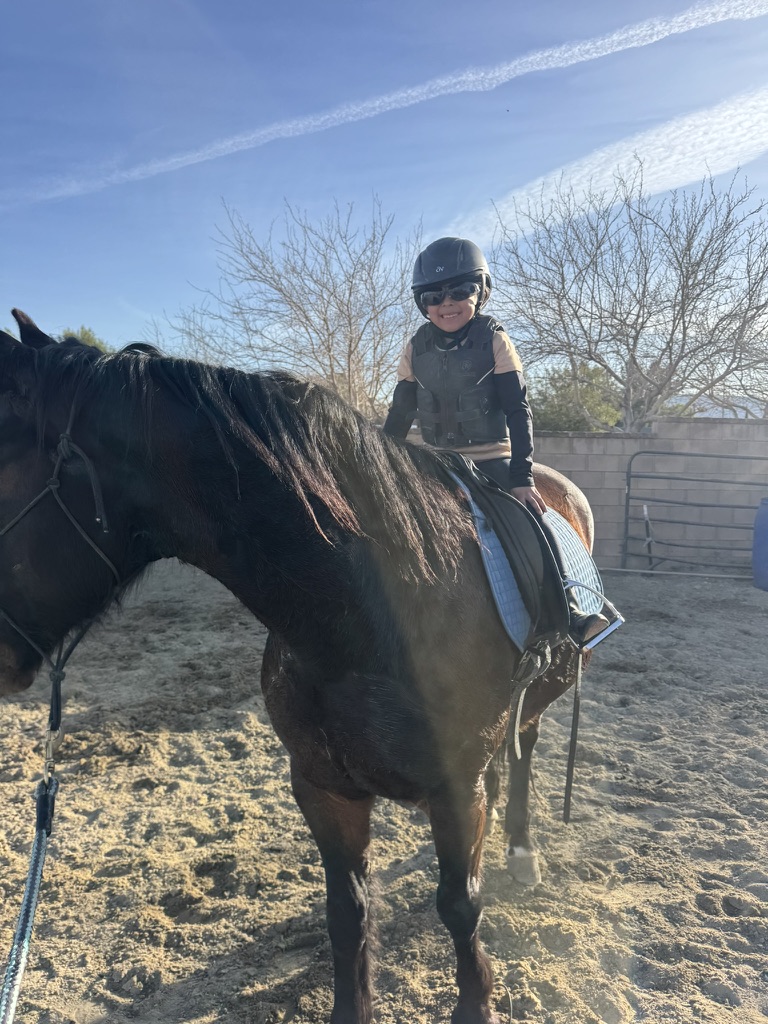
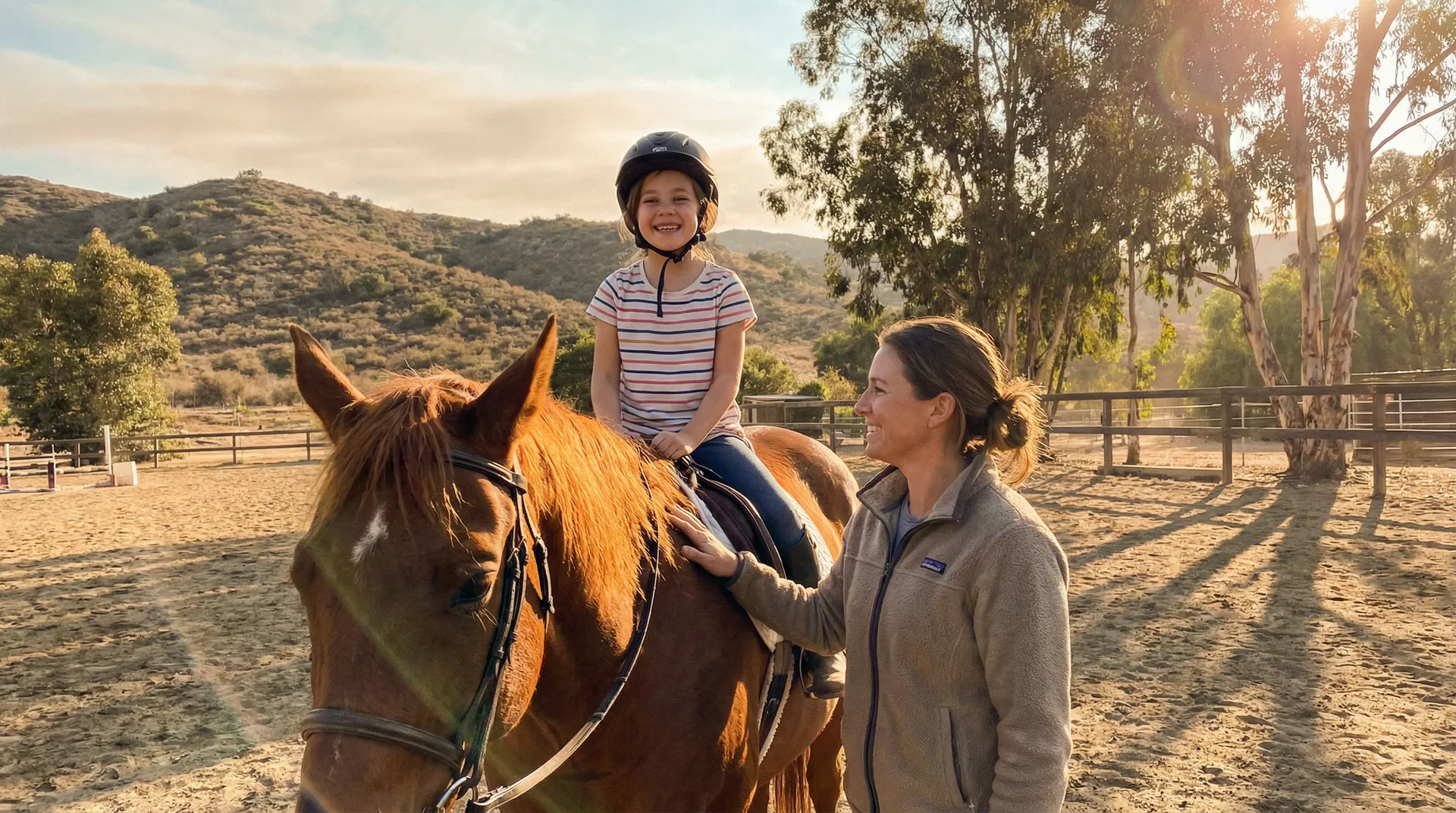
Most reputable riding programs accept children starting at age 6 or 7 for structured lessons. This is not arbitrary. It reflects the developmental stage at which most children can:
Continue Reading · Kids & Families
Complete Guide to Horseback Riding for Kids: What Every Parent Needs to Know
14 min read
- Follow a multi-step instruction without losing track of the first step
- Maintain focus on a task for 30 to 45 minutes
- Understand and respond to safety rules consistently
- Manage a fear or startle response without completely shutting down
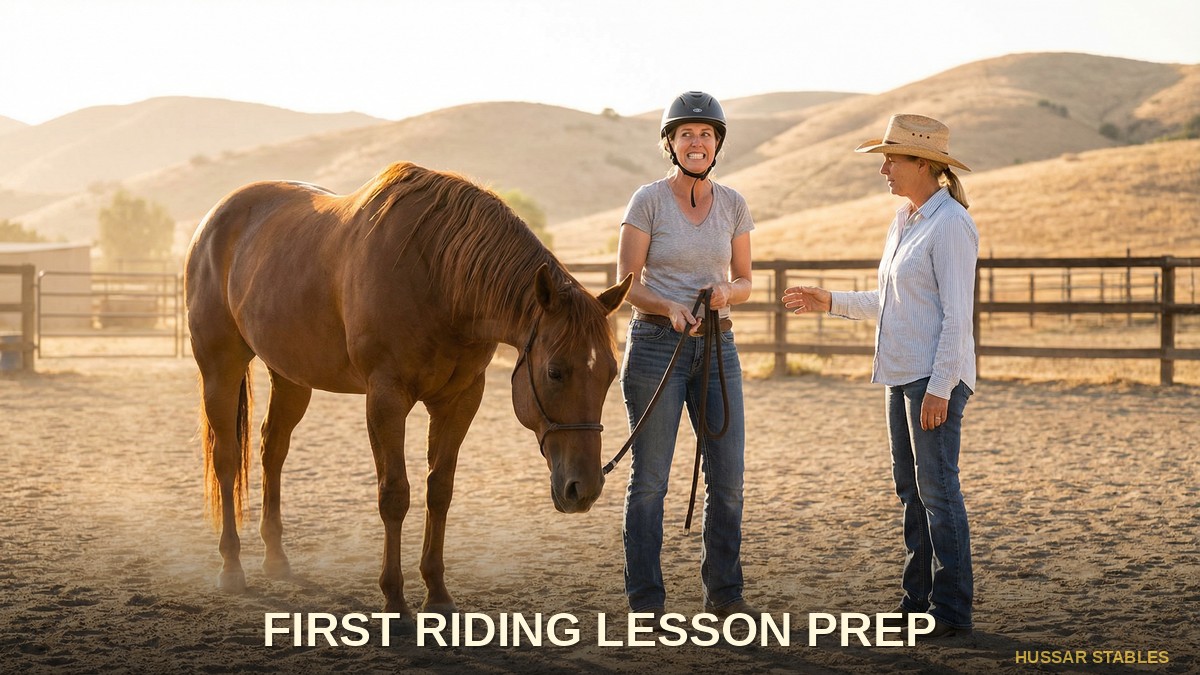
Continue Reading · Kids & Families
How to Prepare Your Child for Their First Riding Lesson
5 min read
These are the practical requirements of a riding lesson. A child who cannot follow a three-step instruction — shorten your reins, sit up straight, look where you are going — is not going to make safe, productive progress on a horse, regardless of how much they love horses.
That said, age 6 is a guideline, not a rule. Some children are genuinely ready at 5. Others are not ready until 8 or 9. The question is not how old is my child but can my child do these things.
What About Younger Children?
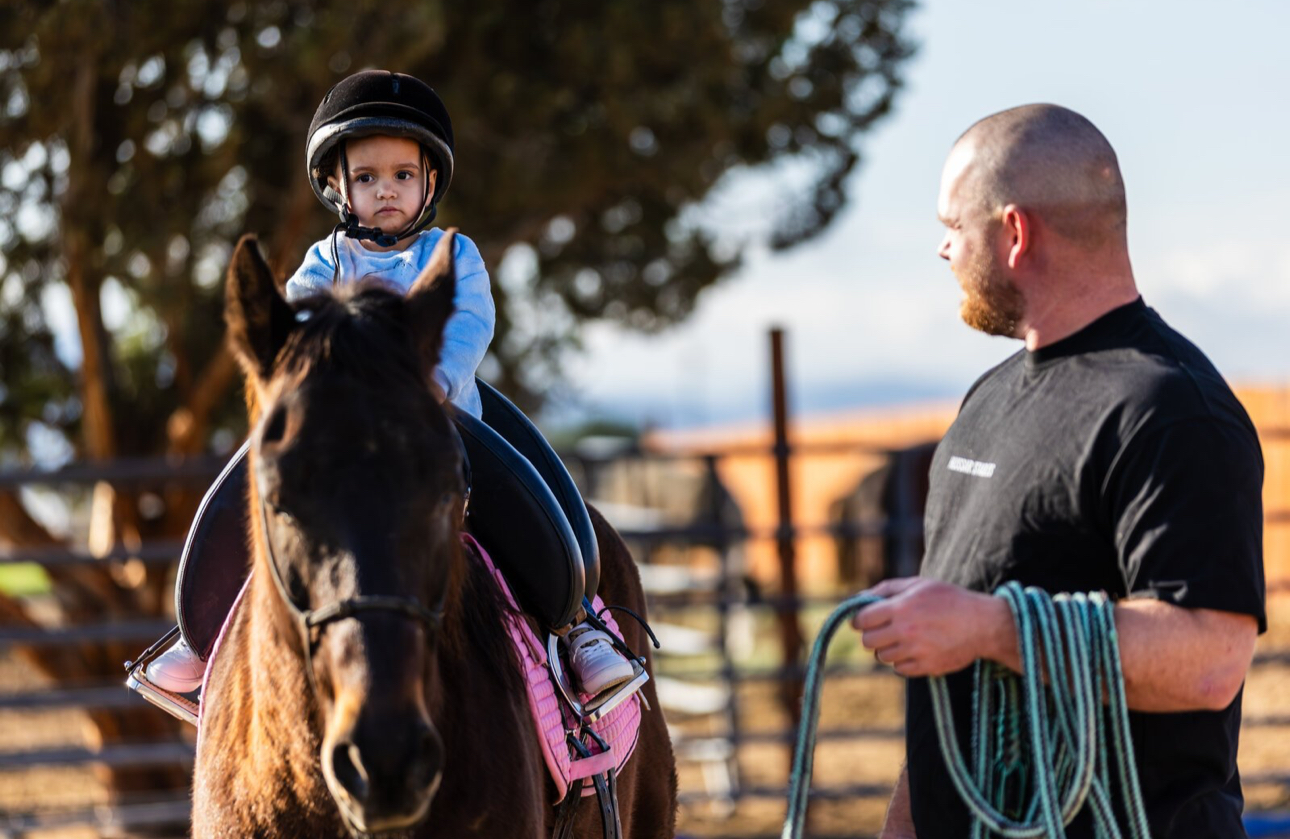
Children under 5 or 6 can absolutely be around horses. Pony rides, led walks, and supervised grooming sessions are wonderful experiences for young children. They build comfort around large animals, introduce the smell and feel of horses, and plant the seed of a lifelong passion.
But these are not riding lessons. They are introductions. A led pony ride does not teach a child to ride any more than sitting in a shopping cart teaches a child to drive.
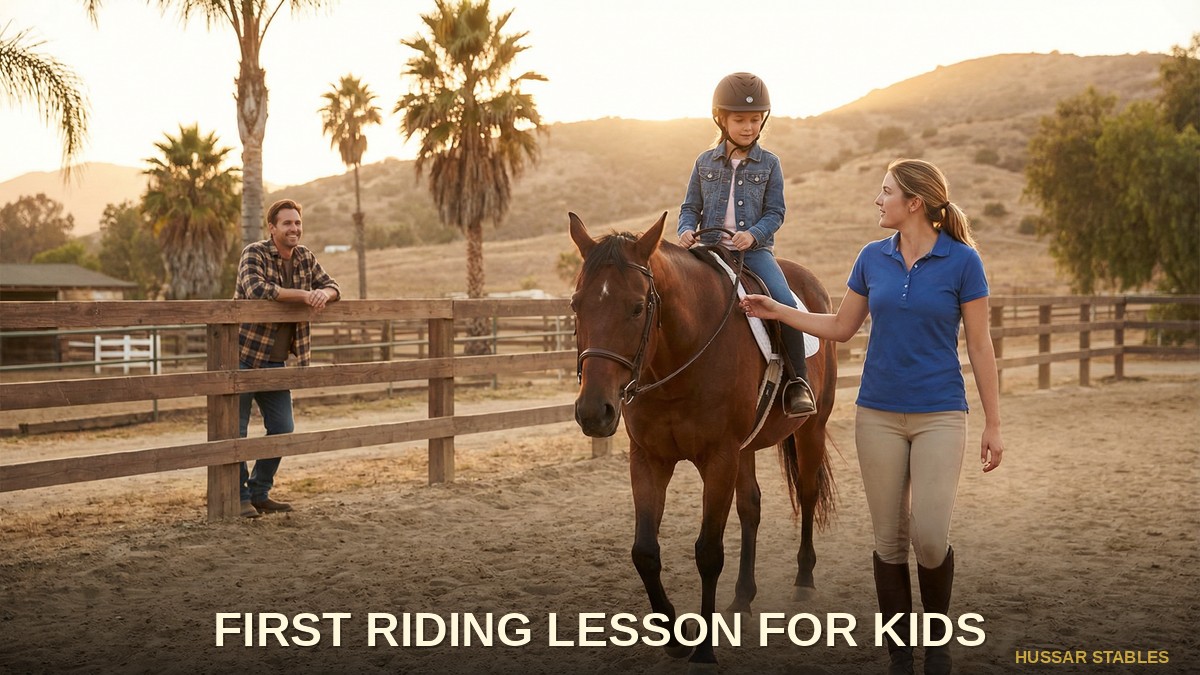
Continue Reading · Kids & Families
The Ultimate Guide to Horseback Riding Lessons for Kids in the Antelope Valley
7 min read
The distinction matters because parents sometimes assume that because their 4-year-old has been on pony rides, they are ready for lessons. The skills are different. Lessons require active participation — the child must apply aids, maintain position, and respond to the horse's movement. That requires a level of cognitive and physical coordination that most children under 6 have not yet developed.
If your child is under 6 and passionate about horses, the best thing you can do is keep them around horses in low-pressure ways. Let them watch lessons. Let them help groom. Let them sit on a horse while you hold the lead rope. Build the relationship. The lessons will come.
The Three Readiness Factors
Rather than asking what age, ask these three questions:
1. Can my child follow multi-step instructions?
Riding requires the simultaneous coordination of multiple aids: leg position, seat, hands, eyes, balance. An instructor cannot teach these one at a time in isolation — they have to be combined. A child who can only hold one instruction in mind at a time will struggle to make progress and may become frustrated.
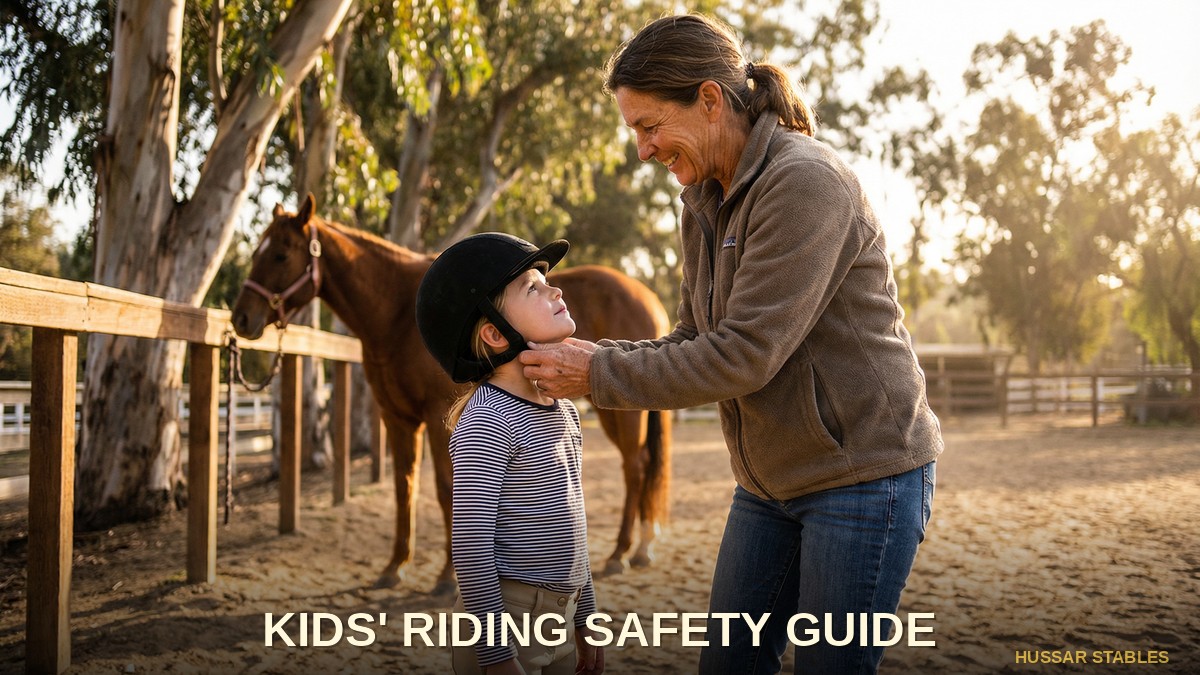
Continue Reading · Safety
Is Horseback Riding Dangerous for Kids? An Honest Safety Guide for Parents
7 min read
A simple test: ask your child to do three things in sequence — go to the kitchen, get a glass of water, and bring it back without spilling it. If they can do this reliably, they can probably follow riding instructions.
2. Can my child manage fear without shutting down?
Horses are large, unpredictable, and occasionally startling. A horse that sneezes, shakes its head, or takes a quick step sideways can frighten a child who is not prepared for it. A child who freezes completely, cries inconsolably, or refuses to re-engage after a scare is not yet ready for lessons — not because they are weak, but because they need more time around horses in low-pressure situations before the demands of a lesson are appropriate.
This is not a criticism of the child. It is a developmental reality. The goal is to set the child up for success, not to push them into a situation that overwhelms them.
3. Does my child actually want to ride?
This sounds obvious, but it is frequently overlooked. Some children love horses from a distance — they love the idea of horses, the books about horses, the toy horses — but are genuinely frightened when they are near a real one. That is fine. It is common. And it means they need more exposure before lessons, not lessons themselves.
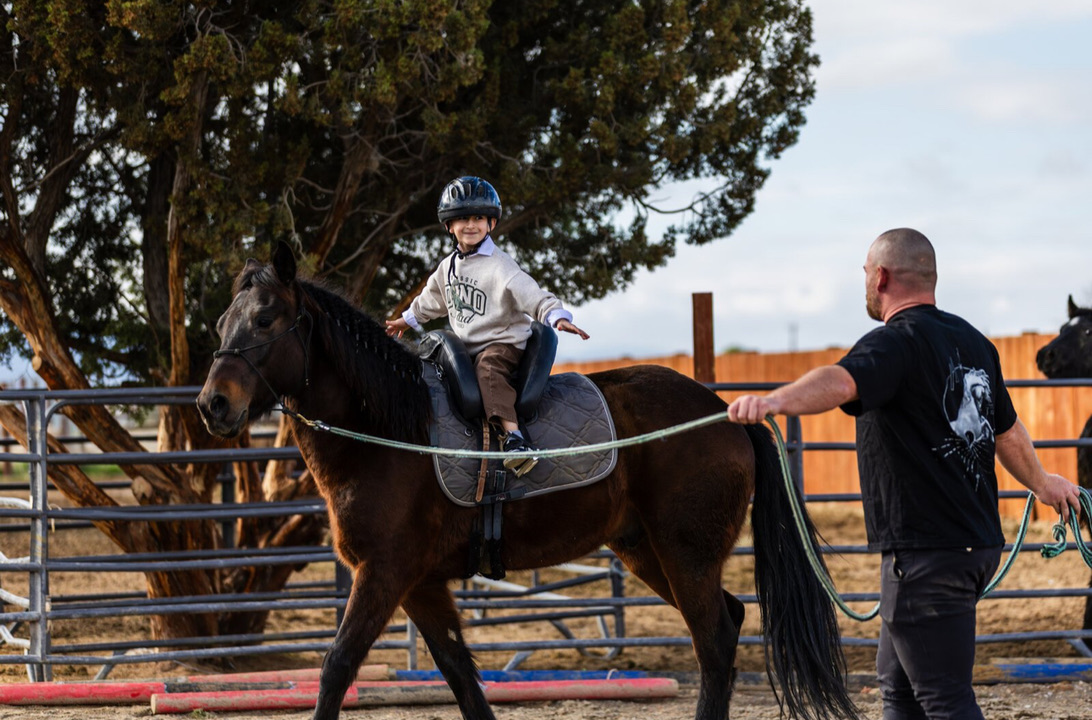
Continue Reading · Kids & Families
How Horseback Riding Builds Confidence in Children with Anxiety
9 min read
Lessons work best when the child is intrinsically motivated. A child who is there because they want to be there will push through the hard parts. A child who is there because a parent signed them up will not.
What to Expect at Different Ages
Ages 6-7: Short attention spans mean lessons should be 30-45 minutes maximum. Private lessons are essential — group lessons are too distracting. Focus is on basic position, walking, and simple steering. Progress is slow but the foundation is solid.
Ages 8-10: This is often the sweet spot. Children this age have longer attention spans, better body awareness, and enough confidence to push through the uncomfortable parts of learning. They can begin trotting and basic cantering within a few months of consistent lessons.
Ages 11-13: Pre-teens can progress quickly when they are motivated. They understand the theory, they can self-correct, and they have the physical strength to develop an independent seat. This is also the age when peer pressure and self-consciousness can become factors — a supportive, non-competitive environment matters.
Ages 14+: Teenagers who start riding are often highly motivated and progress quickly. They have adult-level cognitive ability and can absorb complex instruction. The challenge is the same as for adult beginners: physical tension and self-consciousness. But motivated teenagers can move from beginner to intermediate within a year of consistent lessons.
Choosing the Right Program
The age question is only half of the equation. The other half is the program.
A 7-year-old in the right program will progress faster and more safely than a 10-year-old in the wrong one. What makes a program right for young children:
Calm, experienced horses. Young children make unpredictable movements, drop their reins, and occasionally grab the saddle. The horse needs to tolerate this without reacting. Not every horse can do this. The best lesson horses for children are specifically trained for it.
Private or semi-private instruction. Group lessons for young beginners are chaotic. The instructor cannot watch every child simultaneously, and children distract each other. Private lessons allow the instructor to focus entirely on your child's position, confidence, and progress.
A structured curriculum. Your child should be working toward something measurable — not just being led around the arena. A good program has clear levels, clear goals, and a clear path from beginner to independent rider.
An instructor who is good with children. This is different from being a good rider. A good children's instructor is patient, encouraging, and knows how to make a nervous child feel safe without removing the challenge.
At Hussar Stables in Palmdale, CA, we work with children starting at age 6. Our Intro Lesson is designed to be a genuine first step — not a pony ride, but a real introduction to horsemanship. We teach children to groom, to lead, and to ride with correct position from the very first session.
If your child is ready — or if you are not sure yet — the Intro Lesson is the right place to find out.
[Book an Intro Lesson](/book) for your child at Hussar Stables and see where it leads.
- Most children are ready for structured lessons between ages 6 and 8
- Readiness is about attention span and instruction-following, not just age
- Pony rides and led walks are appropriate for ages 3-5; structured lessons are different
- Private lessons are essential for young beginners — group lessons are too distracting
- The right program matters as much as the right age
- Children who start with good fundamentals progress faster and stay safer
More in Kids & Families
Complete Guide to Horseback Riding for Kids: What Every Parent Needs to Know
14 min read
The Ultimate Guide to Horseback Riding Lessons for Kids in the Antelope Valley
7 min read
Why We Don't Do Drop-In Lessons: The Benefits of a Riding Club Membership
6 min read
Meet the Lesson Horses of Hussar Stables: Safe, Calm, and Ready to Teach
6 min read
How to Prepare Your Child for Their First Riding Lesson
5 min read
Horse Care 101: What Every New Equestrian Parent Needs to Know
7 min read
Have a question?
Text us — we reply fast.
(661) 227-3214 · Hussar Stables, Palmdale CA
Ready to Experience This in Person?
Book a private Intro Lesson at Hussar Stables and discover why families from Palmdale, Lancaster, and Santa Clarita choose our members-only riding club.
Book Intro Lesson