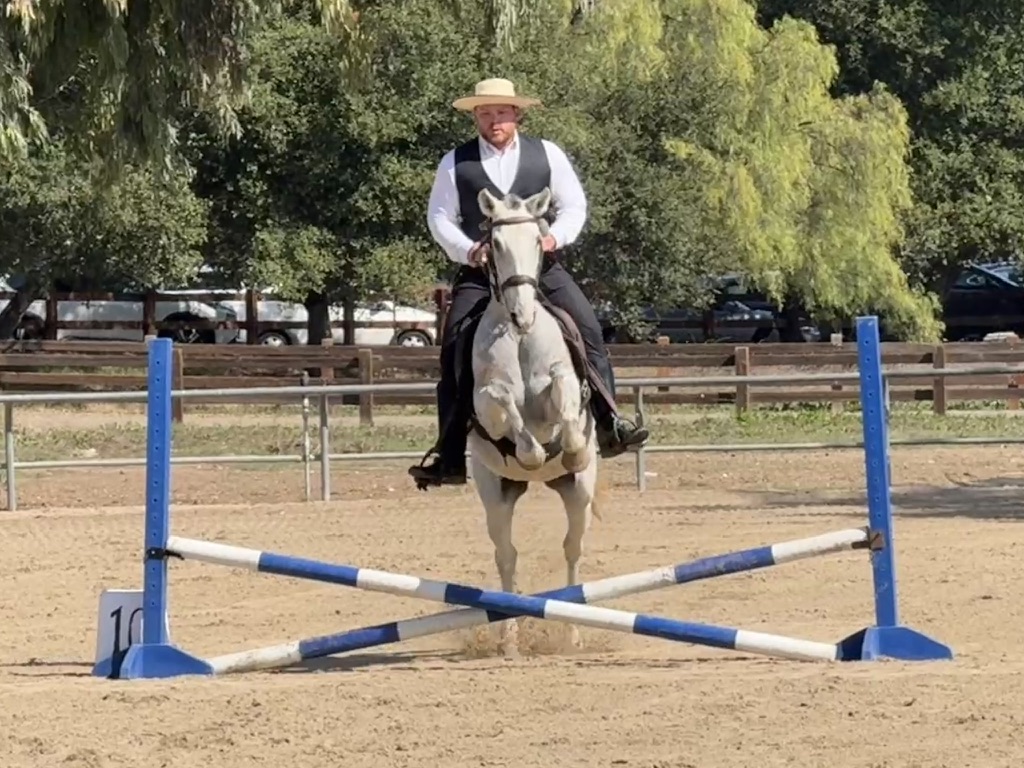
Horses demand the exact kind of focused, present-moment attention that ADHD brains struggle to sustain — and somehow, they get it. Here is why, and what the research says.
# Horses and Kids with ADHD: What the Research Shows and What Parents Say
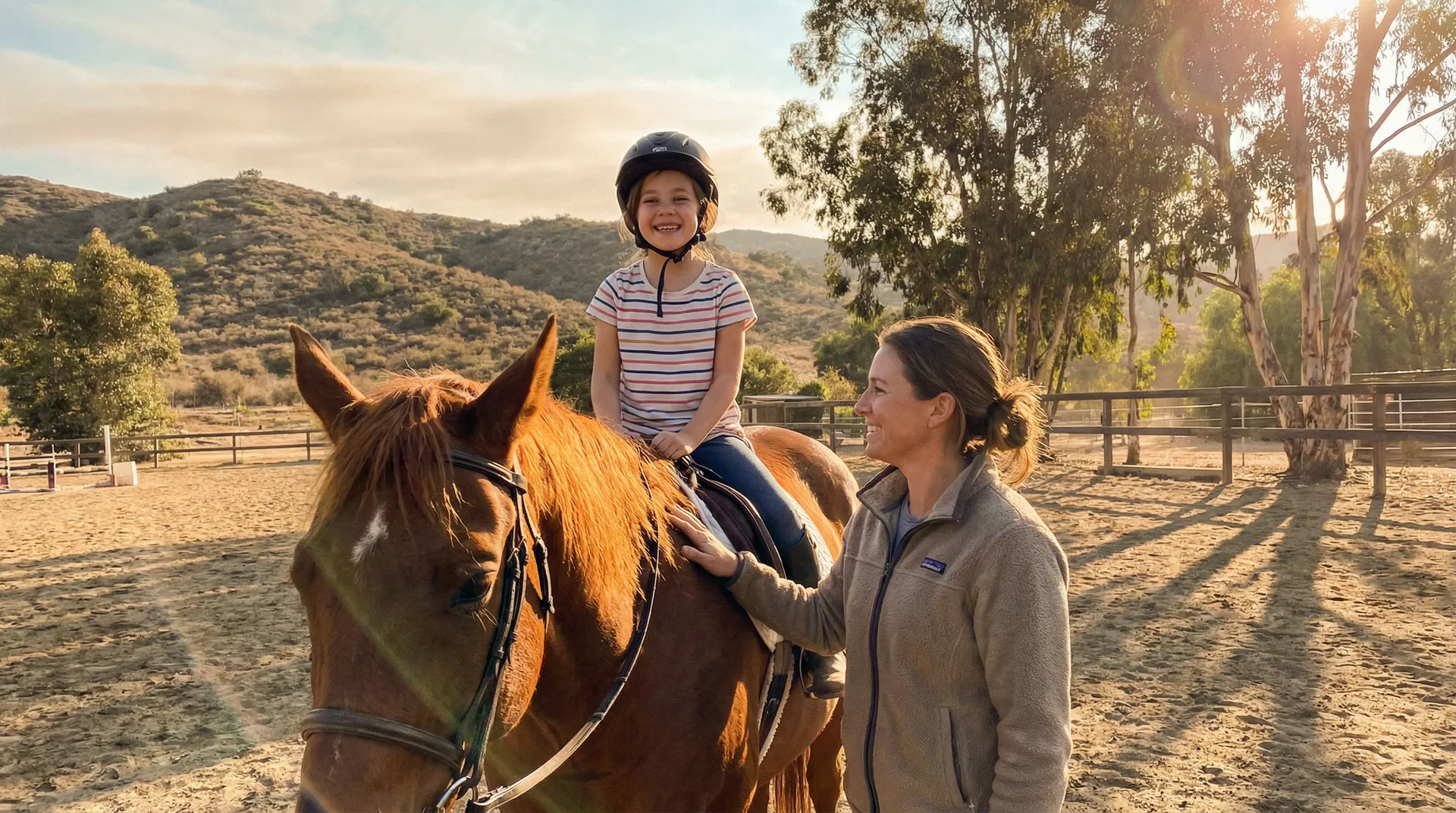
Parents of children with ADHD are accustomed to watching their child struggle to stay focused — in the classroom, at the dinner table, during homework, during conversations. Then they watch their child at the barn, and something is different. The child who cannot sit still for ten minutes is suddenly completely absorbed for two hours. The child who loses interest in every activity within days is asking to go back to the barn every week for months.
This observation is not unique to one family or one barn. It is reported consistently by parents across the equestrian world, and it has attracted enough scientific attention to produce a meaningful body of research. This article reviews what that research shows, explains why horses engage the ADHD brain differently, and describes what families at Hussar Stables have observed firsthand.
What ADHD Actually Is
Attention-deficit/hyperactivity disorder is a neurodevelopmental condition characterized by persistent patterns of inattention, hyperactivity, and impulsivity that interfere with functioning and development. It is not a deficit of attention in the absolute sense — children with ADHD can sustain intense focus on activities they find genuinely engaging, a phenomenon called hyperfocus. The challenge is regulating attention: directing it toward tasks that are not inherently stimulating, and sustaining it in the face of competing distractions.
Continue Reading · Kids & Families
Complete Guide to Horseback Riding for Kids: What Every Parent Needs to Know
14 min read
The ADHD brain is characterized by differences in dopamine regulation. Dopamine is the neurotransmitter associated with motivation, reward, and the ability to sustain effort toward a goal. Activities that provide immediate, varied, and unpredictable feedback — the kind that generates dopamine naturally — tend to hold the ADHD brain's attention far more effectively than activities with delayed or abstract rewards.
Horses, as it turns out, are extraordinarily good at providing exactly this kind of feedback.
Why Horses Engage the ADHD Brain
Horses are unpredictable. A horse is a living animal with its own moods, reactions, and responses. Every ride is different. Every interaction requires the rider to read the horse's body language, adjust their aids, and respond to what is actually happening — not what they expected to happen. This unpredictability is precisely what keeps the ADHD brain engaged. There is no autopilot mode when riding a horse.
Horses provide immediate, physical feedback. When a child gives an aid correctly, the horse responds immediately. When the aid is wrong, the horse responds to that too. This tight feedback loop — action, consequence, adjustment — is the kind of learning environment that the ADHD brain is wired for. It is the opposite of a classroom, where the feedback (a grade, a teacher's comment) is delayed and abstract.

Continue Reading · Kids & Families
The Ultimate Guide to Horseback Riding Lessons for Kids in the Antelope Valley
7 min read
Riding requires full-body engagement. Riding is not a passive activity. It requires the simultaneous coordination of seat, leg, hand, and balance — a level of physical engagement that gives the body's sensory system the input it craves. Many children with ADHD also have sensory processing differences, and the rhythmic movement of a horse at walk and trot has a well-documented calming effect on the nervous system.
The barn environment has natural structure. Horses must be groomed before riding. Tack must be put on in a specific order. Safety rules must be followed. This structure is not arbitrary — it is visibly connected to the horse's wellbeing and the rider's safety, which makes it meaningful in a way that classroom rules often are not. Children with ADHD frequently respond better to rules they understand the purpose of.
Horses do not judge. A horse does not know or care about a child's diagnosis, their grades, or how they behaved at school that morning. The horse responds to what the child does in the present moment. For children who carry a significant burden of negative feedback from the academic environment, this non-judgmental relationship can be profoundly restorative.
What the Research Shows
The scientific literature on equine-assisted activities and ADHD is growing, though it remains relatively young. Several findings are worth noting.

Continue Reading · Kids & Families
Why We Don't Do Drop-In Lessons: The Benefits of a Riding Club Membership
6 min read
A 2014 study published in the Journal of Attention Disorders examined the effects of therapeutic horseback riding on children with ADHD and found significant improvements in social functioning, inattention, and hyperactivity/impulsivity scores after a 12-week program. The researchers noted that the structured, relationship-based nature of the horse-rider interaction appeared to be a key mechanism.
A 2016 study in the same journal found that children with ADHD who participated in equine-assisted activities showed improvements in executive function — the set of cognitive skills that includes working memory, cognitive flexibility, and inhibitory control — compared to a control group. Executive function deficits are considered a core feature of ADHD, and improvements in this domain have broad implications for daily functioning.
Research on the physiological effects of horseback riding has documented reductions in cortisol (the primary stress hormone) and increases in serotonin and beta-endorphin levels following riding sessions. These neurochemical changes are consistent with the calming and mood-stabilizing effects that parents and instructors observe.
It is worth noting that most studies in this area involve therapeutic riding programs specifically designed for children with developmental or behavioral differences. The research on recreational riding programs — the kind Hussar Stables offers — is less extensive, though the mechanisms are the same and the anecdotal evidence from parents is consistent.
Continue Reading · Kids & Families
Meet the Lesson Horses of Hussar Stables: Safe, Calm, and Ready to Teach
6 min read
What Parents at Hussar Stables Observe
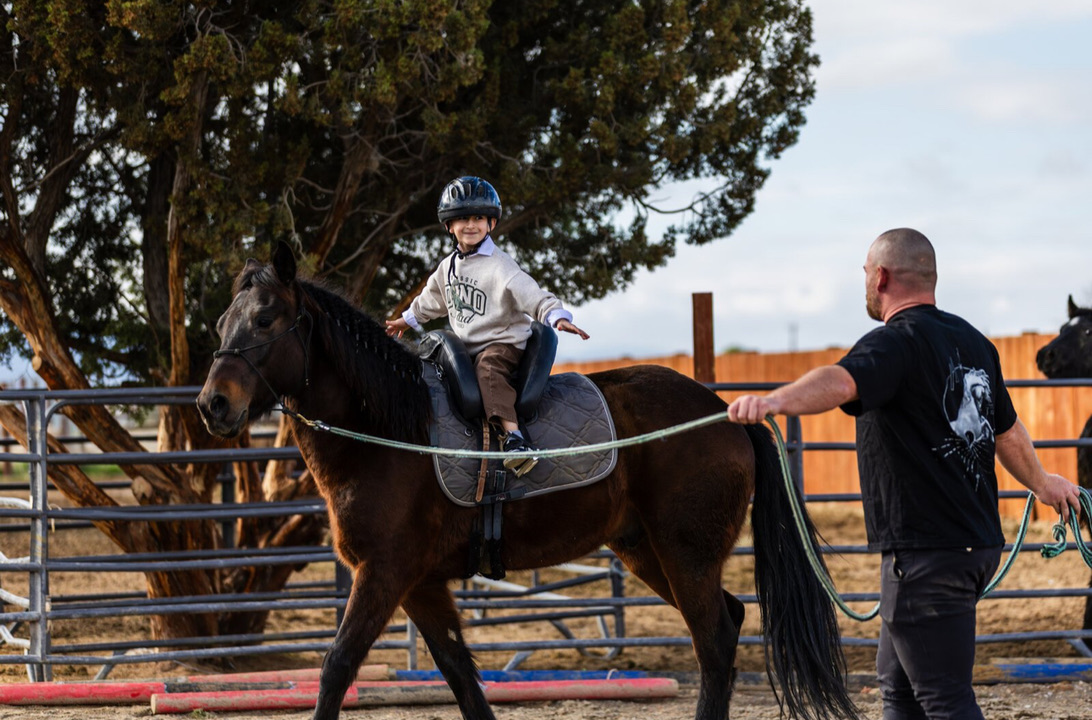
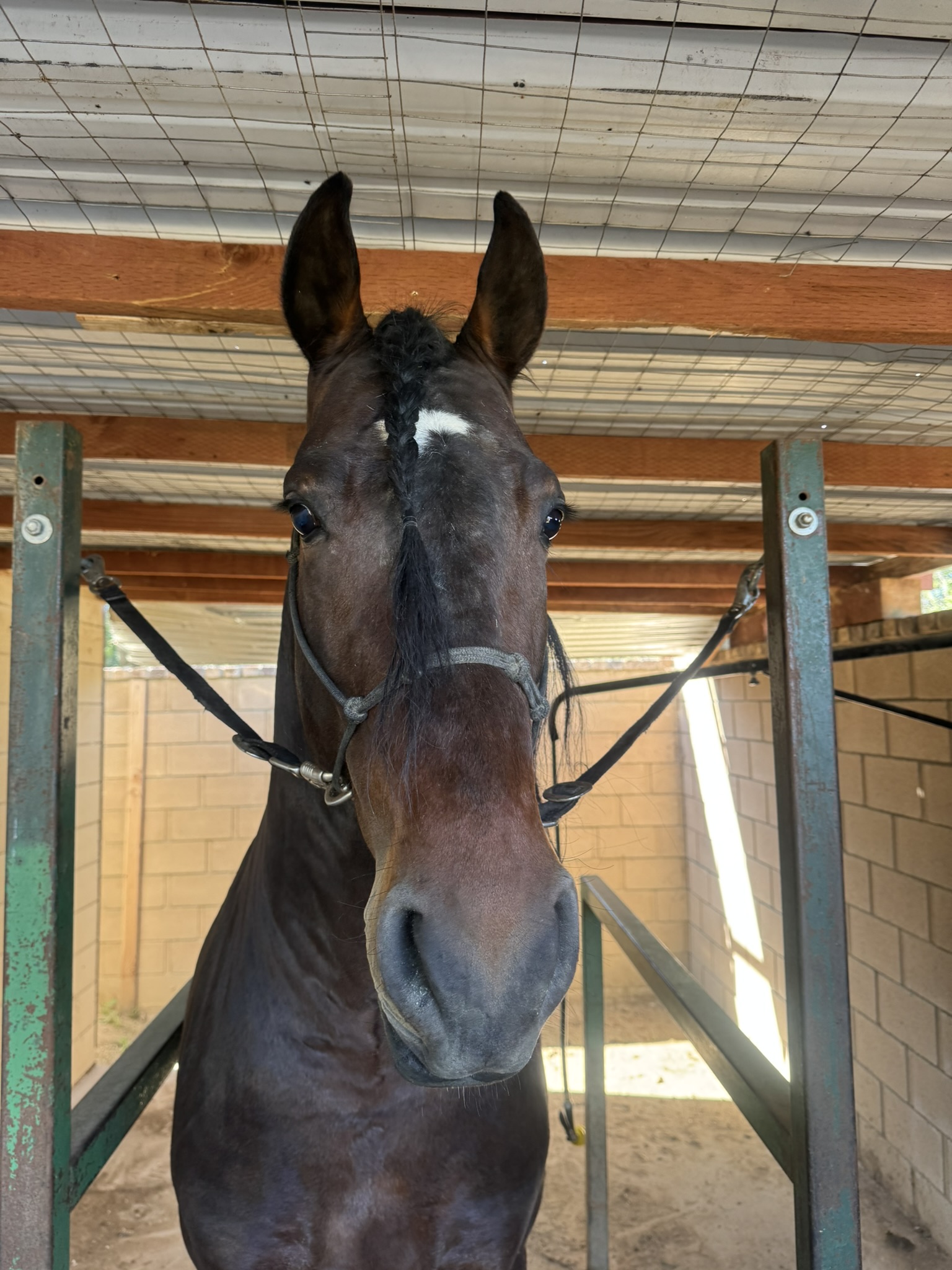
The parents of children with ADHD who ride at Hussar Stables describe a consistent pattern. In the first few sessions, the child is excited but scattered — interested in everything, focused on nothing. By the third or fourth session, something shifts. The child begins to understand that the horse responds to their attention, and that inattention has immediate, tangible consequences. This is a lesson no worksheet can teach.
Over weeks and months, parents describe improvements that extend beyond the barn. Children who ride regularly report sleeping better, managing transitions more easily, and showing more patience in other areas of life. Several parents have noted that their child's teachers commented on improvements in classroom behavior during periods when the child was riding consistently.
These observations are not clinical outcomes. They are the experiences of families who found something that works for their child. That matters.
What to Look for in a Program
Not every riding program is equally well-suited to children with ADHD. When evaluating a program, parents should look for:

Continue Reading · Kids & Families
How to Prepare Your Child for Their First Riding Lesson
5 min read
Small class sizes or individual instruction. A child with ADHD in a large group lesson will spend most of the time waiting, which is precisely the condition that makes ADHD symptoms worse. Smaller groups or private instruction keep the child engaged throughout the session.
Consistent instructors. Children with ADHD benefit from consistent relationships. A program where the child works with the same instructor and the same horses builds the kind of trust and routine that supports focus and emotional regulation.
Structure with flexibility. The program should have clear expectations and routines, but instructors should be experienced enough to read when a child needs a change of pace or a different approach.
Patience and genuine interest in the child. This is harder to quantify but easy to observe. An instructor who is genuinely curious about what makes a particular child tick — not just managing their behavior — will get far better results.
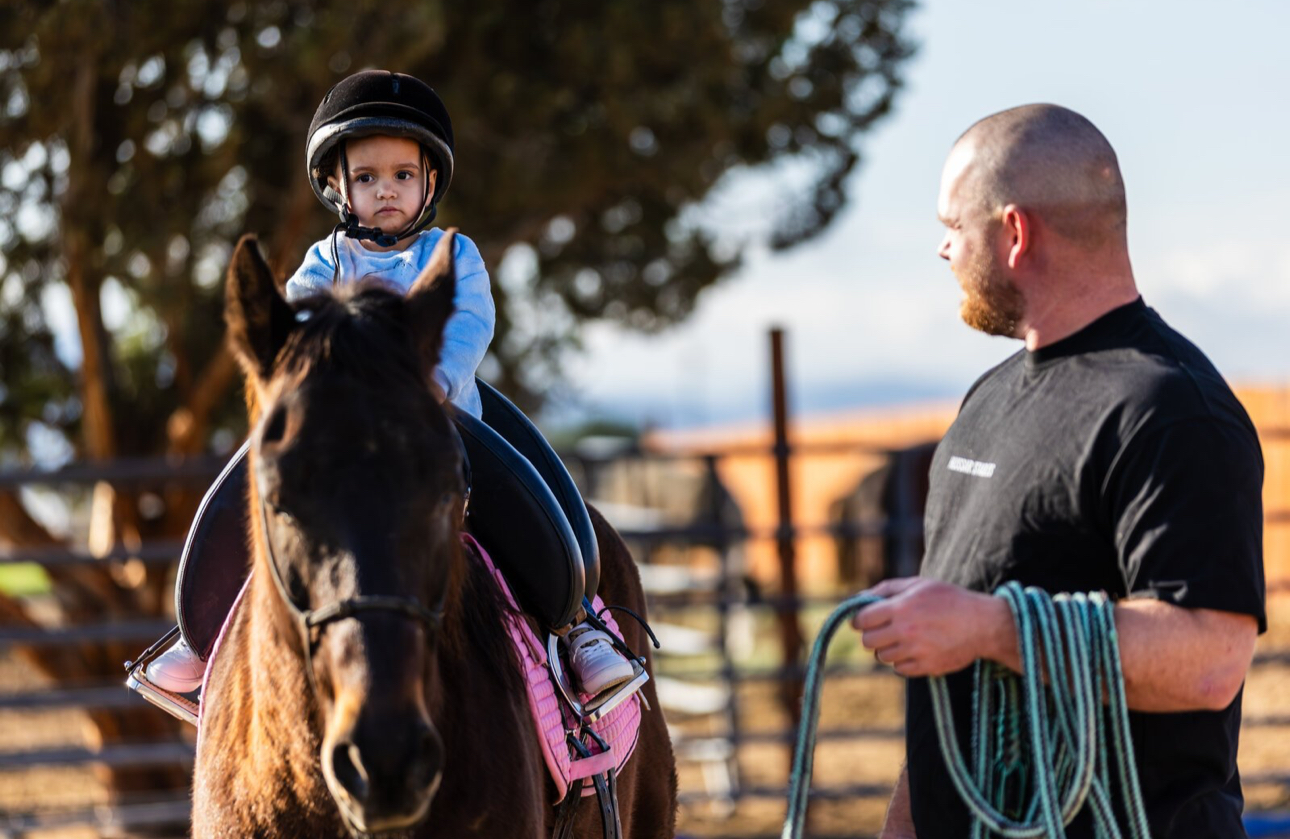
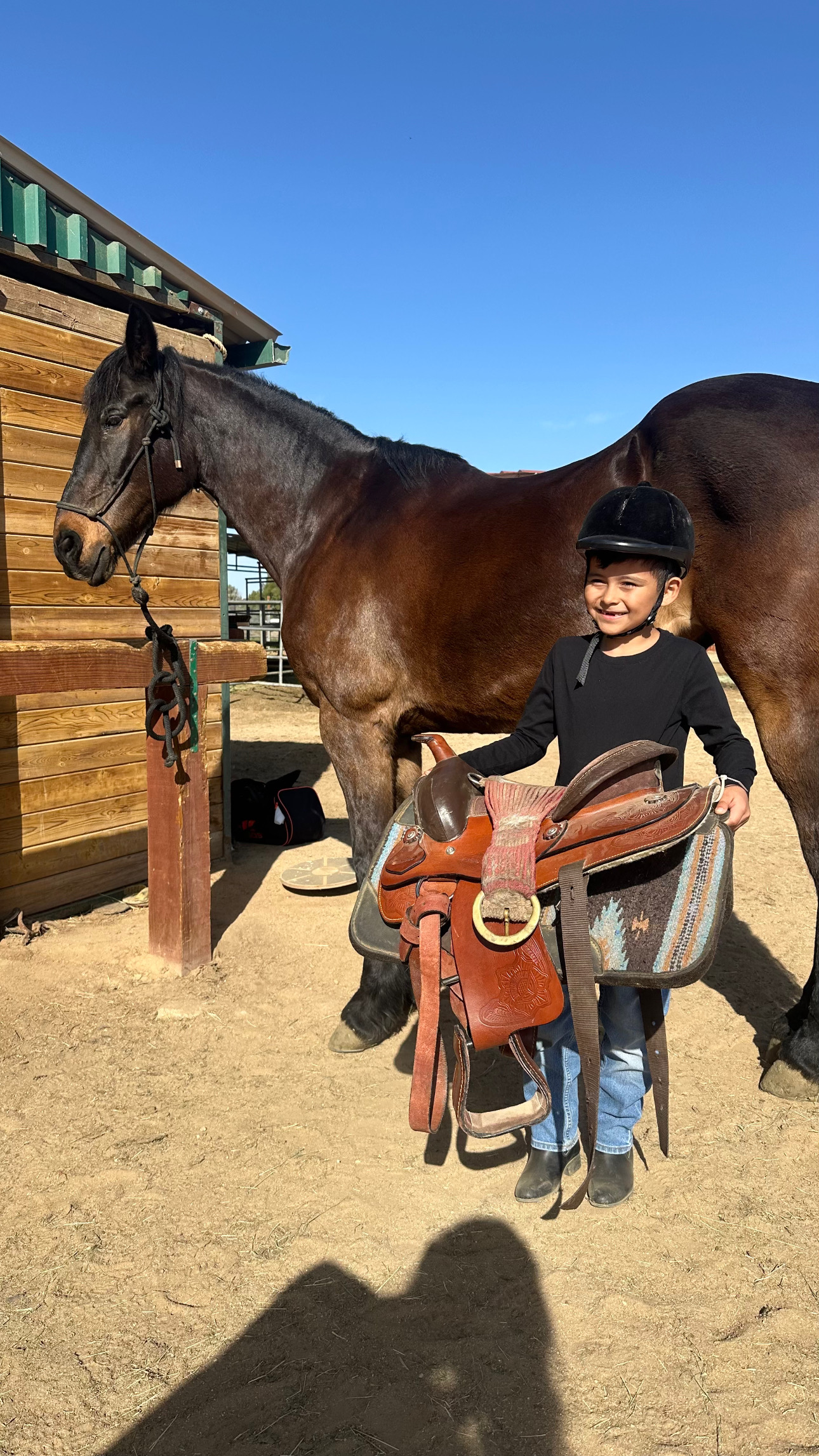
At Hussar Stables in Palmdale, CA, our instructors work with children of all learning profiles. We do not offer a therapeutic riding program in the clinical sense, but we do offer a structured, relationship-based riding program with small groups, consistent horses, and instructors who take the time to know each child individually.
---
If your child has ADHD and you are wondering whether riding might help, the best answer is to come and try it. An Intro Lesson will tell you more than any article can.
[Book an Intro Lesson](/book) at Hussar Stables and see what horses can do for your child.
More in Kids & Families
Complete Guide to Horseback Riding for Kids: What Every Parent Needs to Know
14 min read
The Ultimate Guide to Horseback Riding Lessons for Kids in the Antelope Valley
7 min read
Why We Don't Do Drop-In Lessons: The Benefits of a Riding Club Membership
6 min read
Meet the Lesson Horses of Hussar Stables: Safe, Calm, and Ready to Teach
6 min read
How to Prepare Your Child for Their First Riding Lesson
5 min read
Horse Care 101: What Every New Equestrian Parent Needs to Know
7 min read
Have a question?
Text us — we reply fast.
(661) 227-3214 · Hussar Stables, Palmdale CA
Ready to Experience This in Person?
Book a private Intro Lesson at Hussar Stables and discover why families from Palmdale, Lancaster, and Santa Clarita choose our members-only riding club.
Book Intro Lesson