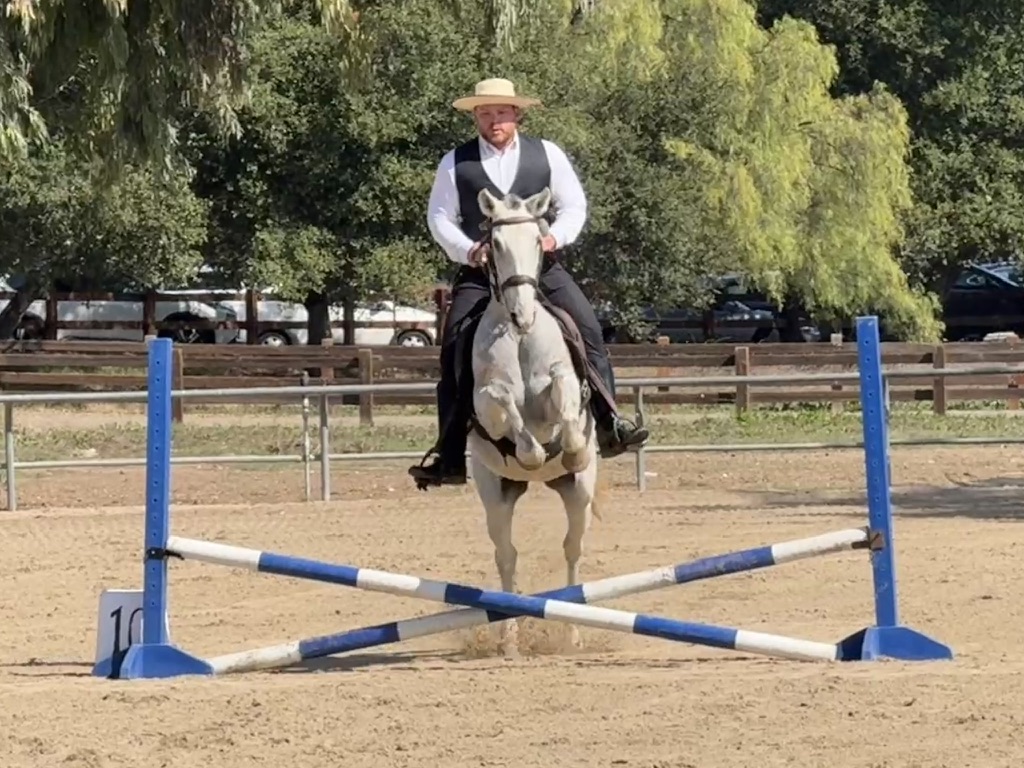
Most riders learn to post the trot in their first lesson and then spend years doing it incorrectly. Here is what the movement actually requires — and the four errors that hold riders back.
# How to Improve Your Posting Trot: The Mechanics Every Rider Gets Wrong
The posting trot is the first skill every rider learns. It is also one of the most commonly done wrong — not because it is difficult in theory, but because the instinctive version of the movement is almost exactly backwards from what good riding requires.
Most beginners learn to post by pushing themselves up out of the saddle using their legs. This works well enough to get through the first few lessons, but it creates a set of habits that become progressively harder to correct as the rider advances. Understanding what the posting trot actually requires — and why the instinctive version falls short — is the fastest path to a genuinely effective rising trot.
What the Posting Trot Actually Is
The trot is a two-beat diagonal gait: the horse's legs move in diagonal pairs (left front and right hind together, then right front and left hind together), with a brief moment of suspension between each pair. The posting trot — also called the rising trot — is a technique in which the rider rises out of the saddle on one diagonal beat and sits on the other, rather than absorbing both beats in the seat.
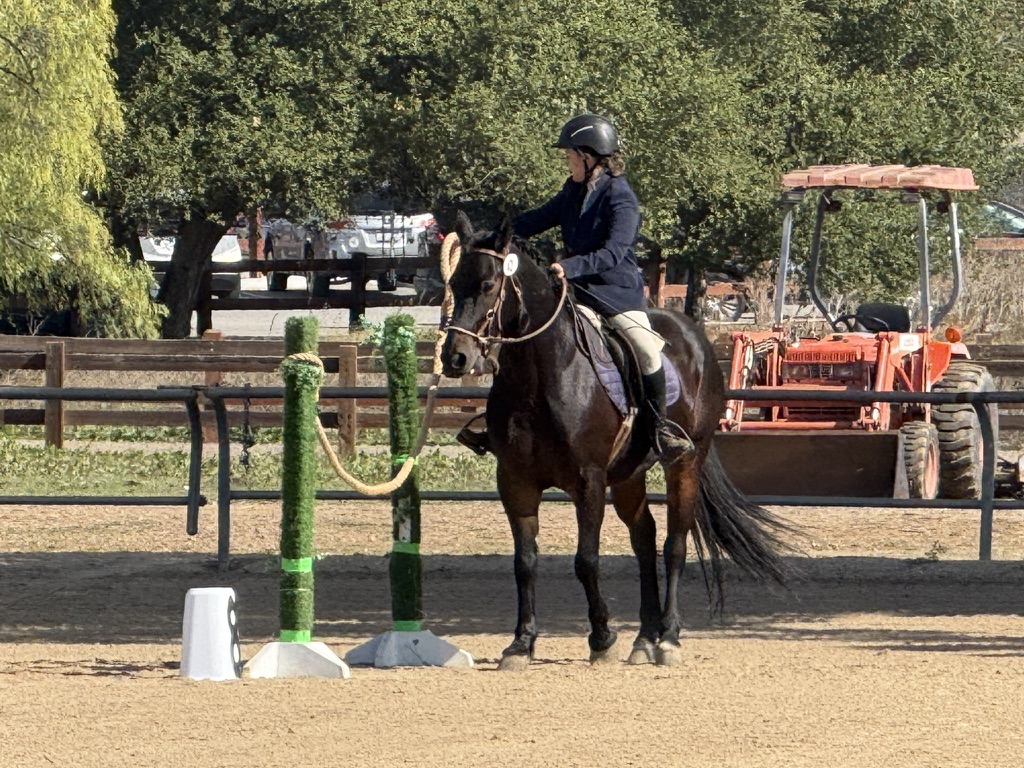
Continue Reading · Riding Technique
Riding Technique: The Complete Guide to Learning and Progressing as an Equestrian
16 min read
The purpose of posting is not merely comfort, though it does reduce fatigue on both horse and rider. Its primary purpose is to allow the horse's back to swing freely. A horse's back moves in a wave-like motion at the trot, and a rider who sits every stride must absorb that motion through their seat and lower back. A rider who posts allows the horse's back to lift without interference on every other stride, which encourages relaxation, impulsion, and freedom of movement.
The Diagonal Question
Before discussing mechanics, it is worth addressing the diagonal. In rising trot, the rider should be posting on the outside diagonal — rising when the horse's outside foreleg and inside hind leg move forward together. This convention exists because the inside hind leg is the primary engine of impulsion and collection, and sitting on it (rather than rising with it) encourages it to step further under the horse's body.
To check your diagonal, glance down at the horse's outside shoulder. If you are rising as that shoulder moves forward, you are on the correct diagonal. If you are sitting as it moves forward, change your diagonal by sitting for one extra beat, then resuming the rise.
The Four Mechanics Most Riders Get Wrong
1. Pushing up instead of following forward. The most common error in the posting trot is a vertical movement — the rider pushes straight up out of the saddle and drops straight back down. This creates a bouncing, disconnected quality that jars the horse's back and leaves the rider behind the motion.
Continue Reading · Riding Technique
Mastering the Bridge: A Step-by-Step Guide to Working Equitation Obstacles
8 min read
The correct movement is not vertical but diagonal — forward and up on the rise, back and down on the sit. Think of the motion as following the horse's energy forward rather than pushing yourself away from it. The rise should feel like the horse is lifting you, not like you are levering yourself up.
2. Gripping with the knee. When riders push themselves up, they instinctively grip with the knee to create a fulcrum. This tightens the entire leg, pushes the lower leg back and away from the horse's side, and creates a pivot point at the knee that amplifies rather than absorbs movement. The result is a rider who appears to be perching on top of the horse rather than sitting into it.
The leg should hang long and relaxed from the hip, with the heel weighted down and the calf in light contact with the horse's side. The knee should be soft — a hinge, not a clamp.
3. Tipping forward at the hip. Many riders compensate for a weak or unstable posting trot by tipping their upper body forward on the rise. This shifts weight onto the horse's forehand, which is the opposite of what good riding requires, and it creates a chair-seat position on the sit phase that makes it impossible to use the seat effectively.
Continue Reading · Riding Technique
How Alta Escuela Principles Build Better Riders (Even if You Never Compete)
7 min read
The upper body should remain tall and balanced throughout the posting trot, with a slight forward inclination of perhaps five degrees — enough to follow the horse's motion, not enough to tip over the pommel. Think of keeping your sternum lifted and your shoulders back and down throughout both phases of the movement.
4. Sitting too hard. The sit phase of the posting trot is not a landing — it is a controlled return to the saddle. Riders who drop heavily into the saddle on the sit phase jar the horse's back, interrupt the rhythm, and make the next rise harder to execute cleanly. The sit should be soft and controlled, with the rider's weight absorbed through a relaxed hip and lower back rather than landing on the seatbones.
A Practical Progression for Improvement
The most effective way to improve the posting trot is to slow it down. Ask for a very slow, deliberate trot — almost a jog — and focus on one element at a time. First, establish the correct diagonal. Then work on the direction of the rise (forward and up, not straight up). Then address the leg position. Then soften the sit.
Transitions are also invaluable. Riding frequent trot-walk-trot transitions forces the rider to rebalance and re-establish the posting rhythm from scratch, which builds awareness of what a correct start feels like. Riders who trot for long stretches without transitions tend to drift into habitual patterns without noticing.
Continue Reading · Riding Technique
Why Unmounted Horsemanship is Just as Important as Riding
6 min read
No-stirrup work at the walk and sitting trot builds the independent seat that makes a correct posting trot possible. It is uncomfortable, but it is the most reliable way to develop the hip suppleness and core stability that the posting trot requires.
What Good Posting Trot Looks Like
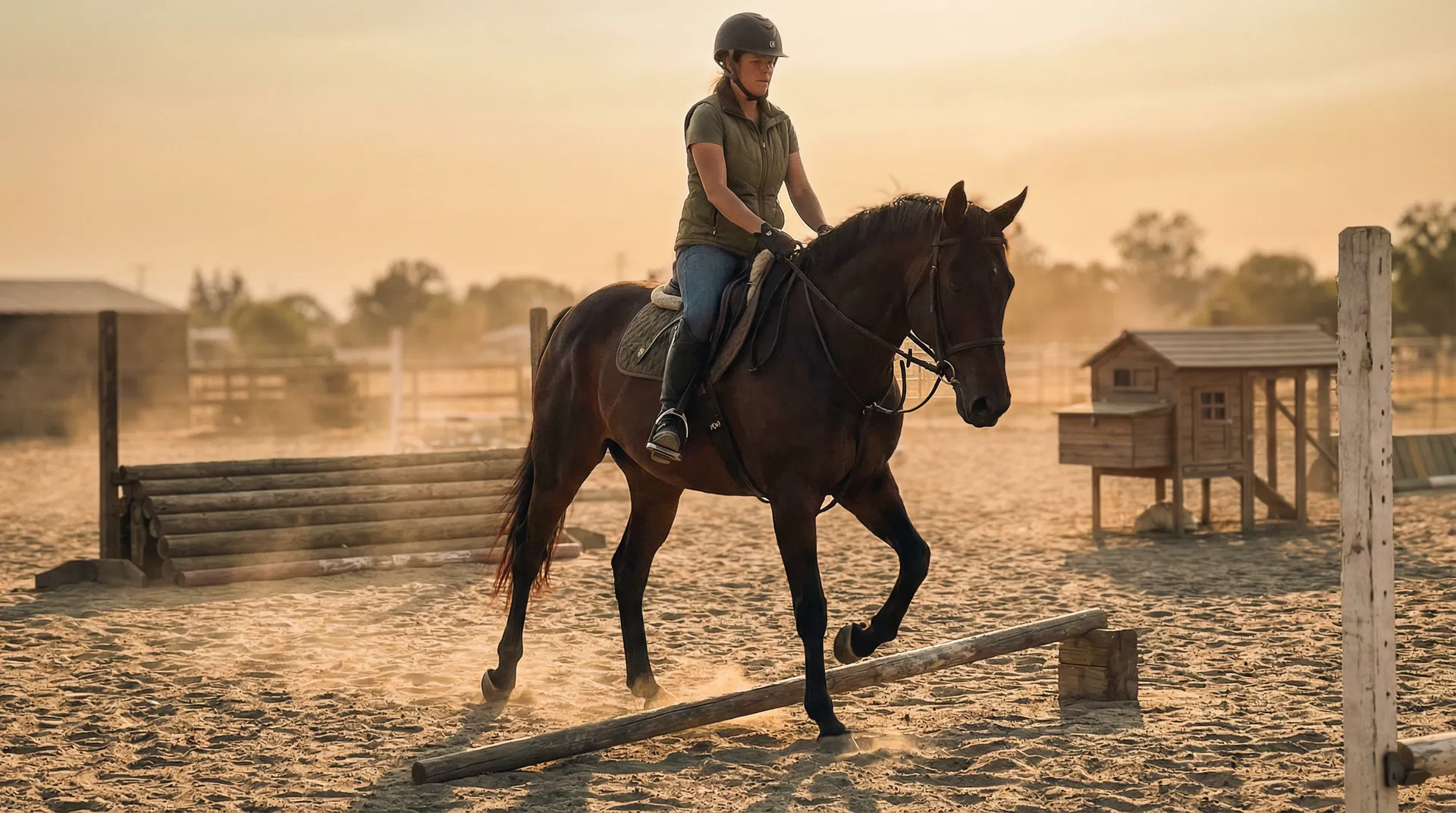
A well-executed posting trot is almost invisible. The rider appears to float above the saddle with minimal effort, their upper body quiet and upright, their leg long and still. The horse's back swings freely, its stride is open and forward, and the rhythm is consistent.
When the posting trot is working correctly, it does not feel like work. It feels like the horse is doing the posting for you — which, in a sense, it is.
---
Continue Reading · Riding Technique
How to Prepare Your Horse for the Working Equitation Speed Trial
8 min read
At Hussar Stables in Palmdale, CA, the posting trot is introduced in the first lesson and refined throughout the curriculum. Riders who establish correct mechanics early progress through the levels far more smoothly than those who have to unlearn ingrained habits later.
[Book an Intro Lesson](/book) at Hussar Stables and build your posting trot on a solid foundation from the start.
More in Riding Technique
Riding Technique: The Complete Guide to Learning and Progressing as an Equestrian
16 min read
Mastering the Bridge: A Step-by-Step Guide to Working Equitation Obstacles
8 min read
How Alta Escuela Principles Build Better Riders (Even if You Never Compete)
7 min read
Why Unmounted Horsemanship is Just as Important as Riding
6 min read
How to Prepare Your Horse for the Working Equitation Speed Trial
8 min read
Classical vs. Modern Dressage: What Every Rider Should Know
5 min read
Have a question?
Text us — we reply fast.
(661) 227-3214 · Hussar Stables, Palmdale CA
Ready to Experience This in Person?
Book a private Intro Lesson at Hussar Stables and discover why families from Palmdale, Lancaster, and Santa Clarita choose our members-only riding club.
Book Intro Lesson