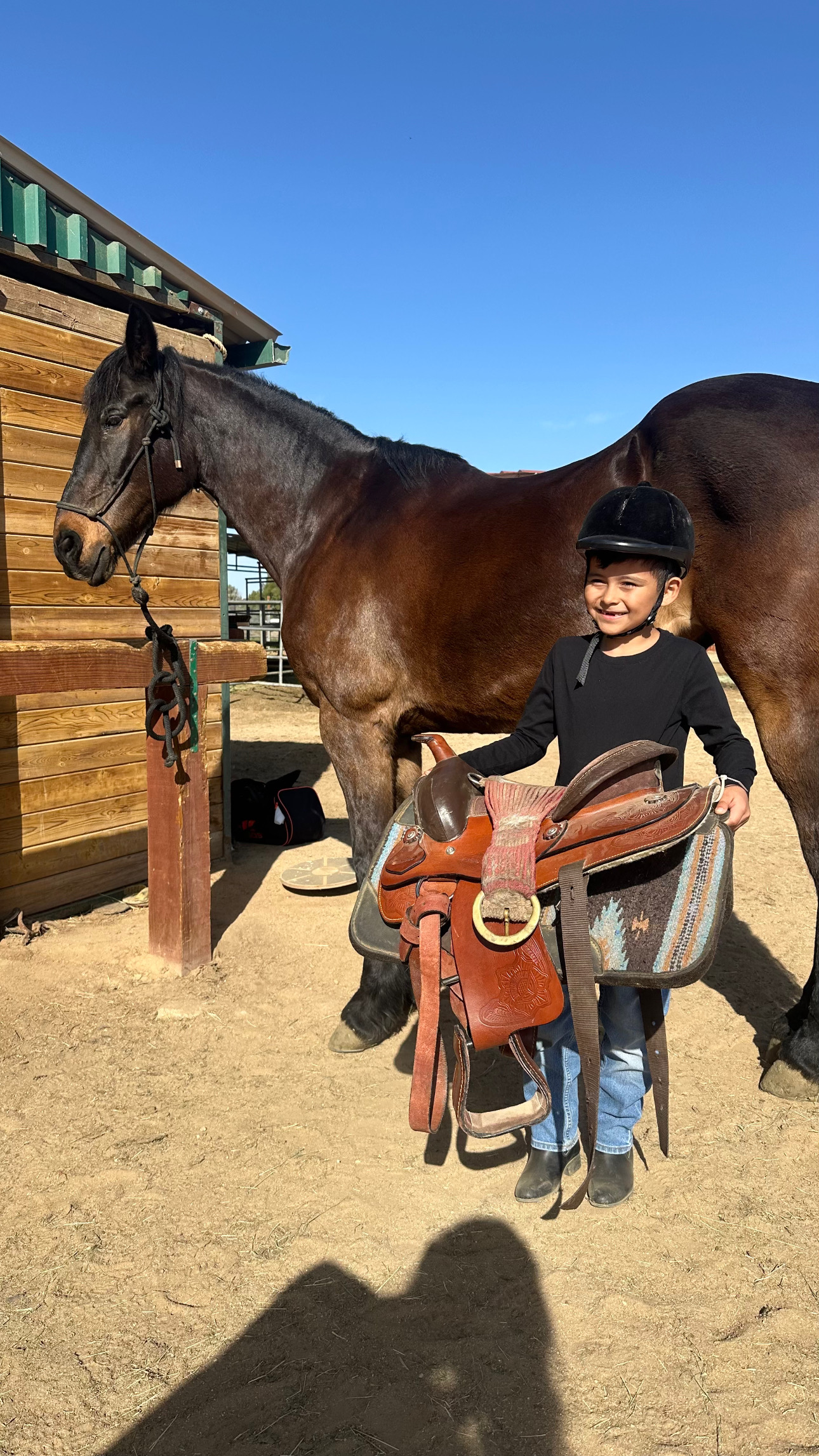
A horse lease gives your child more time with a specific horse without the full cost of ownership. Here is how it works, what it costs, and the questions every family should ask before signing.
# What Is a Lease Horse? A Complete Guide for Families Considering a Half-Lease
At some point in nearly every young rider's development, the question comes up: should we lease a horse? The child is riding multiple times a week, has outgrown the once-a-week lesson format, and wants more time with a specific horse. Ownership feels like too large a commitment. A lease seems like the middle ground.
It often is — but only when families understand exactly what they are agreeing to. This guide explains how horse leases work, what the different types cost, what a lease contract should include, and how to decide whether leasing is the right step for your family.
What a Horse Lease Actually Is
A horse lease is a formal agreement between a horse owner and a lessee that grants the lessee the right to use a horse for a defined period, under defined conditions, in exchange for payment. The owner retains ownership of the horse throughout the lease. The lessee does not acquire any ownership interest.
Continue Reading · Cost & Expectations
How Much Does Horseback Riding Cost? A Complete Guide to Pricing and Expectations
12 min read
Leases exist because horse ownership is expensive and time-consuming. Many owners — particularly those who compete or breed horses — have horses that are suitable for a particular level of rider but that the owner cannot ride full-time. Leasing generates income for the owner, provides the horse with consistent work, and gives the lessee access to a horse without the full financial and logistical burden of ownership.
The Three Types of Lease
Full lease. The lessee has exclusive use of the horse for the duration of the lease, typically paying 25–50% of the horse's market value per year. The lessee is responsible for all or most of the horse's expenses: board, farrier, veterinary care, and feed. The owner retains the right to reclaim the horse at the end of the lease term and may have approval rights over how the horse is used (competitions, disciplines, etc.). A full lease is functionally similar to ownership in terms of daily responsibility.
Half-lease. The most common arrangement for young riders. The lessee has use of the horse on specific days of the week — typically three days — while the owner (or another lessee) uses the horse on the remaining days. Costs are split proportionally. The lessee typically pays a monthly lease fee plus their share of routine expenses (farrier, routine vet). Major medical expenses are usually the owner's responsibility, though this varies by contract. A half-lease is the arrangement most families consider when their child is riding three or more times per week.
Partial lease (lesson lease). The lessee pays a flat monthly fee for a set number of rides per week on a specific horse, typically within a lesson program. The barn or owner handles all care and expenses. This is the simplest and lowest-risk arrangement, and it is what Hussar Stables offers through its membership structure — members ride specific horses on a consistent schedule without taking on the care responsibilities of a traditional lease.
Continue Reading · Cost & Expectations
What is a Half-Lease? A Parent's Guide to Horse Leasing in the Antelope Valley
7 min read
What a Half-Lease Typically Costs
Costs vary significantly by region, horse quality, and what is included. In the Antelope Valley and greater Los Angeles area, a half-lease on a suitable lesson or competition horse typically costs:
| Expense | Typical Range (Monthly) |
|---|---|
| Lease fee | $200–$600 |
Continue Reading · Cost & Expectations
The Difference Between English and Western Riding: Which is Right for Your Child?
7 min read
| Board (lessee's share) | $300–$600 |
| Farrier (lessee's share) | $40–$80 |
| Routine vet / deworming | $20–$50 |
| Total monthly | $560–$1,330 |
Continue Reading · Cost & Expectations
How Much Do Horseback Riding Lessons Cost in California? (2025 Breakdown)
6 min read
These figures do not include tack, show fees, lessons, or emergency veterinary care. Before entering a lease, families should have a clear understanding of every expense they are responsible for and a realistic estimate of annual costs.
What a Lease Contract Should Include
A lease without a written contract is a significant risk for both parties. A well-drafted lease agreement should address:
The horse. Full description including name, breed, age, registration number if applicable, and any known health conditions or behavioral quirks.
Term. Start and end date of the lease, with provisions for early termination by either party and the notice required.
Continue Reading · Cost & Expectations
Is Horseback Riding Worth It? An Honest Cost-Benefit Analysis for Parents
7 min read
Use. What the lessee may and may not do with the horse — disciplines, competitions, trail riding, who may ride the horse, and whether the horse may be taken off the property.
Financial responsibilities. Exactly which expenses the lessee is responsible for, and which remain with the owner. Pay particular attention to emergency veterinary care — a colic surgery can cost $5,000–$15,000, and the contract should be explicit about who bears that cost.
Insurance. Whether the horse is insured, who carries the policy, and whether the lessee is required to maintain liability insurance.
Condition of the horse. A written description of the horse's condition at the start of the lease, ideally with a pre-lease veterinary examination, so that any changes in condition during the lease are documented.
Dispute resolution. How disagreements will be handled.
If the lease agreement does not address these points clearly, ask for clarification before signing. A reputable owner will not object to a thorough contract — it protects both parties.
Questions to Ask Before Leasing
Before committing to a lease, families should ask:
Why is this horse available to lease? The answer reveals a great deal. A horse that is available because the owner is going to college, is pregnant, or has reduced riding time is a very different situation from a horse that has been through three lessees in one year.
What is the horse's health history? Ask for veterinary records. A pre-lease veterinary examination ($150–$300) is strongly recommended for any lease where the lessee bears significant financial responsibility.
What happens if the horse is injured and cannot be ridden? Does the lease fee continue? Is it reduced? This should be explicit in the contract.
Who is the primary contact for veterinary decisions? In an emergency, who authorizes treatment? Who pays?
Can my child's instructor evaluate the horse before we commit? A yes is the only acceptable answer. Your child's instructor knows your child's level and can assess whether the horse is genuinely appropriate.
Is Leasing Right for Your Family?
A lease makes sense when a child is riding frequently enough that the per-ride cost of lessons exceeds the cost of a lease, when the child has a specific horse they work well with, and when the family is prepared for the financial and logistical responsibilities involved.
A lease does not make sense when a child's commitment level is uncertain, when the family is not prepared for the possibility of significant veterinary expenses, or when the child is still developing the skills to handle a horse independently.
For many families, the structured membership model at Hussar Stables — which provides consistent access to specific horses within a supervised program — offers the relationship benefits of a lease without the financial exposure. Members ride the same horses on a regular schedule, develop genuine bonds with those horses, and progress through a structured curriculum, all within a program where the barn handles all care responsibilities.
---
If you are considering a lease and want to discuss whether your child is at the right stage, speak with your Hussar Stables instructor. We are happy to help families think through the decision honestly.
[Book an Intro Lesson](/book) at Hussar Stables and start building the foundation that makes leasing — and eventually ownership — a natural next step.
More in Cost & Expectations
How Much Does Horseback Riding Cost? A Complete Guide to Pricing and Expectations
12 min read
What is a Half-Lease? A Parent's Guide to Horse Leasing in the Antelope Valley
7 min read
The Difference Between English and Western Riding: Which is Right for Your Child?
7 min read
How Much Do Horseback Riding Lessons Cost in California? (2025 Breakdown)
6 min read
Is Horseback Riding Worth It? An Honest Cost-Benefit Analysis for Parents
7 min read
What to Expect in Your First Month of Riding Lessons
5 min read
Have a question?
Text us — we reply fast.
(661) 227-3214 · Hussar Stables, Palmdale CA
Ready to Experience This in Person?
Book a private Intro Lesson at Hussar Stables and discover why families from Palmdale, Lancaster, and Santa Clarita choose our members-only riding club.
Book Intro Lesson