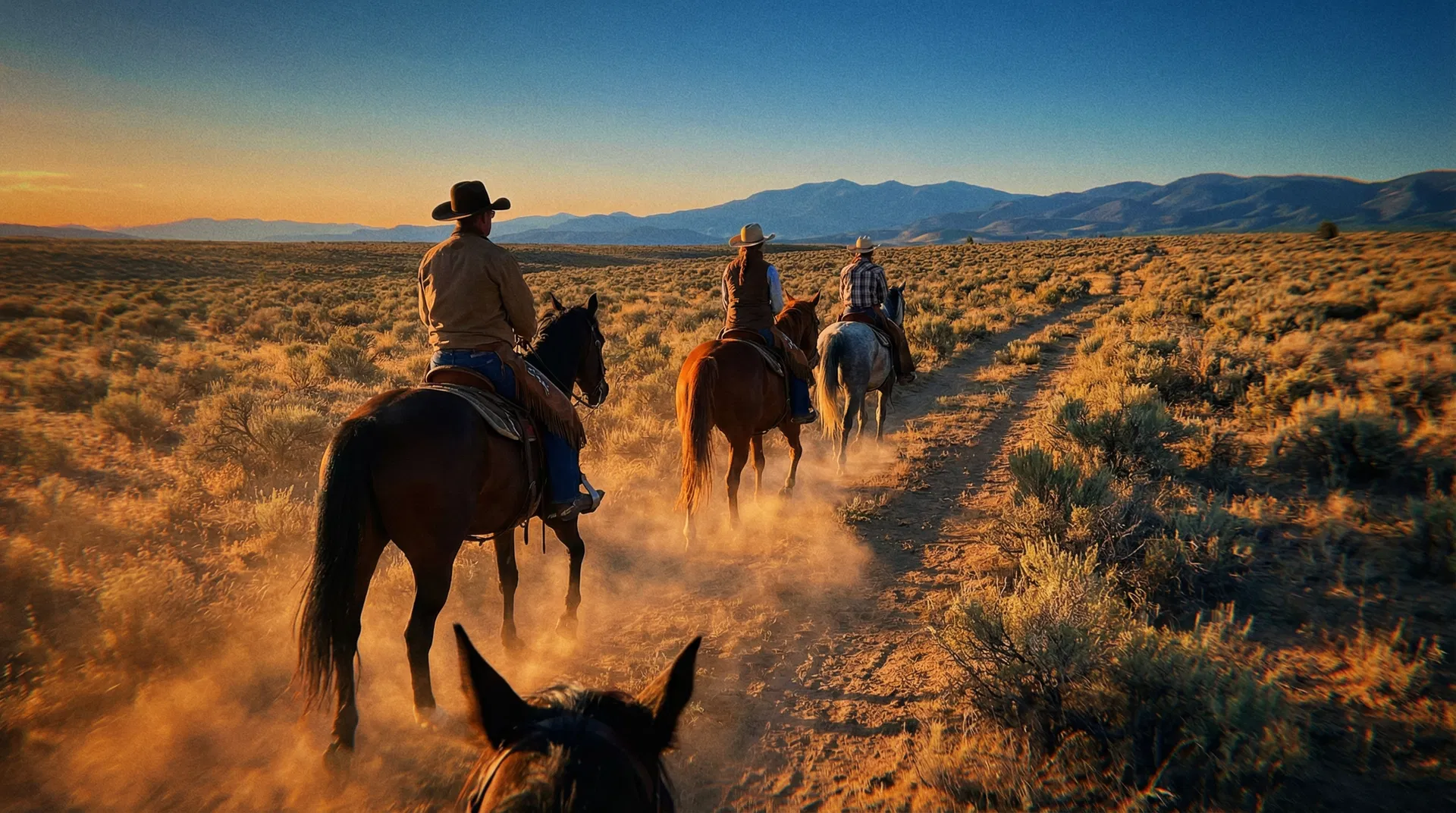
The flying change is the moment when a cantering horse switches its leading leg mid-stride, in the air. Here is how to develop it correctly — and what goes wrong when riders rush it.
# How to Ride a Flying Change: A Step-by-Step Guide for Developing Riders
The flying change is one of the most satisfying milestones in riding. It is the moment when a cantering horse switches its leading leg mid-stride — in the air, between one canter stride and the next — in response to a single, well-timed aid from the rider. When it happens cleanly, it feels effortless. When it is rushed or poorly prepared, it feels like organized chaos.
This guide explains what the flying change actually is, what the horse and rider must be able to do before attempting it, and how to develop it correctly.
What Is a Flying Change?
In canter, the horse leads with one foreleg — the "leading leg" — which determines whether the horse is on the left lead or the right lead. On a circle or in a corner, the horse should be on the inside lead. When changing direction, the lead must change too.
Continue Reading · Riding Technique
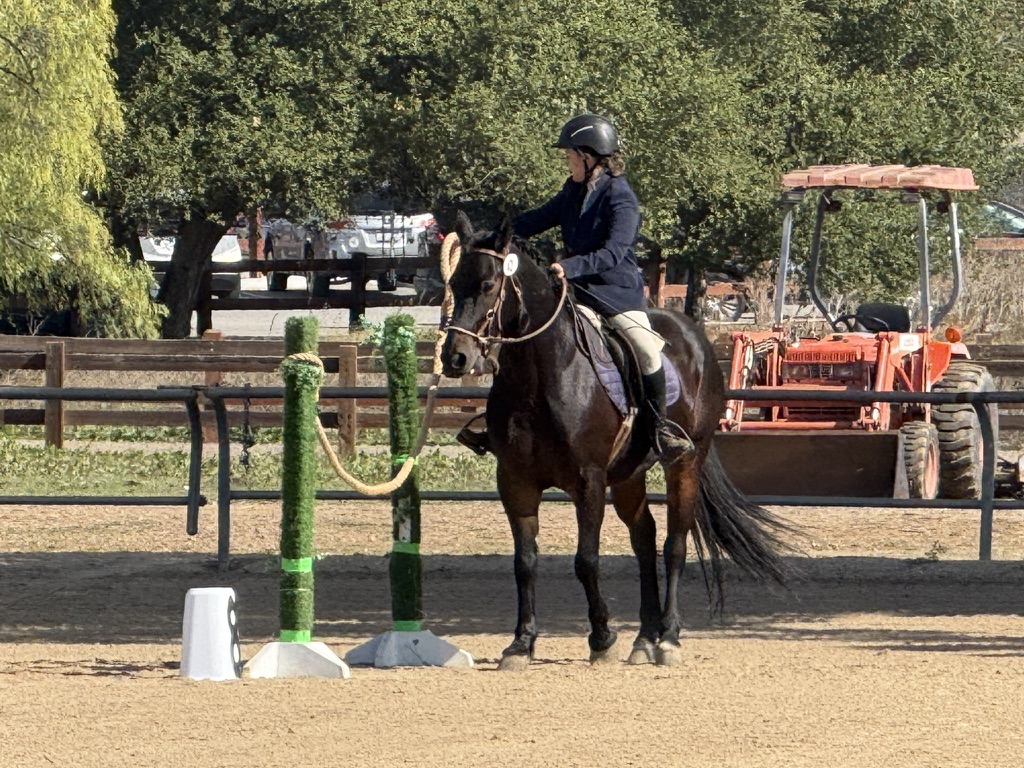
Riding Technique: The Complete Guide to Learning and Progressing as an Equestrian
16 min read
A simple change accomplishes this by breaking to trot for one or more strides, then re-establishing canter on the new lead. A flying change accomplishes it without breaking gait — the horse changes both its front and hind leading legs simultaneously during the moment of suspension in the canter stride, when all four feet are briefly off the ground.
In Working Equitation, flying changes are required in the slalom obstacle at higher levels. In dressage, they appear from Medium level onward, eventually progressing to tempi changes — one-time, two-time, and even one-stride changes in sequence. For any rider pursuing serious equestrian sport, the flying change is a foundational skill.
Prerequisites: What Must Be in Place First
Attempting a flying change before the prerequisites are solid is the single most common mistake riders make. The result is a horse that swaps in front but not behind (a "late change"), swaps behind but not in front, bucks through the change, or simply ignores the aid entirely.
The horse must have a confirmed, balanced canter. The canter should be rhythmic, uphill (weight carried toward the hindquarters), and responsive to half-halts. A horse that runs, falls on the forehand, or requires constant correction is not ready for flying changes.
Continue Reading · Riding Technique
Mastering the Bridge: A Step-by-Step Guide to Working Equitation Obstacles
8 min read
The horse must understand counter-canter. Counter-canter — deliberately cantering on the outside lead through a turn — is the most important preparation for flying changes. It teaches the horse to maintain its lead in response to the rider's aids rather than automatically swapping when the direction changes. A horse that can hold a balanced counter-canter around a 20-meter circle is a horse that understands lead control.
The horse must respond to clear canter depart aids. The flying change is essentially a canter depart from one lead to the other, executed mid-stride. If the horse's response to the canter depart aid is dull, late, or confused, the flying change will be the same.
The rider must have an independent seat. A rider who grips with the leg, tips forward, or uses the rein for balance will interfere with the horse's ability to change. The flying change requires a quiet, independent seat that can deliver a precise aid without disturbing the horse's balance.
The Mechanics of the Aid
The flying change aid is given at a specific moment in the canter stride — as the horse's outside hind leg is about to leave the ground, which is the beginning of the moment of suspension. This is the only moment when the horse can physically change leads.
Continue Reading · Riding Technique
How Alta Escuela Principles Build Better Riders (Even if You Never Compete)
7 min read
The aid sequence is:
Half-halt first. A preparatory half-halt rebalances the horse and signals that something is coming. Without this preparation, the horse arrives at the change unbalanced and the aid is lost.
New inside leg at the girth. The leg that will become the new inside leg moves to the girth position and gives a brief, forward-driving aid. This asks the new inside hind leg to step under and initiate the new lead.
New outside leg behind the girth. The leg that will become the new outside leg moves slightly behind the girth. This is the primary aid — it asks the horse to change the canter lead.
Continue Reading · Riding Technique
Why Unmounted Horsemanship is Just as Important as Riding
6 min read
Weight shift. The rider's weight shifts subtly toward the new inside seat bone. This is not a lean — it is a deepening of the inside seat bone that mirrors the horse's new balance.
Rein. The rein aids are minimal. A slight opening of the new inside rein invites the horse to look in the new direction; the new outside rein maintains contact and prevents the horse from falling out through the shoulder. Pulling with the rein is the most common rider error and the most reliable way to block the change.
The entire aid takes less than a second. The horse's response — the change — happens in the next stride.
A Step-by-Step Training Progression
Step 1: Confirm counter-canter. Before attempting any flying change, the horse should be able to hold counter-canter on a 20-meter circle in both directions without breaking or swapping. This may take weeks or months to develop. Do not skip it.
Continue Reading · Riding Technique
How to Prepare Your Horse for the Working Equitation Speed Trial
8 min read
Step 2: Practice simple changes with a single trot stride. Ride a figure-eight, changing from canter to trot for exactly one stride, then back to canter on the new lead. The goal is a clean, prompt transition with minimal trot strides. When one trot stride is consistently clean, the horse is physically and mentally close to a flying change.
Step 3: Use the diagonal. Many horses find their first flying change on the diagonal line across the arena, where the change of direction is natural and the horse's momentum helps. Ride counter-canter down the long side, turn onto the diagonal, and give the change aid as you cross the center line.
Step 4: Give the aid clearly and then do nothing. The most important thing a rider can do after giving the flying change aid is stay quiet. Riders who chase the change — adding more leg, more rein, more seat — block the horse's ability to respond. Give the aid once, clearly, and wait.
Step 5: Reward immediately. When the horse gives a clean change — or even an attempt — stop, praise, and end the session. Flying changes are mentally demanding for horses. Short, positive sessions build confidence far faster than long, repetitive drilling.
Common Problems and Their Causes
| Problem | Most Likely Cause |
|---|---|
| Late behind (front changes, hind doesn't) | Aid given too early; horse not balanced enough |
| Late in front (hind changes, front doesn't) | Horse on forehand; insufficient preparation |
| Bucking through the change | Horse tense or crooked; aid too strong |
| No change at all | Aid given at wrong moment; horse desensitized |
| Change but then wrong lead | Rider collapses to outside after the change |
| Swapping uninvited | Horse anticipating; vary the work, ride counter-canter more |
Flying Changes in the Hussar Stables Curriculum
At Hussar Stables, flying changes are introduced at Level 6 in the curriculum, after the horse and rider have established confirmed counter-canter, responsive half-halts, and clean simple changes. By Level 7, single flying changes are expected to be reliable. Tempi changes — sequences of flying changes at every stride or every two strides — are a Level 9 and above skill.
The flying change is not a trick. It is the natural result of a horse that is balanced, supple, and responsive to the rider's aids. When the prerequisites are in place, it often happens almost by accident on the first attempt — and that is exactly how it should feel.
---
At Hussar Stables in Palmdale, CA, we teach the flying change as part of a structured classical progression that ensures both horse and rider are genuinely ready. If you are working toward this milestone, we invite you to book an Intro Lesson and see where you are in the journey.
[Book an Intro Lesson](/book) at Hussar Stables and begin the progression toward flying changes.
More in Riding Technique
Riding Technique: The Complete Guide to Learning and Progressing as an Equestrian
16 min read
Mastering the Bridge: A Step-by-Step Guide to Working Equitation Obstacles
8 min read
How Alta Escuela Principles Build Better Riders (Even if You Never Compete)
7 min read
Why Unmounted Horsemanship is Just as Important as Riding
6 min read
How to Prepare Your Horse for the Working Equitation Speed Trial
8 min read
Classical vs. Modern Dressage: What Every Rider Should Know
5 min read
Have a question?
Text us — we reply fast.
(661) 227-3214 · Hussar Stables, Palmdale CA
Ready to Experience This in Person?
Book a private Intro Lesson at Hussar Stables and discover why families from Palmdale, Lancaster, and Santa Clarita choose our members-only riding club.
Book Intro Lesson