Many parents wonder whether their child's seasonal allergies or asthma will be a problem at the barn. Here is what the research says, how to tell the difference between a horse allergy and hay fever, and what to do before the first lesson.
# Horse Allergies in Kids: What Parents Need to Know Before Starting Lessons
It is a question we hear regularly from parents who are excited about riding lessons but cautious: My child has allergies — is the barn going to be a problem?
The honest answer is: it depends, and it is worth finding out before the first lesson rather than after. Horse allergies are real, hay fever at the barn is common, and asthma can be aggravated by barn environments. But many children with allergies ride without difficulty, and with the right preparation, the barn does not have to be off-limits.
Here is what parents need to know.
Continue Reading · Safety
Horseback Riding Safety: The Complete Guide for Beginners and Parents
13 min read
What Causes Allergic Reactions at the Barn?
The barn environment contains several potential allergens, and it is important to distinguish between them because they have different implications.
Horse dander (Equus caballus allergen, Equ c 1–4) is the most specific allergen. Like cat and dog dander, horse dander consists of microscopic proteins shed from the horse's skin, saliva, and urine. True horse allergy — an IgE-mediated immune response to horse dander — affects an estimated 5–10% of people with allergic disease. Children with a true horse allergy will typically react within minutes of exposure: itchy, watery eyes; sneezing; runny nose; hives on skin that has contacted the horse; and in more severe cases, difficulty breathing.
Hay and grass pollen is a separate allergen that is abundant in barn environments. Many children who have no reaction to horses themselves will experience hay fever symptoms at the barn — sneezing, itchy eyes, nasal congestion — because of the hay in the stalls and arena footing. This is not a horse allergy; it is seasonal allergic rhinitis triggered by grass and hay allergens. It is manageable with antihistamines and does not preclude riding.
Mold and dust are present in any barn environment, particularly in hay storage areas. Children with mold or dust allergies may experience symptoms that are unrelated to the horses themselves.
Continue Reading · Safety
The Importance of the Correct Riding Helmet: A Safety Guide for Parents
7 min read
Ammonia from horse urine can irritate the airways of children with asthma, particularly in poorly ventilated indoor arenas. Outdoor arenas and well-ventilated barns significantly reduce this exposure.
How to Tell If Your Child Has a True Horse Allergy
The only reliable way to determine whether your child has a true horse allergy is through allergy testing — either a skin prick test or a specific IgE blood test (RAST test) — administered by a board-certified allergist. If your child has known allergies to cats, dogs, or other animals, the likelihood of a horse allergy is higher, and testing before starting lessons is strongly recommended.
If your child has never been around horses, a supervised first visit to the barn — before committing to a lesson program — is a practical first step. Spend 30 to 60 minutes in the barn environment and observe whether any symptoms develop. This is not a substitute for allergy testing, but it provides useful real-world information.
Signs that warrant a visit to an allergist before proceeding with lessons:
Continue Reading · Safety
Is Horseback Riding Dangerous for Kids? An Honest Safety Guide for Parents
7 min read
- Hives or skin redness after touching the horse
- Eye swelling or significant tearing within minutes of entering the barn
- Wheezing or difficulty breathing
- A history of anaphylaxis to animal allergens
Continue Reading · Safety
How to Fall Off a Horse Safely: The Emergency Dismount Every Rider Needs to Know
5 min read
Managing Hay Fever at the Barn
For children who react to hay and grass pollen rather than horses themselves, riding is generally safe with appropriate management. Strategies that help:
Antihistamines taken 30–60 minutes before the lesson can significantly reduce hay fever symptoms. Non-drowsy second-generation antihistamines (cetirizine, loratadine, fexofenadine) are appropriate for most children and do not impair alertness or coordination.
Nasal corticosteroid sprays (fluticasone, budesonide) used daily during allergy season are more effective than antihistamines for nasal symptoms and can be used in combination.
Timing lessons appropriately can help. Pollen counts are typically highest in the morning and on dry, windy days. Lessons on calm days or after rain tend to produce fewer symptoms.
Continue Reading · Safety
What to Do If Your Horse Spooks: A Calm, Safe Response Guide
5 min read
Showering and changing clothes after the barn removes allergens from hair and skin and reduces the duration of exposure.
Asthma and the Barn Environment
Children with well-controlled asthma can generally ride safely, but the barn environment does require some additional consideration. Dust, hay particles, and ammonia can all act as asthma triggers, and exercise itself is a trigger for some children with exercise-induced bronchoconstriction.
Before starting lessons, children with asthma should:
- Have a current asthma action plan from their physician
- Carry a rescue inhaler to every lesson
- Inform the barn and instructor of their diagnosis and action plan
- Consider a pre-lesson bronchodilator if exercise-induced symptoms are a known issue
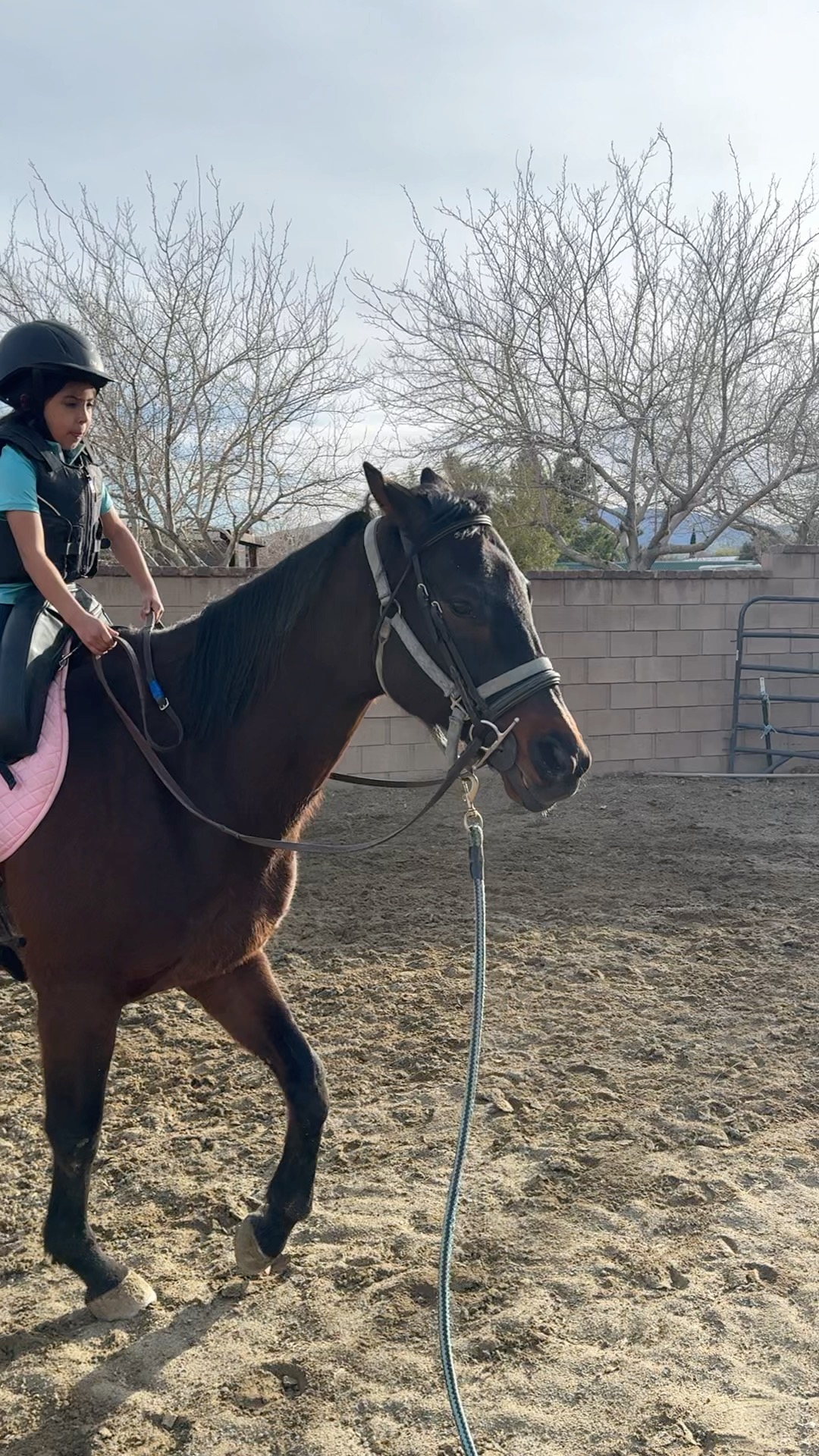
Outdoor arenas with good airflow are generally better for children with asthma than enclosed indoor arenas. At Hussar Stables, our primary arena is outdoors in the clean, dry Antelope Valley air — an environment that many families with asthmatic children find significantly better than indoor facilities.
A Practical Pre-Lesson Checklist for Allergy-Prone Families
| Step | Action |
|---|---|
| 1 | Schedule an allergy test if your child has known animal allergies or asthma |
| 2 | Visit the barn for 30–60 minutes before the first lesson to observe any reactions |
| 3 | Inform the barn of your child's allergies and any medications they carry |
| 4 | Give antihistamines 30–60 minutes before the lesson on high-pollen days |
| 5 | Ensure rescue inhaler is in the lesson bag for children with asthma |
| 6 | Shower and change clothes after the barn to reduce prolonged allergen exposure |
| 7 | Monitor symptoms over the first several lessons and adjust as needed |
Our Experience at Hussar Stables
We have members with hay fever, grass allergies, and mild asthma who ride regularly without significant difficulty. Our outdoor arena, dry climate, and well-maintained facility minimize dust and mold exposure. We ask all families to inform us of any relevant medical conditions before the first lesson so we can take appropriate precautions.
If your child has a known animal allergy or asthma, we recommend consulting your allergist before starting lessons. In most cases, with appropriate preparation, riding is entirely possible — and the benefits to your child's confidence, physical development, and well-being are well worth the extra planning.
---
[Book an Intro Lesson](/book) at Hussar Stables. If you have questions about allergies or asthma, contact us before booking and we will be happy to discuss your child's specific situation.
More in Safety
Horseback Riding Safety: The Complete Guide for Beginners and Parents
13 min read
The Importance of the Correct Riding Helmet: A Safety Guide for Parents
7 min read
Is Horseback Riding Dangerous for Kids? An Honest Safety Guide for Parents
7 min read
How to Fall Off a Horse Safely: The Emergency Dismount Every Rider Needs to Know
5 min read
What to Do If Your Horse Spooks: A Calm, Safe Response Guide
5 min read
10 Horseback Riding Safety Rules Every Beginner Must Know
5 min read
Have a question?
Text us — we reply fast.
(661) 227-3214 · Hussar Stables, Palmdale CA
Ready to Experience This in Person?
Book a private Intro Lesson at Hussar Stables and discover why families from Palmdale, Lancaster, and Santa Clarita choose our members-only riding club.
Book Intro Lesson