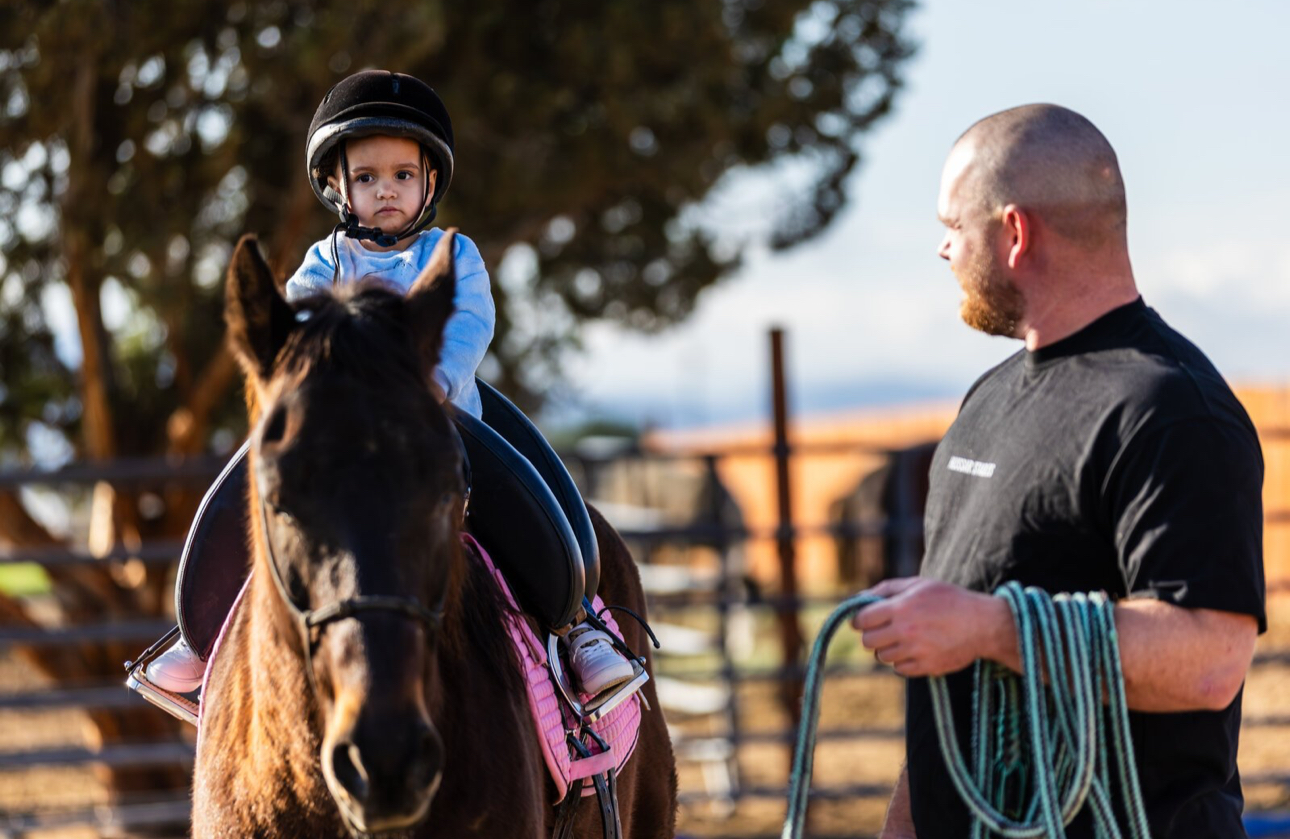
Bonding with a horse is not about treats or time — it is about consistency, body language, and learning to communicate in a language the horse already understands. Here is how to build real trust.
Bonding with a horse starts on the ground, not in the saddle. Consistent, calm handling — grooming, leading, and groundwork — teaches the horse that you are safe and predictable. Horses bond with people who communicate clearly and never punish confusion. Most beginners can build a genuine working bond within 4 to 8 weeks of regular, structured interaction.
There is a moment every rider remembers. You walk into the barn, and the horse you have been working with lifts its head, ears forward, and walks to the gate. Not because you have a treat. Not because it is feeding time. Just because you showed up.
That moment does not happen by accident. It is the result of dozens of small, consistent interactions — most of them not on horseback at all.
Bonding with a horse is one of the most misunderstood parts of horsemanship. People assume it happens automatically, or that it is about how much time you spend, or that the right horse will just like you. None of that is quite right. Bonding is a skill. It is something you build deliberately, through the quality of your interactions, not the quantity.
Here is how to do it.
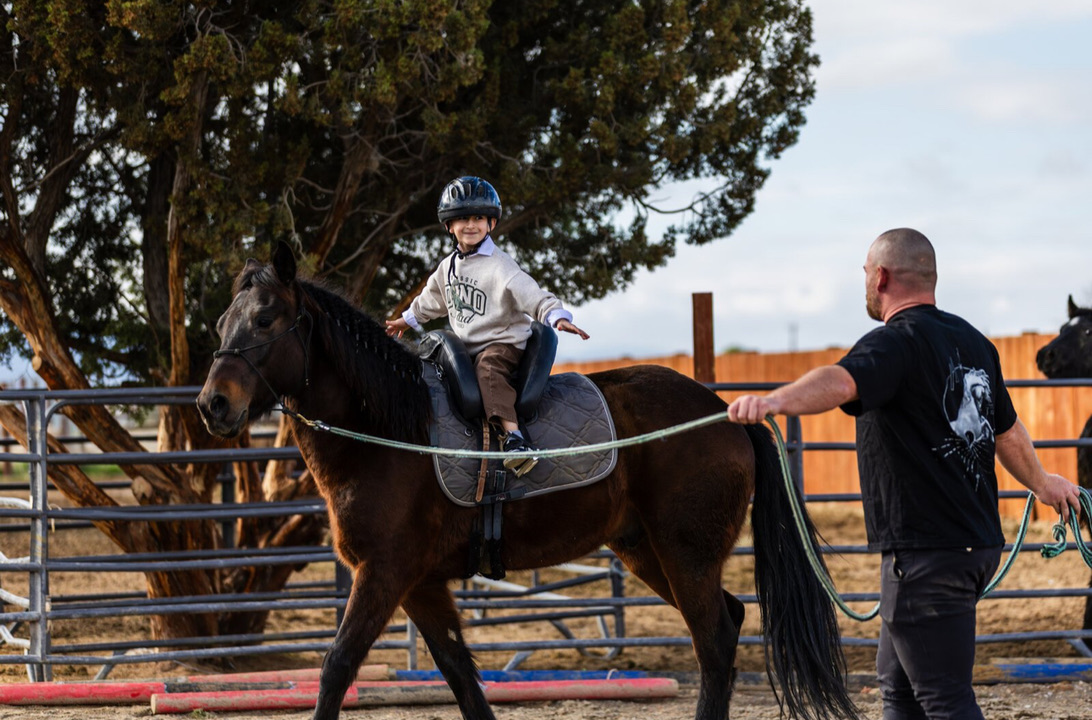
Continue Reading · Beginners
Complete Guide to Horseback Riding for Beginners (2026)
15 min read
Start on the Ground
The single biggest mistake new riders make is rushing to get in the saddle. The saddle is where you ride. The ground is where you bond.
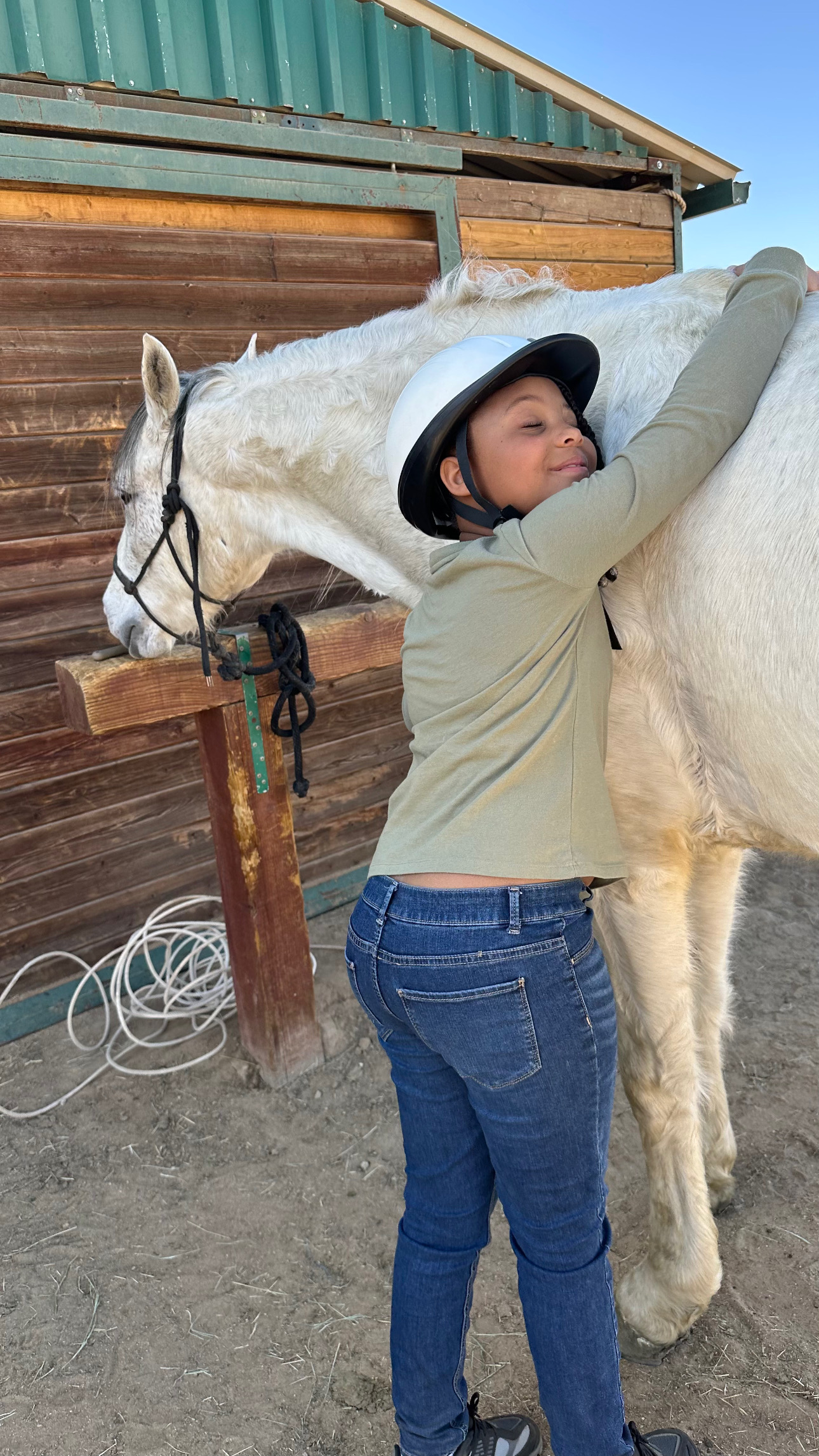
Grooming is the most underrated tool in horsemanship. When you groom a horse — brushing its coat, picking its hooves, running your hands along its neck and back — you are doing several things at once. You are learning the horse's body and where it is sensitive. You are teaching the horse that your touch is safe. And you are giving the horse a chance to read you: your breathing, your energy, your intentions.
Horses are extraordinarily perceptive. They can detect a change in your heart rate. They notice when your jaw is tight or your shoulders are raised. When you groom a horse with calm, deliberate hands, you are communicating something the horse understands at a very deep level: I am not a threat. I am consistent. You can relax around me.
Leading is the second foundational skill. A horse that walks beside you with a loose lead rope, matching your pace, stopping when you stop — that horse trusts you. A horse that drags behind or barges ahead has not yet learned to follow your energy. Practicing clean, clear leading is not just practical. It is one of the clearest ways to establish yourself as a calm, reliable presence.
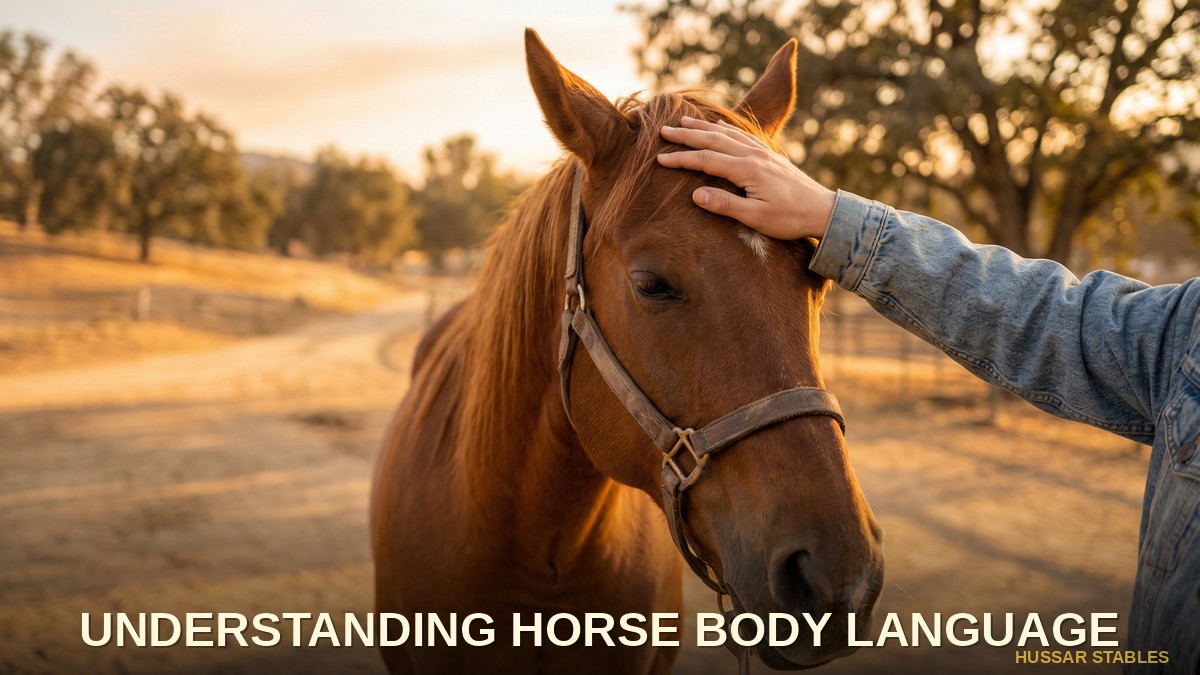
Continue Reading · Beginners
How to Read a Horse's Body Language: A Beginner's Guide
7 min read
Learn to Read Body Language
You cannot bond with something you do not understand. And horses communicate almost entirely through their bodies.
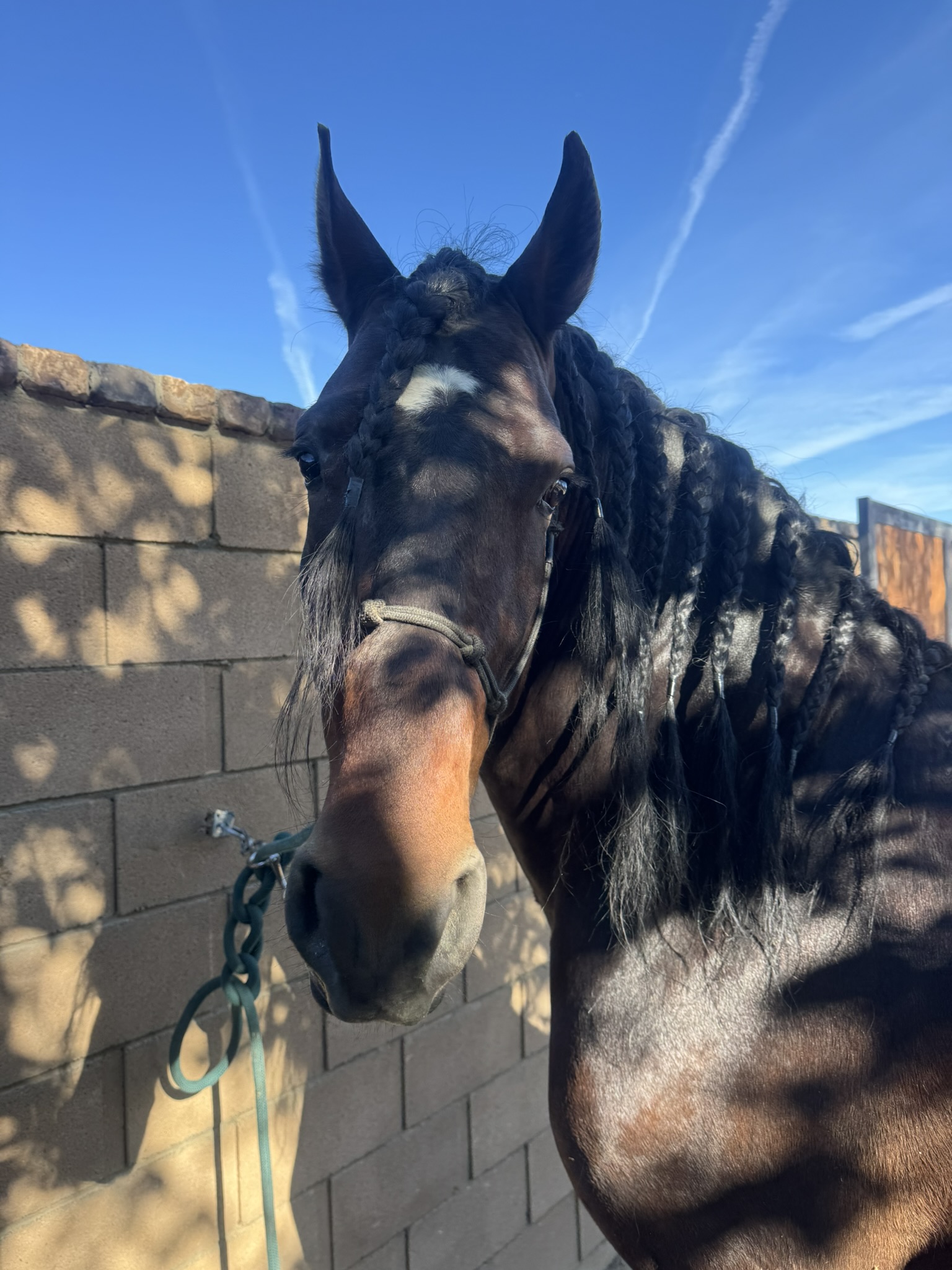
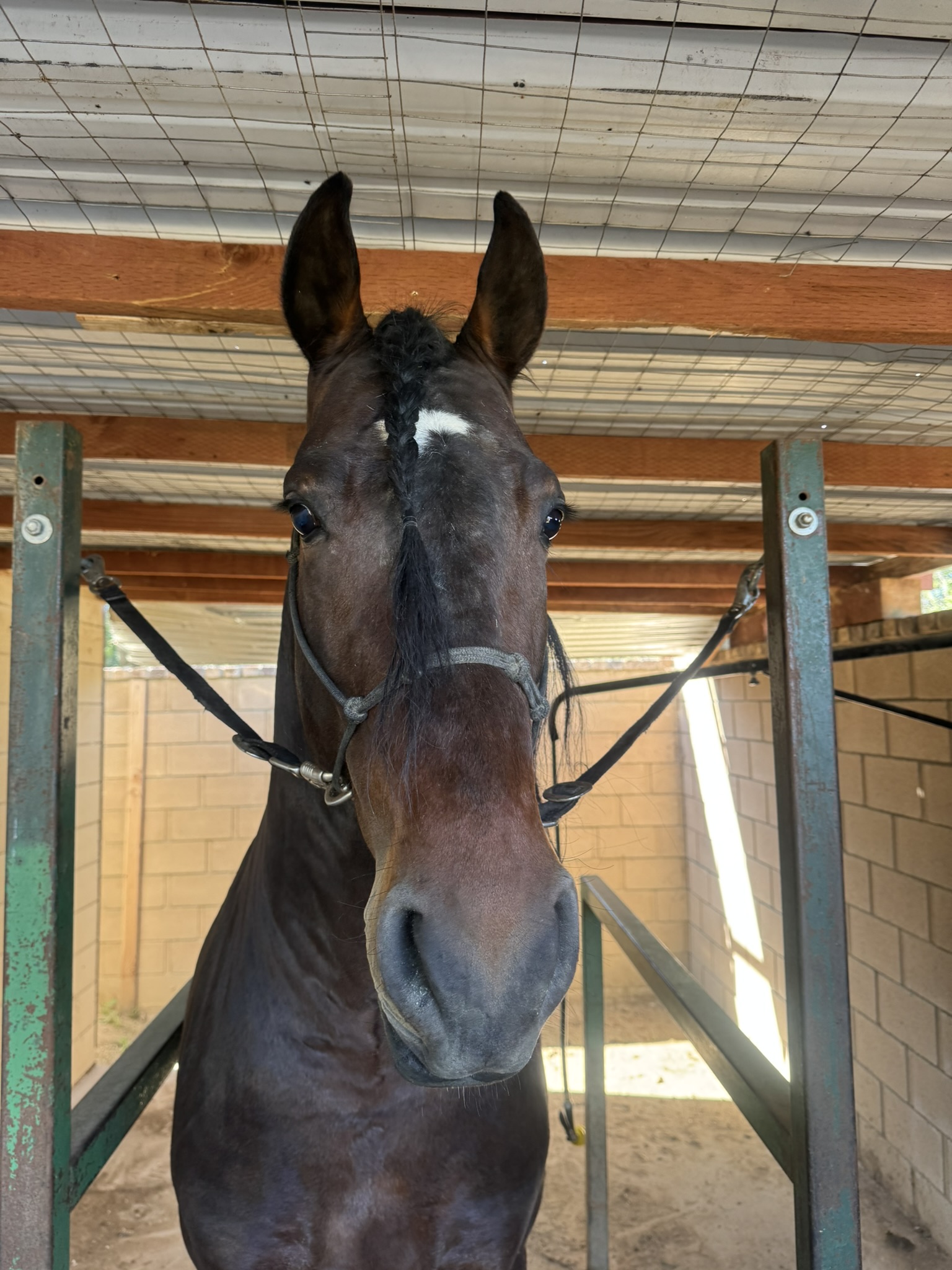
The ears are the most obvious signal. Ears forward mean the horse is alert and curious. Ears back and flat mean the horse is irritated or threatened. Ears loosely to the side, with a soft eye and a relaxed lower lip, mean the horse is content. Learning to read these signals in real time — and adjusting your behavior accordingly — is the foundation of communication.
The eye tells you a great deal about emotional state. A soft, quiet eye with a relaxed brow means the horse is comfortable. A hard, wide eye with white showing means the horse is alarmed. When you see tension in the eye, slow down. Give the horse space. Let it process.
The tail is another indicator. A horse that swishes its tail sharply is expressing irritation. A tail held high means excitement or alertness. A loose, swinging tail at the walk is a sign of relaxation and forward movement.
Continue Reading · Riding Technique
The Psychology of the Horse: Why Understanding Prey Animal Behavior Makes You a Better Rider
9 min read
When you start noticing these signals and responding to them — slowing your approach when the horse tenses, giving it a moment when it looks away, rewarding it with stillness when it softens — the horse begins to understand that you are listening. That is when trust starts to build.
Consistency Is Everything
Horses do not bond with people who show up once a week with a bag of treats. They bond with people who are the same every time.
Consistency means your energy is predictable. It means you handle the horse the same way on a bad day as on a good day. It means you do not rush through grooming when you are in a hurry, and you do not skip the groundwork because you want to ride. It means the horse can count on you to be calm, clear, and fair.
This is harder than it sounds. Horses are exquisitely sensitive to human emotional states. If you arrive at the barn stressed, the horse will feel it before you even open the stall door. This does not mean you have to be perfectly calm every time — it means you have to be aware. Take a breath before you enter the barn. Let your shoulders drop. Slow your walk. Give yourself thirty seconds to transition from whatever you were doing before into the mindset of being with the horse.
Continue Reading · Riding Technique
Why Unmounted Horsemanship is Just as Important as Riding
6 min read
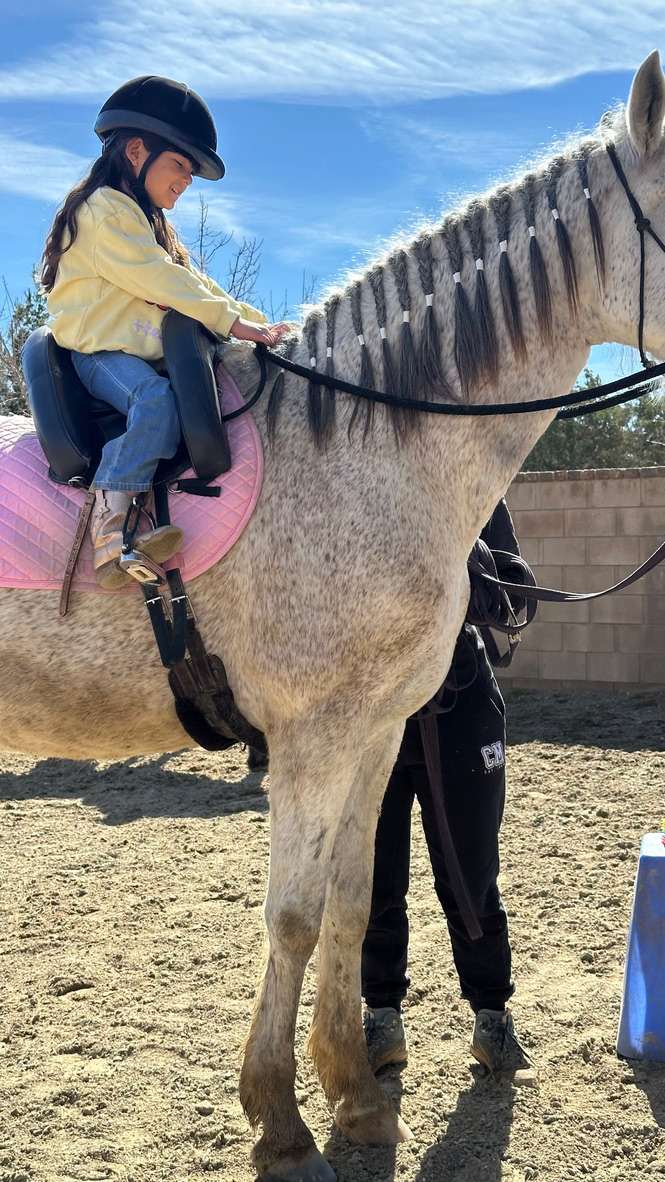
Short, daily interactions build a bond faster than long, weekly sessions. Even fifteen minutes of grooming and leading, done consistently, will produce a stronger relationship than a two-hour ride once a week. The horse learns your rhythm. It starts to anticipate your presence as something positive.
What Not to Do
Treats are the most common mistake beginners make when trying to bond with a horse. Treats do not create trust — they create expectation. A horse that has learned to expect treats will mug you, push into your space, and become frustrated when you do not produce them. This is not bonding. It is conditioning.
Treats have a place in training as a reward for a specific behavior. But they are not a substitute for the patient, consistent groundwork that actually builds a relationship.
Punishing confusion is the other major mistake. Horses do not understand human frustration. When a horse does something wrong — spooks, refuses, does not respond to an aid — it is almost always because it does not understand what is being asked, or because something is frightening it. Punishing that confusion teaches the horse that you are unpredictable and unsafe. It destroys trust.
Continue Reading · Kids & Families
What Makes a Horse Happy? Signs of a Well-Cared-For Lesson Horse
6 min read
Instead, when something goes wrong, ask yourself: Did the horse understand what I was asking? Was I clear? Back up. Simplify the request. Reward the smallest try. This approach — patient, clear, and fair — is what horses respond to.
The Riding Bond
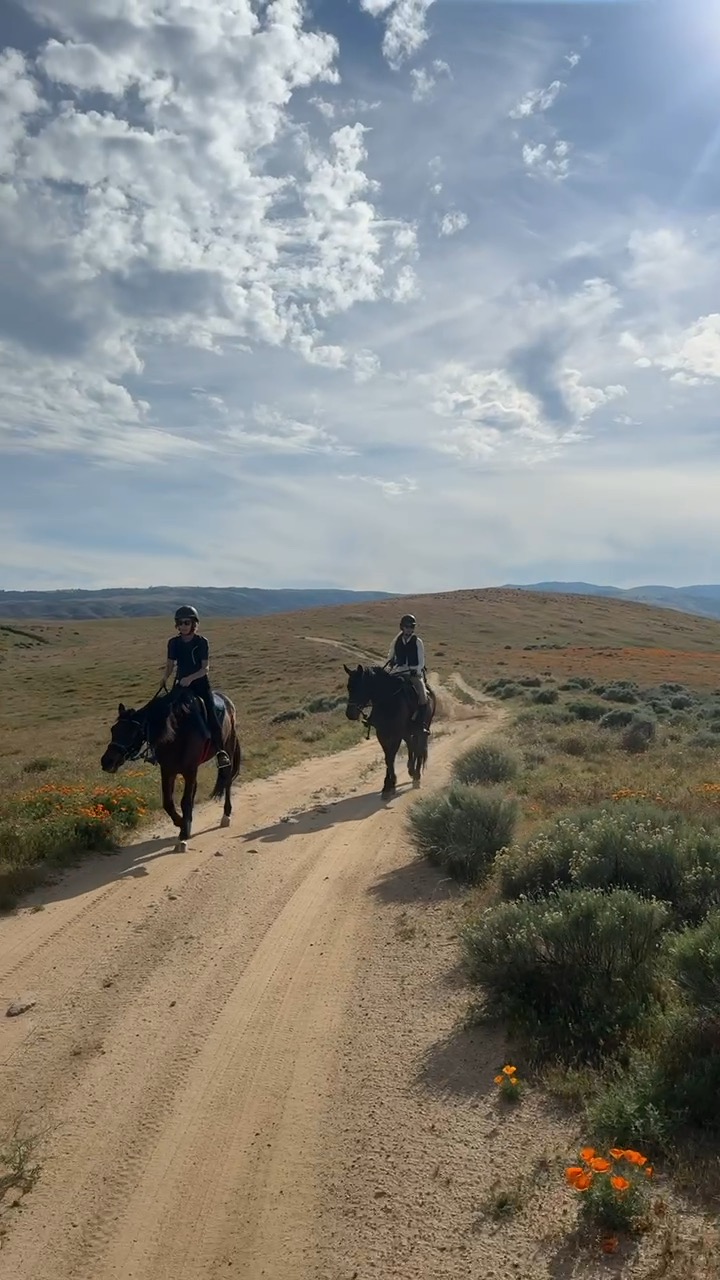
Once you have built a foundation of trust on the ground, the bond in the saddle develops naturally. A horse that trusts you on the ground will be more relaxed under saddle, more willing to go forward, and more forgiving of mistakes.
The riding bond deepens through the same principles: consistency, clarity, and fairness. Ride with soft hands. Use your leg before your rein. Give the horse a moment to understand a new request before repeating it. Reward the try, not just the perfect execution.
At Hussar Stables, we teach bonding as a core part of our curriculum — not as a separate module, but as the foundation every other skill is built on. Our lesson horses are calm, experienced, and accustomed to working with beginners precisely because they have been handled with patience and consistency from the start. When you learn to ride here, you are not just learning to sit in a saddle. You are learning to communicate with another living creature in a language it understands.
That is what makes riding different from every other sport.
Ready to build a real connection with a horse? [Book an Intro Lesson](/book) at Hussar Stables in Palmdale, CA, and start from the ground up.
- Bonding happens on the ground first — grooming and leading build trust before riding
- Horses read your body language constantly; calm, deliberate movement earns respect
- Consistency matters more than time — short daily interactions beat long weekly sessions
- Never punish a horse for confusion; redirect and reward the try
- A bonded horse is easier to ride, calmer under pressure, and more willing to work
- Treats are not bonding — they create expectation, not trust
More in Beginners
Complete Guide to Horseback Riding for Beginners (2026)
15 min read
What to Wear to Your First Horseback Riding Lesson (And What We Provide)
5 min read
How Long Does It Take to Learn to Ride a Horse? A Realistic Timeline
5 min read
The 7 Most Common Beginner Riding Mistakes (And How to Fix Them)
7 min read
How to Read a Horse's Body Language: A Beginner's Guide
7 min read
How to Overcome Fear of Horses: A Step-by-Step Guide for Nervous Beginners
5 min read
Have a question?
Text us — we reply fast.
(661) 227-3214 · Hussar Stables, Palmdale CA
Ready to Experience This in Person?
Book a private Intro Lesson at Hussar Stables and discover why families from Palmdale, Lancaster, and Santa Clarita choose our members-only riding club.
Book Intro Lesson