Working equitation blends dressage, trail obstacles, and cattle work into one of the most practical and rewarding equestrian disciplines. Here's everything you need to know.
Working equitation is an equestrian discipline that combines dressage, a trail obstacle course (ease of handling), a timed obstacle course, and cattle work into a single competition format. It originated in the Iberian Peninsula as a test of the working ranch horse and is now practiced worldwide as both a competitive sport and a training philosophy.
Working equitation is one of the most complete tests of a horse and rider partnership that exists in the equestrian world. It asks the horse to be supple and responsive enough to perform dressage movements, bold and calm enough to navigate a complex obstacle course, quick and agile enough to complete that same course against the clock, and steady enough to work cattle. Few disciplines demand this range.
If you have never seen working equitation before, the best way to understand it is to watch a rider guide a horse through a gate, close it behind them, cross a wooden bridge, weave through poles, pick up a ring on a lance, and do all of it at a collected canter — then do it again as fast as possible. That is working equitation.
Origins: The Working Ranch Horse
Working equitation originated in the Iberian Peninsula — Portugal and Spain — where horses were bred and trained to work cattle on large estates called latifundios. The campino in Portugal and the vaquero tradition in Spain developed a style of riding that prioritized lightness, collection, and practical utility. A horse that could open a gate without dismounting, move cattle through a narrow chute, and respond to the lightest leg pressure was worth far more than one that could only perform in an arena.
The discipline was formalized as a competitive sport in the 1990s when riders from Portugal, Spain, France, and Italy came together to create a unified set of rules. The International Working Equitation organization (WAWE) now governs the sport globally, and it has spread rapidly through Europe, North America, South America, and Australia.
Continue Reading · Working Equitation
Complete Guide to Working Equitation: Everything You Need to Know
18 min read
The Four Phases of Competition
At the competitive level, working equitation is divided into four distinct phases, each testing a different aspect of the horse and rider partnership.
Dressage is the foundation. Riders perform a test in an arena, demonstrating collection, lateral movements, transitions, and harmony. The dressage phase in working equitation is similar to classical dressage but includes movements specific to the discipline, such as the piaffe and passage at higher levels. The horse must be light in the hand, responsive to the leg, and move with energy and balance.
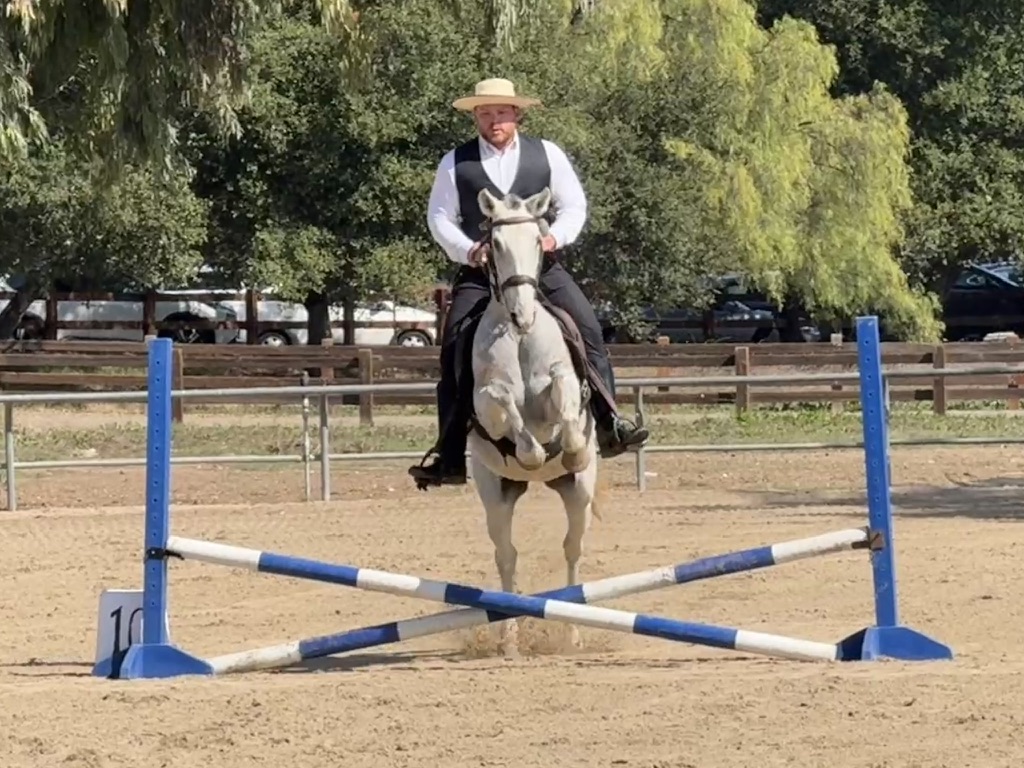
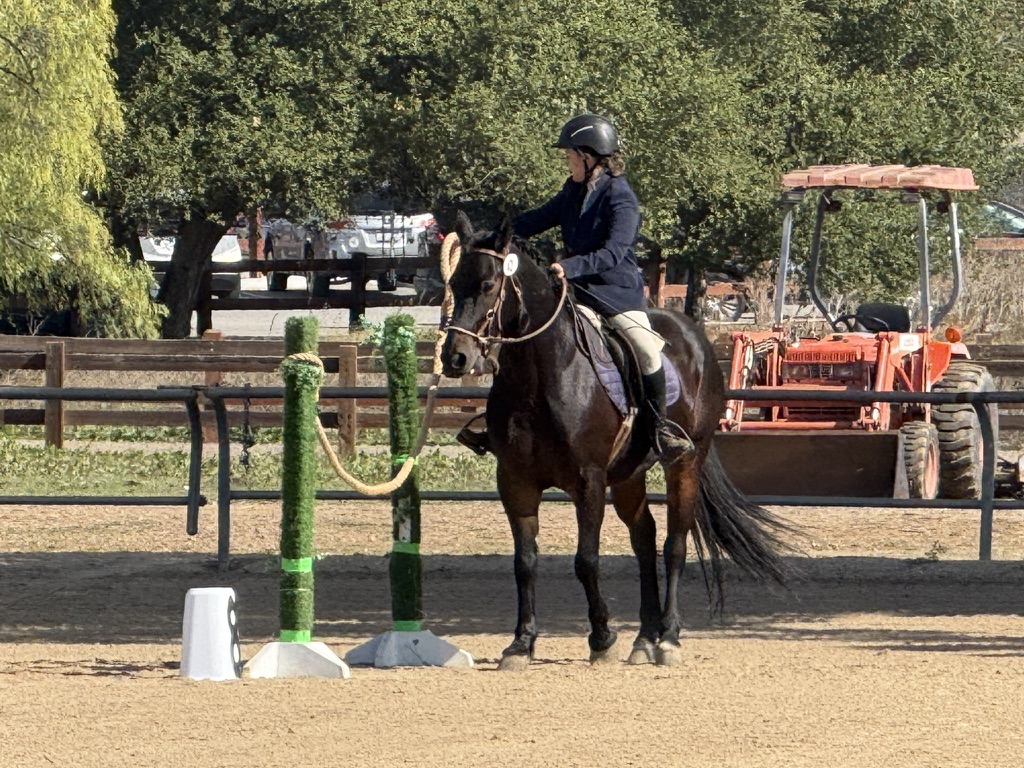
Ease of Handling is the obstacle course phase. Riders navigate a course of ten to fifteen obstacles at a working trot and canter, demonstrating precision and calmness. Obstacles include gates (opened and closed from horseback), a corridor of poles, a water crossing, a bridge, a bull pen, a slalom, and a ring on a lance. The horse must be confident and obedient. Penalties are assessed for knocking obstacles, refusing, or breaking gait.
Speed is the same obstacle course ridden as fast as possible. This phase reveals whether the partnership built in ease of handling holds up under pressure. A horse that rushes, falls apart, or becomes tense under speed has not been properly prepared. The best working equitation horses are faster in the speed phase precisely because they are more collected — they waste no movement.
Continue Reading · Kids & Families
The Ultimate Guide to Horseback Riding Lessons for Kids in the Antelope Valley
7 min read
Cattle Work is the fourth phase, available at higher competition levels. The rider must separate a single cow from a herd and hold it against a wall for a set period of time. This requires a horse that reads cattle, responds instantly to subtle aids, and remains calm in the presence of moving animals. It is the oldest test in the discipline and the one that most directly connects modern competition to its working ranch origins.
Why Any Breed Can Compete
One of the most appealing aspects of working equitation is that it is not a breed-specific discipline. While Lusitanos, Andalusians, and Iberian horses have a natural advantage in the dressage phase due to their conformation and breeding, Quarter Horses, Warmbloods, Arabians, and even stock horses compete successfully at every level. The discipline rewards training, partnership, and the rider's ability to develop their horse — not bloodlines or expensive purchases.
This makes working equitation accessible in a way that some other disciplines are not. A well-trained horse of modest breeding can compete against horses worth ten times as much and win, because the judging rewards harmony and correctness over flashiness.
Working Equitation as a Training Philosophy
Beyond competition, working equitation has become a training philosophy for many riders who never intend to compete. The obstacle course is one of the most effective tools available for developing a horse's confidence, obedience, and responsiveness. A horse that will walk calmly across a bridge, stand quietly while a gate is opened and closed around it, and move through a narrow corridor without tension is a horse that has been properly desensitized and trained.
Continue Reading · Local Guides
Trail Riding Club Near Palmdale: Inside the Hussar Stables Exploration Club
7 min read
The dressage component ensures that this boldness is paired with collection and lightness. A working equitation horse that is only brave but not responsive is not finished. The discipline demands both.
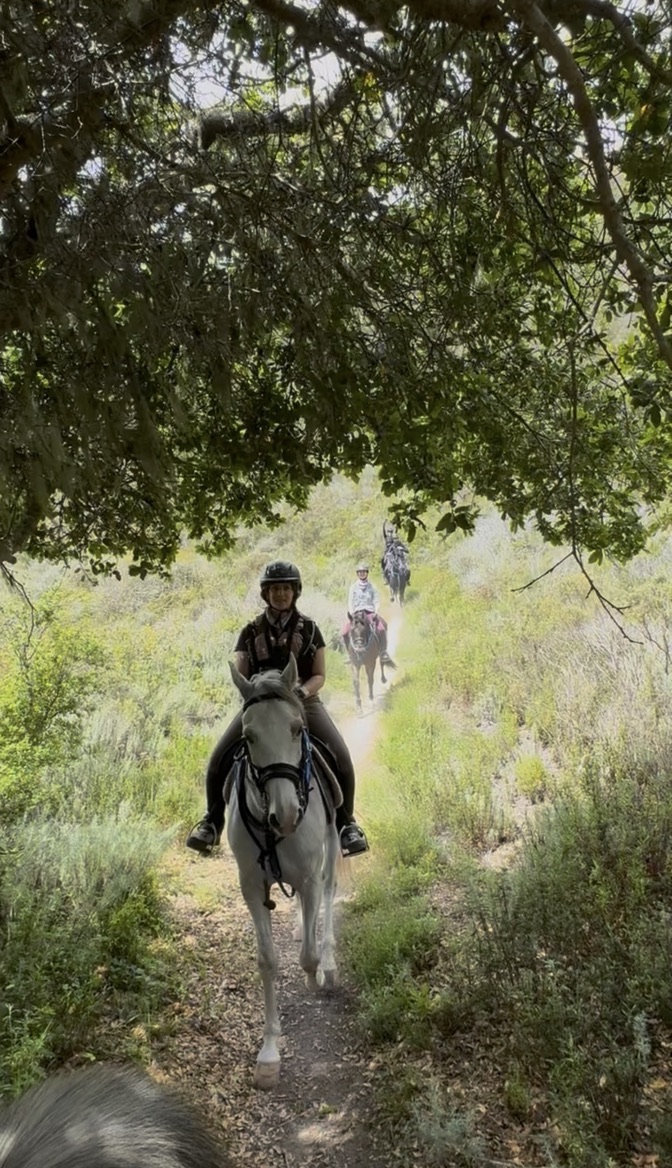
At Hussar Stables, working equitation is central to how we train horses and develop riders. The Exploration Club rides incorporate obstacle work, trail challenges, and cattle-adjacent exercises that build the same skills tested in formal competition. Riders who train in this tradition develop a feel for the horse that is difficult to acquire through arena work alone.
Getting Started in Working Equitation
If you are interested in working equitation, the first step is finding a program that takes the dressage foundation seriously. Working equitation done well begins with a horse that moves correctly — forward, balanced, and light. Without that foundation, the obstacle work becomes a test of brute force rather than partnership.
At the introductory level, the obstacles are straightforward and the dressage test is basic. Riders can begin competing with walk-trot skills and a horse that is comfortable with novel objects. The discipline is genuinely welcoming to newcomers.
If you are in the Palmdale or Antelope Valley area and want to experience working equitation firsthand, the Hussar Stables Exploration Club offers exactly this kind of training. Riders work with horses that have been trained in the working equitation tradition, on terrain and with obstacles that develop real horsemanship. The tryout session is the first step.
Ready to experience working equitation? [Book a tryout session](/exploration-club) and ride with horses trained in this tradition.
- Working equitation has four phases: dressage, ease of handling, speed, and cattle work
- It originated in Portugal and Spain as a test of the practical working horse
- Any breed can compete — it rewards training and partnership, not bloodlines
- The obstacle course tests real-world skills: gates, bridges, water, and more
- It is one of the fastest-growing equestrian disciplines in North America
- Hussar Stables trains riders in working equitation as part of the Exploration Club curriculum
More in Working Equitation
↑ Back to complete guideComplete Guide to Working Equitation: Everything You Need to Know
18 min read
What is Working Equitation? A Beginner's Guide to the USA's Fastest-Growing Equestrian Sport
9 min read
Working Equitation vs. Dressage: Understanding the Key Differences
8 min read
The Essential Gear Guide for Working Equitation Beginners
7 min read
How to Choose the Right Horse Breed for Working Equitation
7 min read
Working Equitation Scoring Explained: How Judges Evaluate Your Ride
8 min read
Have a question?
Text us — we reply fast.
(661) 227-3214 · Hussar Stables, Palmdale CA
Ready to Experience This in Person?
Book a private Intro Lesson at Hussar Stables and discover why families from Palmdale, Lancaster, and Santa Clarita choose our members-only riding club.
Book Intro Lesson