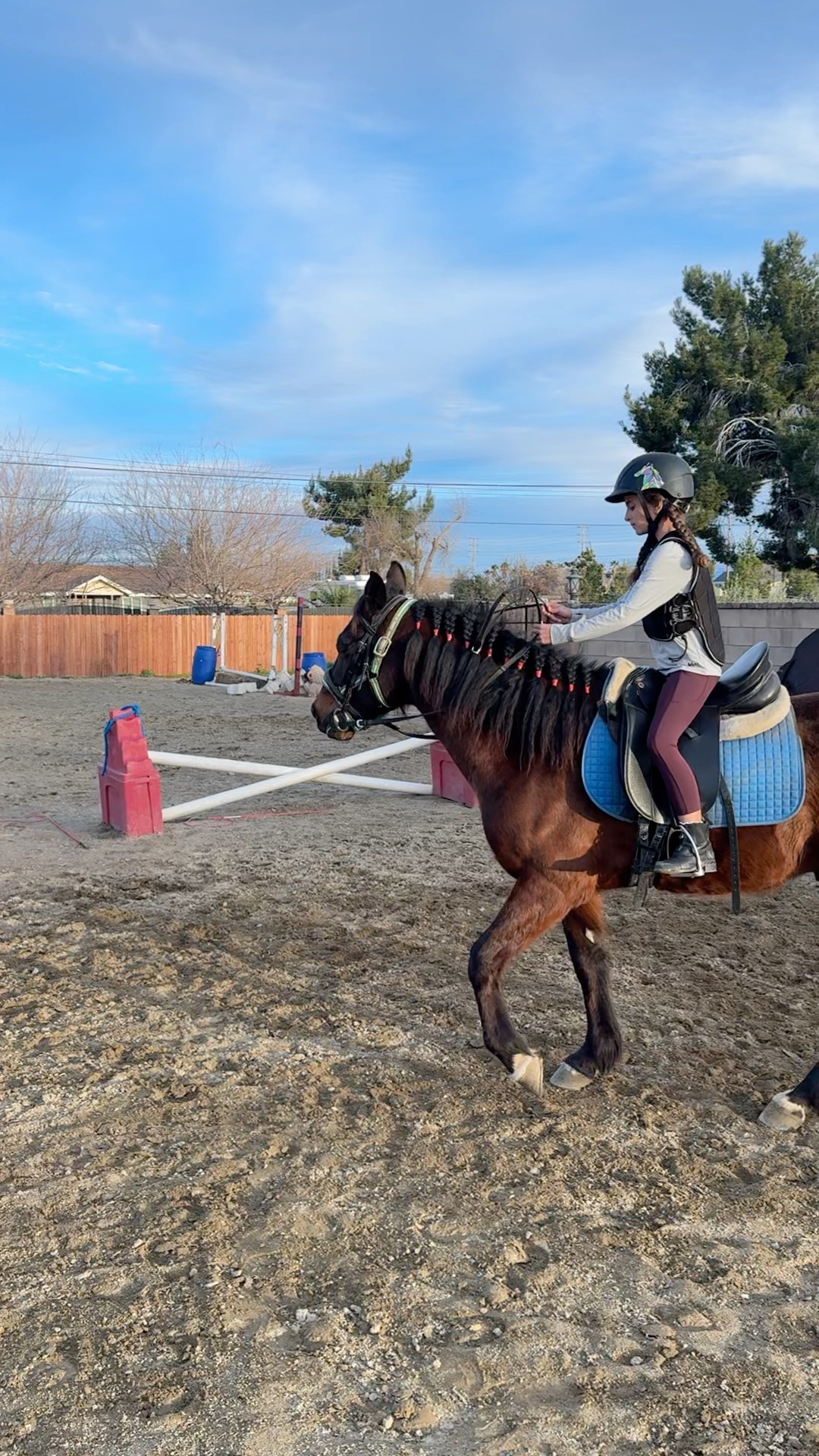
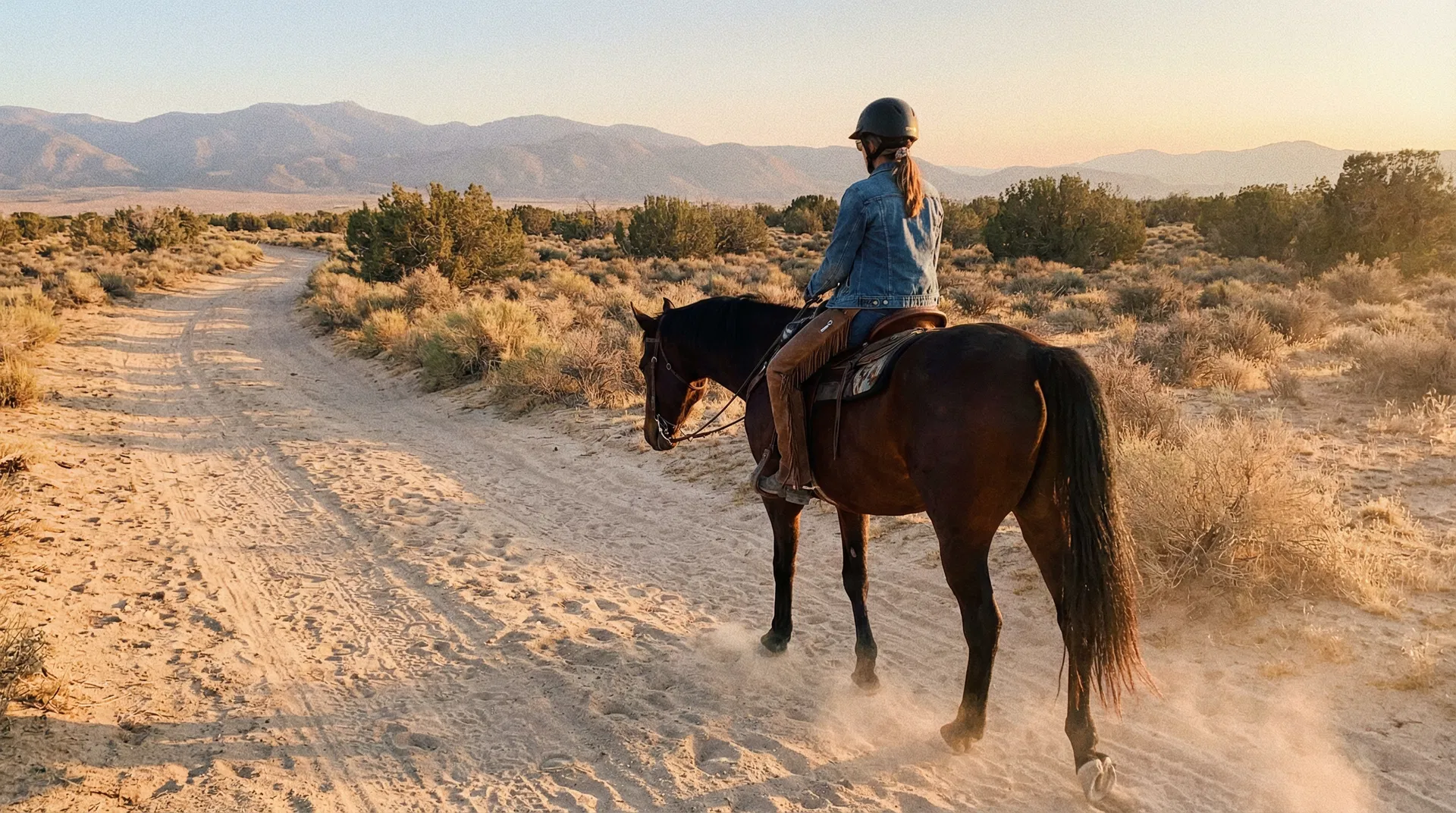
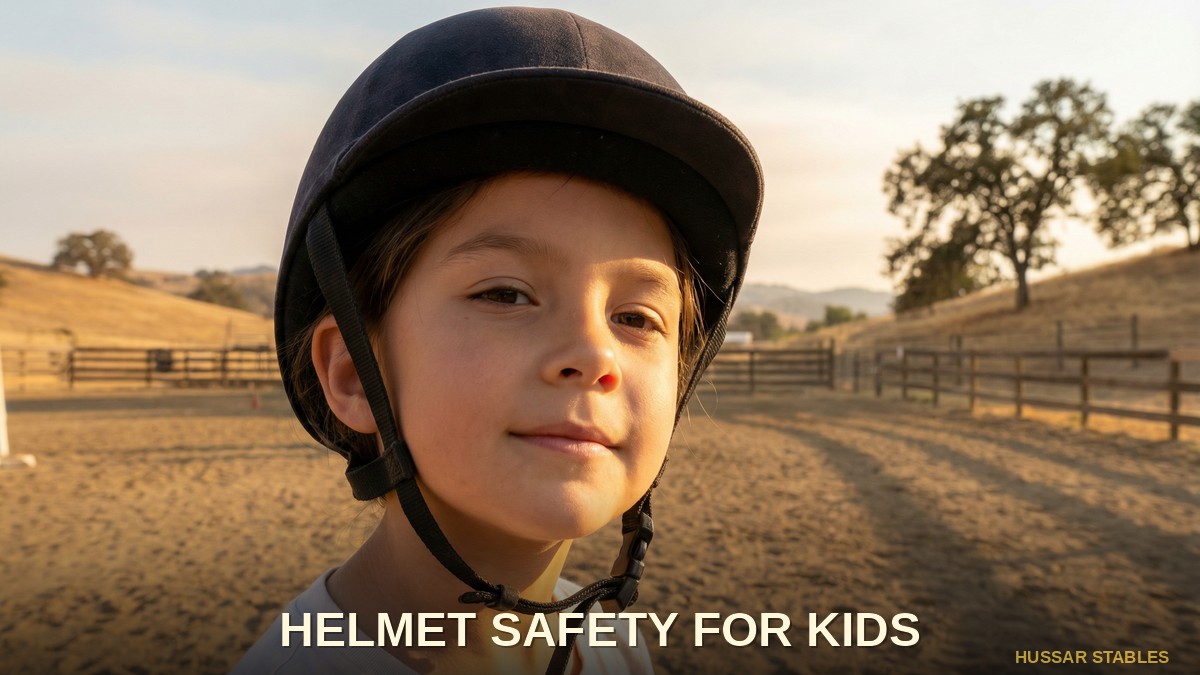
Working equitation is not just a competition discipline. The skills it develops — collection, lateral movement, horse responsiveness — are exactly what separates a competent trail rider from a great one.
Working equitation improves trail riding by developing collection, lateral movement, and precise horse responsiveness — skills that make a horse easier to manage on uneven terrain, in tight spaces, and in unexpected situations. Riders who train in working equitation tend to have better balance, lighter hands, and horses that are more reliably obedient outside the arena.
Most trail riders think of working equitation as a competition discipline — something that happens in an arena with obstacles and judges. That is one version of it. But the principles behind working equitation are older than the competition format, and they are directly applicable to anyone who wants to ride well outside an arena.
The discipline originated with working cattle ranchers in Portugal, Spain, and South America who needed horses that were functional, reliable, and responsive in real-world conditions. A horse that could only perform in a controlled environment was not useful. The training methods that developed around working cattle — collection, lateral movement, precise responsiveness to subtle aids — were not aesthetic choices. They were practical ones.
Those same qualities are exactly what separates a competent trail rider from a great one.
What Working Equitation Actually Develops
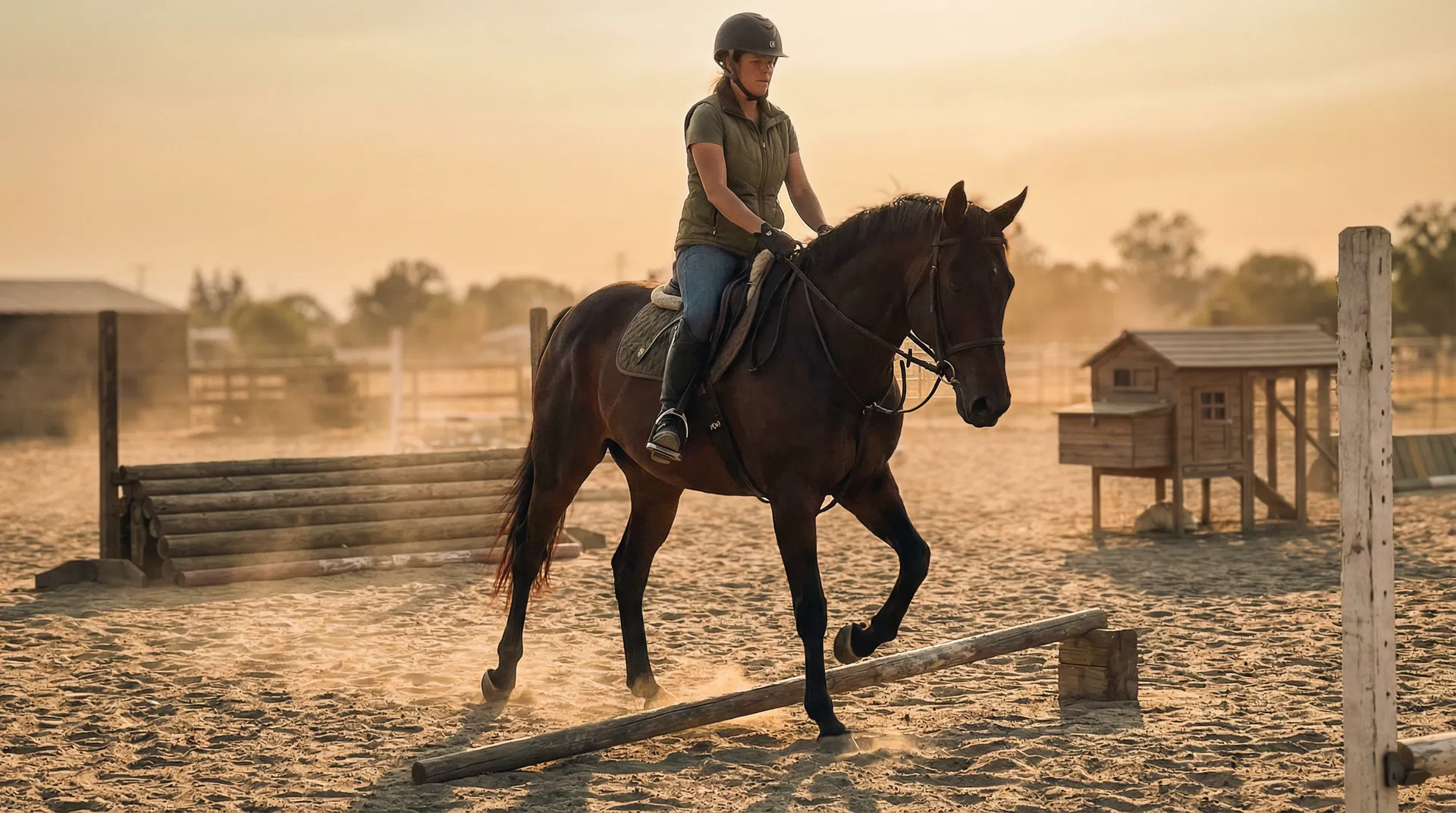
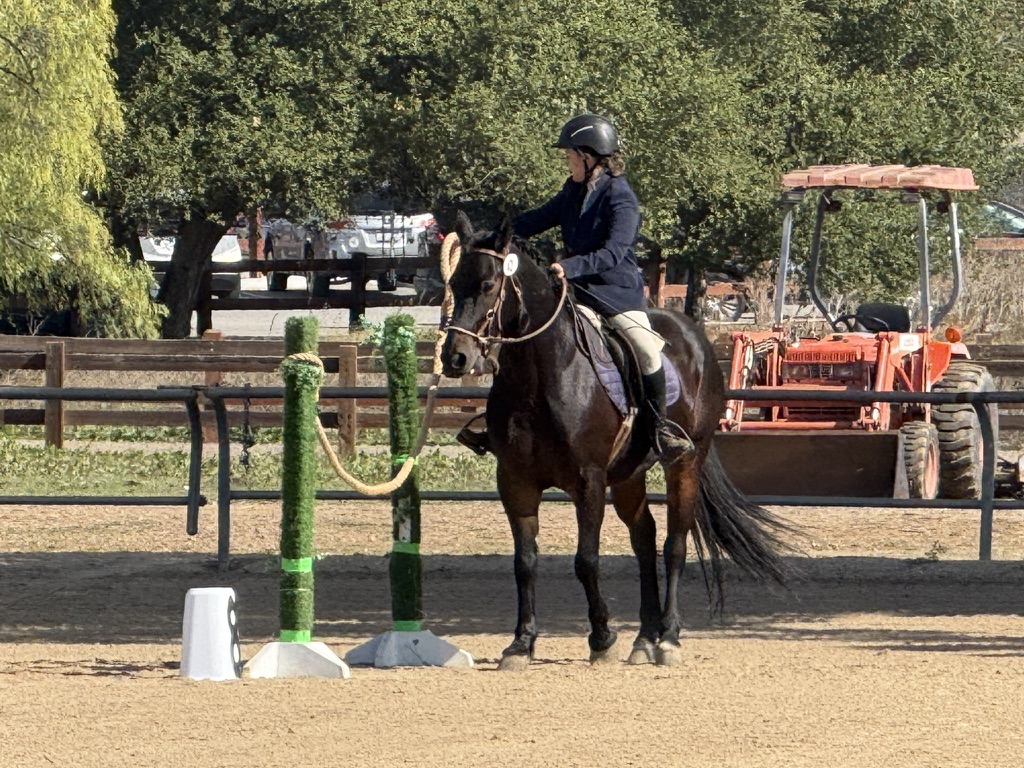
The competition format has four phases: dressage, ease of handling, speed, and cattle work. The ease of handling phase is the most directly relevant to trail riding. In this phase, horse and rider navigate a course of obstacles — gates, bridges, water troughs, barrels, poles — that simulate the kinds of challenges a working horse would encounter in the field.
Continue Reading · Working Equitation
What Is Working Equitation? A Complete Guide to the Discipline
8 min read
To complete these obstacles well, the horse needs to be calm, responsive, and willing to move in any direction from subtle aids. A horse that is tense, dull to the leg, or resistant to lateral movement will struggle. A horse that has been trained in working equitation principles will handle them easily.
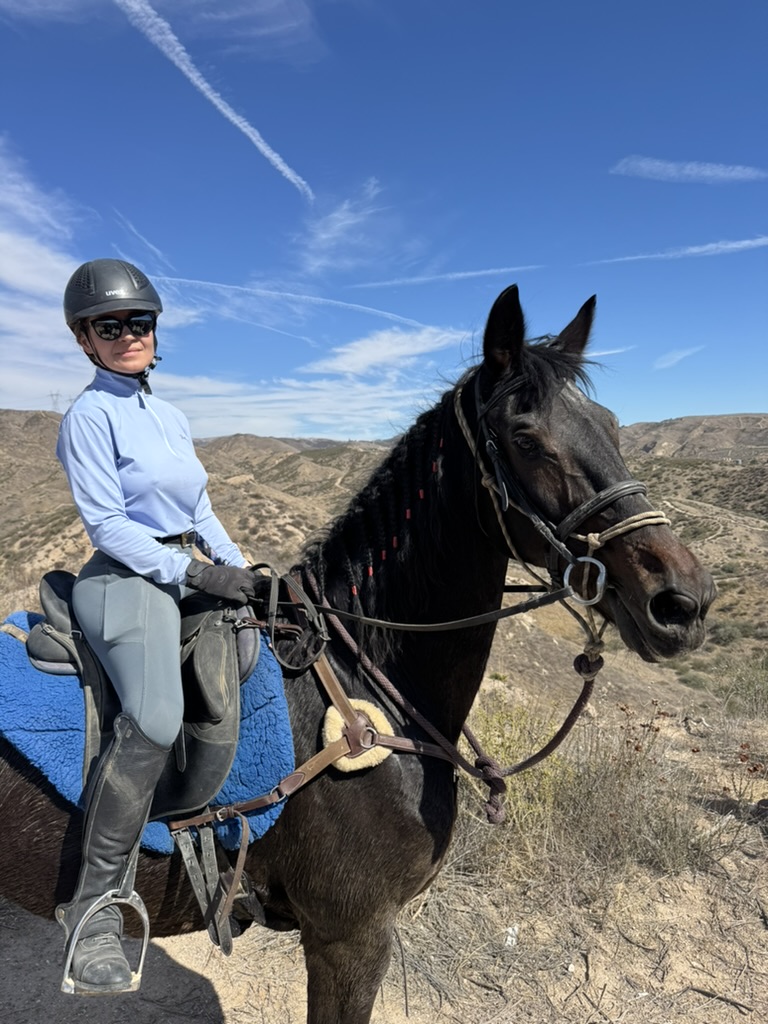
Those same qualities — calm, responsive, laterally mobile — are what you want on a trail. A horse that will step sideways away from a rattlesnake without bolting. A horse that will walk through water without a fight. A horse that will stand quietly while you open a gate. A horse that will hold its position on a narrow ledge without drifting.
The Collection Question
Collection is often misunderstood as a purely aesthetic quality — something that makes a horse look impressive in the arena. In working equitation, collection is functional. A collected horse carries more weight on its hindquarters, which makes it more maneuverable, more balanced on uneven terrain, and more responsive to directional changes.
On a trail, a collected horse is easier to steer around obstacles, easier to slow down on a steep descent, and easier to hold in place when something spooks it. An uncollected horse — strung out, heavy on the forehand, dull to the aids — is harder to manage in every situation that requires precision.
Continue Reading · Working Equitation
Complete Guide to Working Equitation: Everything You Need to Know
18 min read
You do not need to achieve the level of collection required for upper-level dressage. But even basic collection training — getting a horse to step under itself, lighten its forehand, and respond to lighter aids — makes a measurable difference on the trail.
Lateral Movement on the Trail
Lateral movements — leg yield, shoulder-in, haunches-in — are standard in working equitation training. On the trail, they are constantly useful. Moving a horse sideways to avoid a hazard. Positioning a horse alongside a gate or fence. Keeping a horse straight on a camber where it naturally wants to drift downhill.
Riders who have never trained lateral movement tend to steer with the reins alone, which is slow and imprecise. Riders who have trained lateral movement steer with their whole body — weight, leg, rein — which is faster and requires much less physical effort. On a long ride, that efficiency matters.
How Hussar Stables Integrates Working Equitation
At Hussar Stables, working equitation is not a separate program for competition-minded riders. It is a training philosophy that runs through everything — the arena sessions, the trail rides, and the way the horses are developed.
Continue Reading · Local Guides
Trail Riding Club Near Palmdale: Inside the Hussar Stables Exploration Club
7 min read
The Exploration Club arena sessions include working equitation elements: transitions, lateral work, obstacle navigation, and the kind of precision that makes a horse genuinely rideable in any situation. The trail rides then test those skills in real conditions. The two reinforce each other.
Riders who come to the club from a purely trail riding background often notice the difference within a few sessions. Their horses become lighter. Their aids become quieter. The rides become less effortful and more enjoyable.
You do not need to compete in working equitation to benefit from it. You just need to train the qualities it develops — and then take those qualities out onto the trail.
Interested in riding with a group that takes this seriously? [Book a tryout session](/exploration-club) at Hussar Stables.
Continue Reading · Local Guides
Inside the Hussar Stables Exploration Club: What a Month Actually Looks Like
8 min read
- Working equitation develops collection and lateral movement that directly improve trail riding
- The ease of handling phase trains horses to navigate obstacles calmly — essential on real trails
- Riders develop lighter, more precise aids that work in any environment
- The discipline originated with working cattle ranchers who needed functional, reliable horses
- Hussar Stables integrates working equitation into both arena sessions and trail rides
- You do not need to compete to benefit from working equitation training
More in Working Equitation
↑ Back to complete guideComplete Guide to Working Equitation: Everything You Need to Know
18 min read
What is Working Equitation? A Beginner's Guide to the USA's Fastest-Growing Equestrian Sport
9 min read
Working Equitation vs. Dressage: Understanding the Key Differences
8 min read
The Essential Gear Guide for Working Equitation Beginners
7 min read
How to Choose the Right Horse Breed for Working Equitation
7 min read
Working Equitation Scoring Explained: How Judges Evaluate Your Ride
8 min read
Have a question?
Text us — we reply fast.
(661) 227-3214 · Hussar Stables, Palmdale CA
Ready to Experience This in Person?
Book a private Intro Lesson at Hussar Stables and discover why families from Palmdale, Lancaster, and Santa Clarita choose our members-only riding club.
Book Intro Lesson